

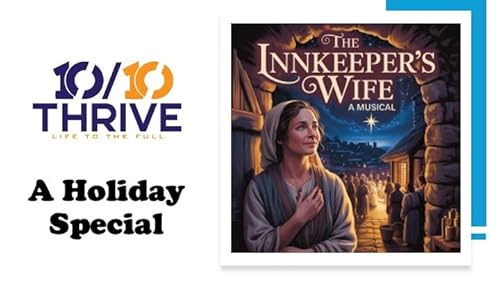
Holiday Special: The Innkeeper's Wife (Part 4)
カートのアイテムが多すぎます
カートに追加できませんでした。
ウィッシュリストに追加できませんでした。
ほしい物リストの削除に失敗しました。
ポッドキャストのフォローに失敗しました
ポッドキャストのフォロー解除に失敗しました

Holiday Special: The Innkeeper's Wife (Part 4)
-
ナレーター:
-
著者:
このコンテンツについて
In Episode 4 of our Christmas Special, “The Innkeeper’s Wife,” the discussion among the travelers solidifies the central theme: the ironic difficulty of recognizing God, who often arrives in humble, unexpected ways, contrary to human expectations of majesty and power. Ruth, drawing on Isaiah, corrects the notion that the Messiah will be immediately recognizable by his appearance, stating he will have "no beauty or majesty to attract us." The group reviews the prophetic markers for the Messiah's time, including the virgin birth (Isaiah), the calling out of Egypt (Hosea), and the coming of a messenger like Elijah (Malachi). However, Ruth warns that the prophecies also foresee great sorrow alongside the joy, citing Jeremiah's weeping in Ramah, concluding that salvation is costly and the coming of the King would be accompanied by profound suffering.
The conversation elevates when Bartholomew, the merchant, introduces the philosophical concept of the Logos (the Word of God) from Alexandrian thought, speculating on how God might bridge the gap between the infinite and His creation. Leah offers the profound, simple conclusion that "He would have to come Himself," sparking disbelief from Miriam that God could become a man. Ruth counters with the reminder that they worship a "God of impossibilities," and Leah connects the idea of a suffering Messiah to the pattern of their own history: major figures like Moses and David had to suffer before they could reign. This leads the group to the stark recognition that their ancestors consistently failed to recognize the Lord until He revealed Himself through a spectacular act, whether wrestling until dawn (Jacob) or ascending in fire (Manoah).
As the night nears its end, the focus shifts from intellectual debate to immediate action and prophecy. Ruth insists the time is "very, very close," citing Genesis's prediction that the scepter would not depart Judah until the Messiah comes, noting that the Roman census is evidence the sons of Jacob are scattered and vulnerable. When Leah asks how they would know if they were part of it, Ruth offers the ultimate lesson: they would be the ones who said "yes"—the ones who accepted the chaotic, unexpected moment and acted with faith. Simon, affirming Leah's weary service as the highest form of preparation, concludes that if God were to do something new, "He'd just do it, and we'd all be stumbling around trying to catch up," leaving Leah with the charge to "find room" for the next traveler, even when there is no room left.