

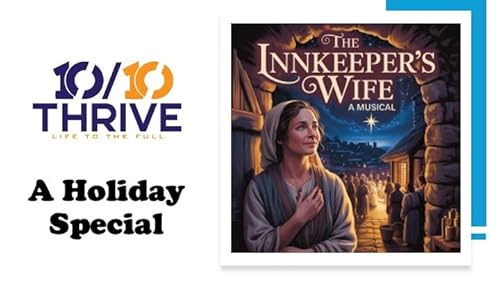
Holiday Special: The Innkeeper's Wife (Part 3)
カートのアイテムが多すぎます
カートに追加できませんでした。
ウィッシュリストに追加できませんでした。
ほしい物リストの削除に失敗しました。
ポッドキャストのフォローに失敗しました
ポッドキャストのフォロー解除に失敗しました

Holiday Special: The Innkeeper's Wife (Part 3)
-
ナレーター:
-
著者:
このコンテンツについて
In Episode 3 of our Christmas Special, “The Innkeeper’s Wife,” the inn's common room becomes a vibrant forum for theological debate, sparked by merchant Bartholomew bar Jonas, who shares a rumor from an Alexandrian rabbi that the Messiah's arrival is imminent based on calculations from Daniel's prophecy. Simon, the innkeeper, dismisses this as typical, inaccurate speculation, but the travelers—including the new widow Hannah and the elderly Ruth—are drawn into the conversation, their deep-seated hope stirred. Ruth immediately grounds the discussion in scripture, recalling the original promise of a Deliverer given by God after the fall in Eden. She asserts that while the timing may be wrong, the promise of a Messiah is absolutely correct and has driven the hope of every generation since.
The travelers then solidify the unique connection to their location. Hannah recalls her late husband speaking of specific prophetic "markers", leading Ruth to recite the prophecy of Micah, which explicitly names Bethlehem Ephrathah—the small, overlooked village—as the place from which the "ruler over Israel" would come. This revelation surprises Miriam and intrigues Bartholomew, engaging his merchant's logical mind. The conversation quickly shifts to the paradoxical nature of the Messiah's role, citing Isaiah's prophecies: He is the Glorious King (Wonderful Counselor, Prince of Peace) but also the Suffering Servant ("despised and rejected," "wounded for our transgressions"). The travelers admit they cannot reconcile how one person could embody both a mighty conqueror and a humiliated sufferer.
Leah steps out of the shadows and offers a crucial, insightful synthesis. She humbly states she is no rabbi but draws on the common history of their people: she reminds them that Joseph, David, and Moses all had to endure periods of suffering, slavery, or exile before they ascended to power. She suggests that the pattern might hold for the Messiah, proposing: "What if the Messiah has to suffer before he reigns?" Her simple, practical observation—made while contemplating scripture during midnight chores—offers a solution to the theological paradox, earning Ruth’s deep respect and surprising her husband Simon, who realizes his wife's quiet wisdom rivals the scholars and merchants filling their inn.