エピソード

  • HUSA April 24 2026 - Heil Harvesting Update
    2026/04/24
    Update from Heil Harvesting We've been pretty quiet here recently simply because there are just not a lot of photogenic happenings in progress. We are always busy -- always. We'll share some photos of some of what we've been working on. We often would be rolling full speed ahead at this time of year in front of balers or silage choppers -- but not this year, or at least not so far. Not much activity has been happening aside from maintenance, repairs and (of course) bookkeeping. What we ARE doing a lot of right now is hunting acres to swath, which doesn't really generate a lot of great photos for sharing. Unfortunately, the exceptionally dry conditions in combination with the poor hay market are really hurting our spring business. The wheat crops that we might normally be called to swath for baling are ranging currently from poor to almost nonexistent. We've driven a lot of miles, from southeast New Mexico and far western Texas up into northeastern Colorado, and we have seen very few acres of wheat that look like they'll be harvestable at all. Most of them don't even have enough growth to make it worth swathing them for baling as hay -- and the hay market is still poor enough that nobody is much interested in baling failed crops anyway, even if there would be enough yield to justify doing it (which there would not be). Add in the fact that the little growth the wheat has is the only ground cover available to defend against wind erosion and there is, very understandably, zero interest in swathing that wheat for baling. On the silage side of things, even irrigated crops are suffering from the lack of natural assistance. This is especially visible in areas that are a little short on water anyway (which is everywhere we work). Dryland triticale fields that are usually chopped are in a situation very similar to that of the wheat. There's a little growth there, but not much. Most of the crops are light enough this spring that the silage crews aren't likely to need help from us. They usually have their own swathers and only call us in when they need a little additional help. In a good year, they often need a little additional help. This year, nope. So, the swathing season outlook isn't really the most optimistic. We've talked to all of our people and are advertising for work anyway, and keeping our eyes and ears open. We are keeping our name out there by word of mouth, and we've driven a lot of miles wallpapering this general region with "SWATHING WANTED" flyers. One of our swathers is parked at the intersection in town that has the McDonald's with a giant "FOR HIRE" sign in the window, in the hopes that someone who sits down for lunch at McDonald's might see it and start getting some ideas. The thing is that even when conditions look terrible, one never knows what type of opportunity might pop up. When something does pop up, we want our name to be out there so potential customers know we're available! This type of thing goes with the territory. It is cyclical: Sometimes there is so much work to do that we literally can't do it all. Other times we sit and wish we were in the field. You take the bad with the good. And we know we're not the only ones affected! All any of us can do is wait and see -- and do everything we can to be prepared for when conditions change, and continue to pray for beneficial rains across the region!
    続きを読む 一部表示
    2 分
  • HUSA April 23 2026 - Possible Early Start
    2026/04/23

    We are hearing there are tough conditions in Texas right now for the harvesters. Due to drought conditions, Duffek Custom Harvesting is looking for wheat to harvest in Texas, Oklahoma, Kansas, Colorado, and North. That's Duffek Custom Harvesting.

    BT Harvesting writes that they've got most of the crew in and they've already been making good progress on the harvest prep. They may have an early start in Texas, they wrote, that's BT Harvesting.

    Thacker Harvesting came across some old pictures from their first years headed south. They were back from 95 and 96, taken anywhere from Alberta to Kansas. Times have sure changed, they wrote, check out that post from Thacker Harvesting on our Harvest USA Report Facebook page.

    You'll also find the Oklahoma and Kansas Wheat Commission's reports. Behind every Oklahoma wheat field is a story most people never get to see. This year that story has included dry planting conditions, drought, heat, grazing pressure, and difficult decisions for farm families across the state. In places like Cotton County, some wheat is taken hit after hit, but it's still standing, still trying, and still telling the story of Oklahoma agriculture at its toughest. Get more information from Oklahoma from that Oklahoma wheat crop update.

    In Kansas, according to the USDA NASS for the weekend in April 20th, winter wheat jointed is at 76%, ahead of 63% last year, and well ahead of the 51% for the five year average. Headed was 15%, ahead of 5% last year and the 2% average. Kansas wheat is getting ready quickly.

    Find all that information that I talked about today right on our Harvest USA Report Facebook page. Also, this audio report is available there.

    That's going to do it for today's report. Thanks again for listening and may God bless, I'm Brian Hale.

    続きを読む 一部表示
    2 分
  • HUSA April 22 2026 - Michael Deacon
    2026/04/22

    So we're talking to Michael Deacon, Conrad Montana.

    "So how are things looking?"

    "Okay, we've got some surface moisture, not a lot of deep moisture. Everybody's getting rolling on spring seeding and yeah so things look good for now but we definitely need some more here shortly. So that last storm that came through hit our country with we got about a half an inch of snow or maybe a courier. Did you get any of that? Yep, just a skiff of snow."

    "Some beats nothing."

    "Yep."

    "So do you have any winter wheat?"

    "We do yeah we had we did put in some winter wheat. Well and I think just right where we were here because there's some pretty good-looking winter wheat around but yeah ours looks a little spotty in areas. I was gonna go scout it out a little bit and kind of see if we needed to redo a little bit of it but yeah I don't know there's some pretty decent looking winter wheat around."

    "Some pretty good-looking winter wheat in our in our area too."

    "Good."

    "Do you raise any canola down there?"

    "We don't, no."

    "There is some canola in the neighborhood I think isn't there?"

    "Yeah there is some. I'll see canola every now and then, not a ton like up north, but yeah there's some grown for sure."

    "Lentils and chickpeas and stuff like that are they good with dry land?"

    "Yeah yeah there's quite a bit grown I know the lentil prices are way down this year so there's I don't think there's quite as much. I think the same on conventional chickpeas. We're doing some organic chickpeas and we haven't done that in a number of years so we'll see how that goes."

    That was David Woodruff from Alberta Canada talking with Michael Deacon from Conrad Montana.

    続きを読む 一部表示
    2 分
  • HUSA April 21 2026 - Jesper Hansen
    2026/04/21

    So we're talking to Jasper Henson, Scobey, Montana.

    "So how's the equipment looking?"

    "Equipment's ready to go. We'll probably be hitting for Texas in about three weeks the way it sounds. It's gonna come off early down there. There's not gonna be much of a crop but we still get a harvest what's there."

    "So your people have some then, right?"

    "Yeah, not a whole lot but there's a little bit there."

    "Yeah, I've talked to some that they didn't think they're even gonna turn a wheel. There are people that had cattle grazing them all off. So you've got some some pulse crops that go down there don't you?"

    Yeah, on our farm here we'll do chickpeas, yellow peas, lentils. We'll do some soybeans and some flowers as well.

    "Those pulse crops historically they do okay for you?"

    "Yeah, they they kind of been once at been the farm saver for the last few years and now this price this year they're lower priced but they'll be okay. So they are looking a little bit better than the cereal grains, right? Yeah, I still think with the lower price on lentils this year we're still bit off putting them in versus spring wheat."

    "And then you've got the residual nitrogen that the legumes give you too."

    "That's correct. Yeah, well I better get out of your hair you got stuff to do. Thank you for being there for us."

    "Anytime."

    That was Jesper Hansen from Scobey Montana with our co-host David Woodruff from Alberta, Canada talking about the poor conditions in Texas and getting started on the harvest.

    続きを読む 一部表示
    2 分
  • HUSA April 20 2026 - Jesper Hansen
    2026/04/20

    So we're talking to Jesper Henson, Scobie Montana, what things look like today down there?

    "Well actually today we're kind of cold, we were 17 degrees this morning and the snow is coming down right now kind of sideways a little windy too."

    So how are you fixed for moisture from coming out of the winter?

    "We're still pretty dry around here we could sure use a good rain."

    "How's that wheat looking?"

    "Well we don't have any winter wheat around here and we're fixing to, we'll probably start seeding tomorrow, it's supposed to warm up tomorrow, afternoon sometimes. So we'll get going in the field, we already got one drill filled up and we'll get another one this afternoon."

    "That's spring wheat?"

    "Yeah we'll start up spring wheat. Does any barley raised in your country?"

    "Very very little in the northeast corner here."

    "So you've got some some pulse crops that go down there don't you?"

    "Yeah on our farm here we'll do chickpeas, yellow peas, lentils, we'll do some soybeans and some flowers as well."

    "Those the pulse crops historically they do okay for you?"

    "Yeah they they kind of been the ones that been the farm saver for the last few years and now this price this year their lower price but they'll be okay."

    "So they are looking a little bit better than the cereal grains right?"

    "Yeah I still think with the lower price on lentils this year we're still bit off putting them in versus spring wheat."

    Jesper Hansen from Scobie Montana with our co-host David Woodruff.

    続きを読む 一部表示
    2 分
  • HUSA April 17 2026 - Educational Background
    2026/04/17

    Our co-host David Woodruff has Brandon Roland from Hemingford, Nebraska on today's interview, let's listen in.

    "I got my degree in Agriculture Communication and mainly I did it that way. I would sit there with my advisor. And they go, well, what do you want to learn about it? I go, well, I got a lot about soils this month there. Like, can we just change it up? Like, let's do some business. Let's do some cattle. But I thought that was the whole point of college. I wanted to have a wide range. So, psychology courses, psychology courses, and communication courses. And the whole thing that everybody argued with was, well, communication said, well, it's how it's communicated to you. Sociology said, well, it's how society communicated to you. And psychology always said, well, it's what your brain is meant to be. And I would just laugh like taking the different courses. Like the older I got in college where I'm like, we're all arguing about the same thing. It's just the information of, well, why are you taking the information in? And I get that's the one thing I'm glad I took all those classes. But one thing I always realized with college, it's all right, well, we can backtrack and figure out what's true information, what's BS information, what's proven."

    That was Brandon Roland from Hemingford, Nebraska with our co-host David Woodruff.

    続きを読む 一部表示
    2 分
  • HUSA April 16 2026 - Brandon Roland
    2026/04/16

    Our co-host David Woodruff has Brandon Roland from Hemingford, Nebraska on today's interview. Let's listen in.

    So what's going on down there?

    "We're dry Dave. We are bone dry. We missed all the fires. The Morill fire, we've been on the outside of it. But we got a little bit of a shower yesterday, and I don't think there was three, four drops out of it. Last week, Dave, we got a tenth of an inch on there. And I think by the time it came on the ground, it was done afterwards. We just desperately need rain. And when I've been talking to the other guys up North, down South, we're all kind of in the same boat. We don't get moisture. I don't know what we're going to do, especially right now. Dry land farming. We desperately need moisture."

    So is there much irrigation in your area?

    "There's a lot of irrigation, but the price of everything, guys are worried. You can't afford to put it in. And then the price of the fuel or electricity costs. Yeah, you're going to be spending a lot of money there. During the winter as well, Dave, I'm a potato inspector, potato certification of Nebraska. And we've graded out a lot of potatoes, but there's not a market for them anymore."

    That was Brandon Roland from Hemingford, Nebraska with our co-host, David Woodruff.

    続きを読む 一部表示
    2 分
  • HUSA April 15 2026 - The Buzz
    2026/04/15

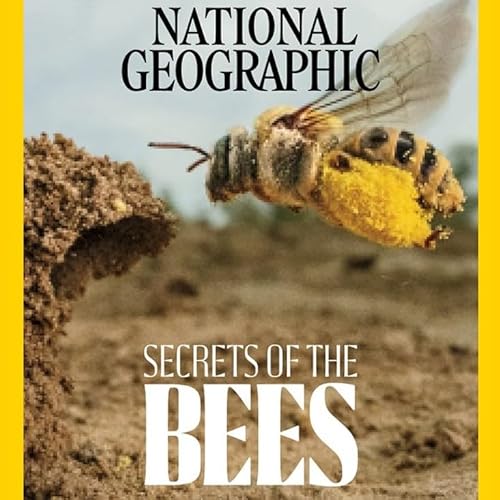
    Several national publications have been writing recently about bees and the importance that they play in the harvest. And now National Geographic is suggesting that bees might be geniuses. Their cover story, Secrets of the Bees. A hidden genius of one of nature's most essential creatures. National Geographic reveals the remarkable minds of the world's most important pollinators. Emerging research shows that bees can solve complex problems, associate color with rewards, and navigate ever-changing landscapes. That breadth of intelligence is rare in the animal kingdom, and it may be a key to their survival. One of our favorite beekeeping facilities and honey production labs is Kiowa Honey Company, located in California and Nebraska. For more about this story and the essential benefits of this delicious, nutritious treat, visit Kiowa Honey Company. You can find that link on our Facebook page on the Harvest USA Report.

    Water is a very important resource, and many times farmers get blamed for high usage.

    Did you know that Utah gets about 61 million acre feet of precipitation every year? "Over 92% of that goes right back into the natural systems, trees, rangelands, wetlands, and evaporation. Human use, all of it, is just a tiny sliver. Farmers steward most of the diverted water, sure, but their net consumptive use after return flows is only about 2.5 to 3.3% of the state's total water. They're not draining Utah dry, they're feeding families, supporting rural economies, and keeping productive land working."

    That was written by Phil Lyman and can be found on our Harvest USA Report Facebook page.

    続きを読む 一部表示
    2 分