エピソード

  • 5 Signs You No Longer Need to Impress Anyone
    2026/09/23
    Send us Fan MailHave you ever looked at something you were working so hard to achieve and suddenly asked yourself, “If nobody ever knew I had this, would I still want it?”It’s an interesting question because so much of what we call ambition can sometimes have an invisible audience attached to it. The promotion isn’t only about the work; it’s also about the title people will associate with you. The beautiful home isn’t only about how it feels to live there; part of you imagines how others will see it. Even certain goals can become more desirable because of what achieving them will say about who you are.For many years, we may not even question this. We want our parents to be proud of us. We want people who once underestimated us to see how far we have come. We want our peers to respect us. And sometimes, if we’re completely truthful, we even want to impress people whose opinions shouldn’t matter nearly as much as they do.Then something begins to change.You still want to grow. You still have dreams. You may still want success, money, recognition, beautiful experiences and a bigger life. But you become increasingly uninterested in proving that you have a good life to people who aren’t actually living it.And that shift can feel surprisingly freeing.Today, we’re talking about outgrowing the need to be impressive—what changes when you stop building your identity around other people’s admiration and start choosing what genuinely feels meaningful to you.Hello beautiful soul,Welcome back to another honest and deeply reflective episode of the Flight to Fulfillment Podcast, where we explore emotional awareness, self-worth, identity, and the hidden patterns that quietly influence the lives we create.I’m your host, Ratika Seth, Life Enhancement Coach and founder of the Freedom Divas Hub, a community where women reconnect with themselves, rebuild self-trust, and create lives rooted in freedom, self-respect and conscious choice.Today, I want to talk about a shift that often happens so quietly that you may not immediately recognise it as growth. You stop needing your life to impress people.This doesn’t mean you have lost your ambition. It doesn’t mean you suddenly stop caring about achievement or decide that money, recognition, success or beautiful things no longer matter. You can still want the thriving business, the meaningful career, financial freedom, a beautiful home, travel, recognition and everything else that genuinely matters to you.The difference is that somewhere along the way, the audience becomes less important.There can be a stage in life when so much of what we achieve carries an invisible audience with it. We don’t simply want to succeed; we want certain people to know that we succeeded. We don’t only want to become financially independent; we want people to see that we made it. We don’t just want the beautiful experience; sometimes part of the experience is imagining how it will look from the outside.And I think this becomes particularly interesting for women as we move through different stages of life.There comes a point when constantly maintaining an impressive version of yourself can become exhausting. You no longer want to have an exciting answer every time somebody asks what you’re doing next. You stop feeling the same urgency to keep up with other people’s milestones. You become less interested in proving that you are successful, happy, desirable, busy or important.Perhaps you even begin questioning some of the things you once thought you desperately wanted.Maybe the prestigious position comes with a life you no longer want to live. Maybe being constantly busy once made you feel important, but now peace feels more valuable. Maybe you realise that something you were chasing wasn’t actually making you happy; you simply liked what having it would say about you.And walking away from those things can be difficult because sometimes we’re not only letting go of a goal. We’re letting go of the identity that goal gave us.That is when a much deeper question begins to emerge:“Do I actually want this, or do I want what having this will make other people think about me?”And I think that question can reveal so much.Because there is a difference between wanting something because it expands your life and wanting something because it improves your image. There is a difference between achievement that fulfils you and achievement that reassures you that you are enough.Sometimes both can exist together. There is nothing wrong with enjoying recognition or feeling proud when other people appreciate what you have accomplished. The shift happens when their admiration is no longer the thing that determines whether the accomplishment feels valuable.You begin wanting a life that feels good on an ordinary Tuesday, not simply one that looks good when somebody asks you about it.You begin choosing relationships based on how you are treated rather than how impressive the ...
    続きを読む 一部表示
    14 分
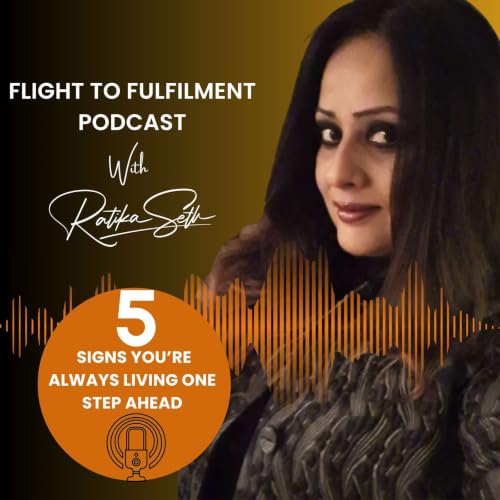
  • 5 Signs You’re Always Living One Step Ahead
    2026/09/21
    Send us Fan MailHave you ever realised that while your body is in one moment, your mind is already living in the next?You’re having dinner with people you love, but you’re mentally preparing for tomorrow. You finally take the holiday you had been looking forward to, but halfway through it, you’re already thinking about returning home. Something wonderful happens, and instead of fully enjoying it, your mind immediately moves to, “What next?”Sometimes anticipation goes even further. You don’t only think about what you need to do next; you start preparing for what might go wrong next. You rehearse conversations that haven’t happened, worry about losing things you still have, and emotionally prepare for disappointments that may never arrive.Without realising it, you can become so busy preparing for life that you forget to actually experience it.Today, we’re talking about living in anticipation instead of experience—why your mind keeps pulling you into the next moment, and how constantly thinking ahead can quietly take you away from the life that is happening right now.Hello beautiful soul,Welcome back to another honest and deeply reflective episode of the Flight to Fulfillment Podcast, where we explore emotional awareness, self-worth, identity, and the hidden patterns that quietly influence the way we experience our lives.I’m your host, Ratika Seth, Life Enhancement Coach and founder of the Freedom Divas Hub, a community where women reconnect with themselves, rebuild self-trust, and create lives rooted in freedom, self-respect and conscious choice.Today, I want to talk about something that can easily be mistaken for being responsible and organised: always thinking ahead.Planning is an important part of life. We prepare for meetings, organise our families, think about our finances, make plans for the future and anticipate things that may need our attention. Thinking ahead helps us feel prepared.But there is a difference between planning for the future and mentally living there.You may be sitting at breakfast, but your mind is already going through the day ahead. You’re listening to someone speak, but part of your attention is preparing what you’ll say next. You achieve something you worked incredibly hard for, but instead of allowing yourself to enjoy the achievement, you immediately start thinking about the next goal.You are technically present, but mentally you are always somewhere else.And I think one of the saddest ways this pattern shows up is when we finally receive something we once desperately wanted.You get the promotion you worked towards for years, but instead of feeling proud, you immediately begin worrying about whether you’ll be able to prove yourself in the new role. You enter a loving relationship, but rather than allowing yourself to enjoy being loved, you start wondering whether it will last. Your children are happy and doing well, but your mind begins imagining the problems they could face in the future.You finally reach a level of financial security you once prayed for, but instead of experiencing the feeling of having enough, you begin worrying about what would happen if you lost it.The moment you were waiting for finally arrives, but emotionally, you have already left it.There is a reason anticipation can feel comforting. Thinking ahead can create a sense of control. Somewhere inside, we may believe that if we anticipate every possible problem, we won’t be caught off guard. If we imagine disappointment before it happens, perhaps it won’t hurt as much. If we remain one step ahead of life, perhaps life won’t be able to surprise us.But there is a hidden cost to constantly preparing yourself emotionally for things that haven’t happened.You can end up experiencing the anxiety of a future problem without ever actually having the problem.You worry about the relationship ending while you are still happily together. You worry about your children leaving while they are still sitting across the dinner table from you. You worry about losing the opportunity while you are still enjoying it.And in trying to prepare yourself for tomorrow’s possible pain, you accidentally reduce your ability to experience today’s very real joy.Anticipation can also become a habit for ambitious women because we are so accustomed to moving towards the next milestone. There is always another target, another responsibility, another level to reach and another version of ourselves we are trying to become.We tell ourselves, “I’ll relax when this project is finished.” Then the project finishes and another begins. “I’ll enjoy myself when the business reaches this number.” The number arrives and immediately moves again. “I’ll feel settled once this situation is sorted.” It gets sorted, but the mind finds something else that requires attention.The finish line keeps moving because the problem was never the finish line. The mind simply became accustomed to living ahead of ...
    続きを読む 一部表示
    13 分
  • 5 Signs Your Competence Has Become Your Armour
    2026/09/18
    Send us Fan MailHave you ever been the woman everyone assumes will be fine, no matter what happens?At work, you’re the person people turn to when something goes wrong. At home, you remember what needs to be done before anyone else even notices. When there is a crisis, you don’t fall apart. You organise, make decisions, solve the problem and keep everything moving.People describe you as capable, dependable and strong. And they’re not wrong. You probably are all of those things.But sometimes there is another woman underneath that competence. A woman who is tired of always knowing what to do. Tired of being the person with the answers. Tired of hearing, “You’ll manage, you always do.” And perhaps most painfully, tired of being admired for a strength that has made everyone forget that she might need someone to take care of her too.Today, we’re talking about the woman behind the mask of competence—and what happens when being capable stops being simply one of your strengths and becomes the armour you use to hide how much you’re actually carrying.Hello beautiful soul,Welcome back to another honest and deeply reflective episode of the Flight to Fulfillment Podcast, where we explore emotional awareness, self-worth, identity, and the hidden patterns that quietly shape the women we become.I’m your host, Ratika Seth, Life Enhancement Coach and founder of the Freedom Divas Hub, a community where women reconnect with themselves, rebuild self-trust, and create lives rooted in freedom, self-respect and conscious choice.Today, I want to talk about a woman I think many of us will recognise. Maybe you know her. Maybe you admire her. Or maybe, without even realising it, you have become her.She is incredibly capable. She handles pressure well, remembers what everybody needs, makes difficult decisions and somehow finds solutions when everyone else is overwhelmed. People trust her because she rarely lets anything fall through the cracks.And that sounds like a wonderful quality to have. It is.But there is a side of competence we don’t talk about enough. When you function exceptionally well, people can easily assume that functioning well means feeling well.It doesn’t.You can run a meeting brilliantly while emotionally falling apart inside. You can take care of your family while desperately wishing somebody would notice that you need taking care of too. You can solve everyone else’s problems and still have absolutely no idea what to do about your own.This is where competence can become complicated.There is nothing unhealthy about being independent, responsible or capable. These qualities may have helped you build your career, create financial independence, survive difficult seasons and become the woman you are today.But sometimes competence becomes more than something you can do. It becomes something you believe you must be.You become so identified with being the woman who handles everything that not handling something begins to feel like failure.You find it easier to help than to be helped. You would happily spend hours supporting someone you love, but when somebody asks what you need, your automatic answer is, “Nothing, I’m fine.”You may even secretly wish someone would notice that you’re struggling without you having to say it. But because you continue functioning so beautifully, nobody realises there is anything to notice.And this can create a very particular kind of loneliness.Everyone knows how strong you are, but very few people know how tired you are.Sometimes the mask of competence develops because being capable once felt safer than needing people. Perhaps you learned early that depending on others could lead to disappointment. Perhaps being responsible brought appreciation. Maybe you became the person who kept things together because there simply wasn’t anyone else to do it.Eventually, “I can handle it” quietly becomes “I should handle it,” and then, without noticing the shift, it becomes “I have to handle it.”That is when competence can start behaving like armour.Because if you are always the woman with the solution, you rarely have to admit, “I don’t know what to do.”If you are always giving support, you don’t have to experience the vulnerability of asking for it.If you remain composed, people never see the emotions underneath.And if you never need anyone, you never have to risk discovering whether somebody will actually show up when you do.But there is a cost to becoming so self-sufficient that nobody knows how to reach you.The people around you may genuinely want to support you, but you have trained them to believe that you don’t need it. You say, “I’ve got it,” so often that eventually everybody believes you.And perhaps one day you find yourself thinking, “Why does nobody ever take care of me?”That can be a painful question. But there may be another question underneath it:“Have I ever allowed people to see the part of me that needs care?”...
    続きを読む 一部表示
    17 分
  • 5 Signs Your Need for Certainty Is Keeping You Stuck
    2026/09/16
    Send us Fan MailHave you ever known that something in your life needed to change, but kept waiting until you were completely sure? You want to leave the job, but first you need to know that the next one will be better. You want to make a decision about a relationship, but you want some guarantee that you won’t regret it later. You want to start something of your own, but you need to know that it will succeed before you risk what you already have.So you think a little longer. You do more research, ask more people, make another list and imagine every possible outcome. You keep telling yourself, “I just need a little more clarity.” But what if clarity isn’t actually what you’re waiting for? What if you’re waiting for something life can rarely give you—certainty?Sometimes we don’t stay stuck because we don’t know what we want. We stay stuck because we want to know exactly what will happen after we choose it. And today, we’re talking about the invisible need for certainty, why not knowing can feel so uncomfortable, and how waiting for guarantees can quietly keep you from moving forward.Hello beautiful soul,Welcome back to another honest and deeply reflective episode of the Flight to Fulfillment Podcast, where we explore emotional awareness, self-worth, identity, and the hidden patterns that quietly influence the choices we make.I’m your host, Ratika Seth, Life Enhancement Coach and founder of the Freedom Divas Hub, a community where women reconnect with themselves, rebuild self-trust, and create lives rooted in freedom, self-respect and conscious choice.Today, I want to talk about something that most of us would probably never consider a problem: wanting to be sure.Of course, we want certainty. We want to know that we’re choosing the right person, making the right career move, investing our money wisely, taking the right opportunity or walking away for the right reasons. There is nothing wrong with gathering information, considering consequences and thinking carefully before making an important decision.The problem begins when thoughtful decision-making quietly becomes, “I cannot move until I know.”Because there are some things no amount of thinking can tell you. You cannot know with absolute certainty that a relationship will last. You cannot know that a business will succeed before you build it. You cannot know that leaving something familiar will make you happier. And you cannot guarantee that you will never look back at a decision and wonder whether another choice might have been better.Yet we often behave as though, if we think long enough, we can somehow remove uncertainty from the decision. We ask another friend, speak to another expert, look for another sign or run through another “what if.” Every answer gives us temporary reassurance, but before long another question appears.Eventually, what looks like careful thinking can become a very sophisticated way of avoiding the discomfort of choosing.Because choosing means accepting that there will always be something you cannot predict. It means closing certain doors, taking some degree of risk and acknowledging that you cannot control every consequence of your decision.And perhaps this is where the deeper issue lies. Sometimes our need for certainty isn’t really about wanting to know the future. It’s about not completely trusting ourselves to handle the future if it doesn’t unfold the way we hoped.There is a big difference between saying, “I need to know this will work,” and saying, “I hope this works. I’ve thought carefully about it, and if it doesn’t work the way I expect, I trust myself to deal with what comes next.”The second one doesn’t give you certainty. It gives you something far more valuable: self-trust.Because real emotional security isn’t knowing that nothing will go wrong. It isn’t knowing that nobody will leave, that every opportunity will work out or that every decision will turn out to be the right one. Real emotional security is knowing that when life changes, you trust yourself not to abandon yourself inside that change.There is something else we often forget. Not making a decision doesn’t protect us from risk either. Staying in the relationship is a decision. Remaining in the job is a decision. Postponing the dream is a decision. Waiting another year is also a decision.Sometimes we become so focused on what might happen if we change our lives that we forget to ask what might happen if we don’t.So today, we’re exploring 5 signs your need for certainty may be keeping you stuck, why the unknown can feel so threatening, and how to stop demanding guarantees from life and start building enough trust in yourself to move forward without them.More Power To All!Follow me onInstagram Facebook YoutubeLinkedInFor any information, write to me on connect@gratitudeconcepts.comTo know more, visit my website www.ratikaseth.comMuch Gratitude!Ratika Seth
    続きを読む 一部表示
    15 分
  • 5 Signs You’re Silencing Your True Feelings
    2026/09/14
    Send us Fan MailHave you ever left a conversation and thought...“Why didn’t I just say what I really felt?”Something hurt you, but you said, “It’s fine.”You disagreed, but decided it was easier to stay quiet.You wanted to say no, but heard yourself saying, “Okay, I’ll manage.”Someone crossed a line, and instead of telling them, you spent so much time wondering how to say it without upsetting them that eventually you said nothing at all.And perhaps this happens so naturally now that you don’t even recognise it as a pattern. You’re not being dishonest But you may be giving people a carefully edited version of yourself.A version that is easier to accept.Less likely to disagree.Less likely to disappoint.Less likely to make anyone uncomfortable.And after years of doing this, something interesting can happen.You become very good at protecting other people from your truth—and increasingly disconnected from what that truth actually is.Today, we’re talking about the habit of emotionally editing yourself, why so many women learn to censor their feelings before anyone else gets the chance, and what it can cost when being acceptable begins to matter more than being authentic.Hello beautiful soul,Welcome back to another honest and deeply reflective episode of the Flight to Fulfillment Podcast, where we explore emotional awareness, self-worth, relationships, and the hidden patterns that quietly influence the way women experience themselves and the people around them.I’m your host, Ratika Seth, Life Enhancement Coach and founder of the Freedom Divas Hub, a community where women reconnect with themselves, rebuild self-trust, and create lives rooted in freedom, self-respect and conscious choice.Today, I want to talk about something that can be difficult to recognise precisely because it often looks like emotional maturity.Editing your emotions.Now, there is an important distinction here.Being emotionally honest doesn’t mean saying everything you think the moment you think it.There are times when pausing is wise. There are times when we need to calm down before having a conversation. And there are times when choosing our words carefully is an act of respect—for ourselves and for the other person.That is emotional regulation.Emotional editing is different.It happens when you repeatedly minimise, soften or hide what you genuinely feel because you’re afraid of what might happen if you express it honestly.Maybe you’ll be called difficult.Maybe someone will become angry.Maybe they’ll withdraw.Maybe they’ll think you’re too sensitive.Maybe you’ll disappoint them.And so, before anybody else can reject your feelings...you reject them first.Someone asks, “Did that upset you?”You say, “Not really.”But it did.Someone asks, “Are you okay with this?”You say, “Of course.”But you aren’t.Someone says something that hurts you, and instead of acknowledging the hurt, your first instinct is to explain their behaviour to yourself.They probably didn’t mean it.Maybe I’m overreacting.They’re going through a lot.It’s not worth making an issue out of it.And notice what has happened.You haven’t even expressed your emotion yet, but you’ve already begun negotiating against it.For many women, this habit didn’t appear overnight.Perhaps being agreeable was praised when you were young.Perhaps expressing anger created conflict.Perhaps having needs made you feel demanding.Perhaps you became the understanding one in your relationships—the woman who could always see everybody else’s side.And eventually, being easy to be around became part of your identity.But there is a hidden cost to constantly making yourself emotionally convenient.Because every time your mouth says “It’s okay” while something inside you is saying “No, it isn’t,” there is a small disconnect between what you experience and what you express.Do that often enough and the problem is no longer simply that other people don’t know how you feel.You can begin losing touch with how you feel too.You start questioning whether you’re allowed to be angry. Whether your disappointment is reasonable. Whether your needs are too much. Whether your boundaries are justified.And perhaps one of the loneliest consequences is this:You can be surrounded by people who genuinely believe they know you... while privately feeling that nobody really does. But how could they? They’ve been meeting the edited version.The woman who says she doesn’t mind.The woman who can manage.The woman who understands.The woman who rarely asks for much.The woman who is always okay.And perhaps the work isn’t becoming completely unfiltered.It is learning that authenticity and confrontation are not the same thing.You can say, “That hurt me,” without attacking someone.You can say, “I don’t agree,” without becoming disrespectful.You can say, “That doesn’t work for me,” without writing a five-paragraph explanation.You can ...
    続きを読む 一部表示
    18 分
  • 5 Signs You’re Carrying Everyone Else’s Happiness
    2026/09/11
    Send us Fan MailHave you ever noticed how one person’s mood can completely change yours?Your partner becomes quiet, and your mind immediately starts wondering, “Did I do something?”Your mother sounds disappointed, and even though you know you’ve made the right decision, guilt follows you for the rest of the day.Your child is unhappy, and suddenly you can’t enjoy yourself either.A friend is struggling, and you don’t just listen to her problem—you carry it home with you.Before you know it, you’re reassuring, explaining, adjusting, apologising or trying to make things better.And only when everyone around you seems okay...do you finally feel okay.But here’s the question we rarely ask:When did somebody else’s happiness become evidence of whether you were doing life correctly?Because there is a difference between caring deeply about the people you love and feeling personally responsible for keeping them happy.And that difference can determine how much of your emotional life actually belongs to you.Hello beautiful soul,Welcome back to another honest and deeply reflective episode of the Flight to Fulfillment Podcast, where we explore emotional awareness, self-worth, relationships, and the hidden patterns that quietly influence the way women experience their lives.I’m your host, Ratika Seth, Life Enhancement Coach and founder of the Freedom Divas Hub, a community where women reconnect with themselves, rebuild self-trust, and create lives rooted in freedom, self-respect and conscious choice.Today, I want to talk about something that can look like love from the outside...but feel like exhaustion on the inside.Feeling responsible for everybody else’s happiness.For some women, this responsibility has become almost automatic.You walk into a room and notice the emotional temperature before you notice your own mood.You hear the slightest change in someone’s voice.You know when your partner is irritated before he says anything.You sense when your mother is disappointed.You know when your child isn’t okay.And almost instantly, your attention moves away from yourself and towards them.What happened?Was it something I said?Should I call?Should I explain?Should I apologise?What can I do to make this better?There is nothing wrong with noticing how people feel. Empathy and emotional responsiveness are important parts of close relationships.But there is a point where empathy can quietly turn into emotional over-responsibility.You stop thinking:“Someone I love is unhappy.”and start feeling:“Someone I love is unhappy, therefore I need to do something about it.”Those are very different emotional positions.And this pattern often has a history.Maybe growing up, keeping everybody happy kept the house peaceful.Maybe being helpful earned appreciation.Maybe someone else’s disappointment felt frightening.Maybe you became the peacemaker in your family.Or perhaps you were simply praised for being the accommodating, understanding girl who never caused too much trouble.Over time, you can internalise the idea that being a good daughter, partner, mother, friend or woman means keeping the people around you emotionally comfortable.And then adulthood becomes one long attempt to manage reactions you cannot actually control.You soften your no so nobody feels rejected.You over-explain decisions so nobody misunderstands you.You say yes when you mean no because somebody’s disappointment feels harder to tolerate than your own resentment.You solve problems before people have even asked for help.Sometimes you even shrink your own happiness because enjoying yourself while someone you love is struggling feels selfish.And slowly, other people’s emotional weather begins deciding whether you are allowed to have sunshine.That is an exhausting way to live.Because no matter how loving, thoughtful or emotionally aware you are, you cannot guarantee another person’s happiness.Your partner will sometimes be disappointed.Your children will sometimes be unhappy with your decisions.Your parents may not understand every choice you make.Your friends may occasionally feel hurt, frustrated or left out.And somebody being unhappy with you does not automatically mean you have harmed them.That distinction matters.Of course, if your behaviour genuinely hurts someone, taking responsibility is important. Healthy relationships require accountability, apologies and repair.But accountability means taking responsibility for your behaviour.It does not mean taking ownership of every emotion another person experiences in response to your choices.Perhaps one of the most freeing things we can learn is this:I can care about how you feel without believing it is my job to change how you feel.I can listen without fixing.I can support without rescuing.I can love you and still say no.I can understand your disappointment without reversing a decision that is right for me.And I can allow you to have an uncomfortable emotion without immediately making ...
    続きを読む 一部表示
    14 分
  • 5 Signs You’re Still Living by Childhood Roles
    2026/09/09
    Send us Fan MailWere you the child everyone described as “so mature for your age”?You rarely created problems. You understood when your parents were stressed. You adjusted when money was tight. You looked after younger siblings. You learned when to stay quiet, when to help, and sometimes, when not to ask for what you wanted.People called you responsible.Understanding.Independent.A good girl.And perhaps you were proud of being that child.But nobody tells you what can happen when the role that earned you appreciation at eight, twelve or sixteen is still running your life at forty.You become the woman who automatically takes responsibility when something goes wrong.You feel guilty saying no.You struggle to receive without immediately wanting to give something back.You sense someone is upset and instinctively wonder what you need to do about it.You take care of everyone so naturally that sometimes you don’t even realise how rarely you allow someone to take care of you.And this is where an old childhood role can begin to feel like an emotional debt you’re still paying as an adult.Hello beautiful soul,Welcome back to another honest and deeply reflective episode of the Flight to Fulfillment Podcast, where we explore emotional awareness, self-worth, relationships, and the hidden patterns that quietly shape the women we become.I’m your host, Ratika Seth, Life Enhancement Coach and founder of the Freedom Divas Hub, a community where women reconnect with themselves, rebuild self-trust, and create lives rooted in freedom, self-respect and conscious choice.Today, I want to talk about the roles children quietly learn to play inside their families.Maybe you were the responsible one who could always be trusted.Maybe you were the peacemaker who couldn’t bear tension in the house.Maybe you were the achiever who made everyone proud.Maybe you became the caretaker.Or perhaps you were the child who learned to need very little because other people already seemed to have enough to deal with.Nobody necessarily sat you down and gave you that role.Children learn by watching.They notice what receives praise. They notice what creates tension. They notice when a parent is overwhelmed. They notice when their own needs seem to add pressure to an already difficult situation.And they adjust.A child who repeatedly hears, “You’re the sensible one,” may learn that being easy and responsible brings approval.A child surrounded by conflict may become skilled at keeping everybody happy.A girl praised for always helping may begin to connect being needed with being valued.These responses can make perfect sense within the environment in which they developed.The difficulty is that childhood ends, but the role doesn’t always end with it.The little girl who learned, “Don’t create another problem,” becomes the woman who says, “Don’t worry, I’ll manage,” even when she desperately needs help.The girl who kept everyone happy becomes the woman who experiences another person’s disappointment as something she must immediately fix.The responsible daughter becomes the woman carrying the practical and emotional load of an entire family while quietly wondering:“Why does nobody ever think about what I need?”And perhaps the answer is painful.You became so good at being the person who doesn’t need looking after that everyone eventually believed you.This is what I mean by emotional debt from childhood roles.It isn’t a clinical term or diagnosis. I’m using it to describe that invisible feeling that you somehow still owe people something.Your availability.Your obedience.Your emotional labour.Your ability to cope.Your willingness to adjust.Your time.Sometimes even your own happiness.And when you finally try to stop paying that debt, guilt appears.You say no and feel selfish.You allow somebody else to solve their own problem and feel irresponsible.You choose yourself and wonder whether you’ve changed.You stop rescuing and worry that you’ve become uncaring.But perhaps you haven’t become less loving.Perhaps you’re simply beginning to question a contract you never consciously agreed to.And understanding that doesn’t require blaming your parents or rewriting your childhood as something terrible.Families are complicated. Parents have their own pressures, histories and limitations. Many childhood roles develop without anyone deliberately creating them.This conversation isn’t about blame.It’s about awareness.Because the woman you are today is allowed to ask whether the role that once helped her feel safe, useful, loved or valued still deserves permanent authority over her adult life.So today, we’re exploring 5 signs you may still be carrying emotional debt from childhood—and how to honour the child who learned to adapt without making the woman you are today spend the rest of her life paying for it.More Power To All!Follow me onInstagram Facebook YoutubeLinkedInFor any information, write to me on connect@...
    続きを読む 一部表示
    15 分
  • 5 Ways to Stop Performing Your Life and Choose Peace
    2026/09/07
    Send us Fan MailHave you ever realised that you can be completely alone...and still feel as though you’re performing for an audience?You keep pushing when you’re tired because slowing down feels uncomfortable.You say, “I’m fine,” because you don’t want anyone worrying about you.You keep saying yes because being the difficult one feels worse than being the exhausted one.You achieve something, enjoy it briefly, and then immediately start thinking about what you need to accomplish next.From the outside, you look capable, composed and successful.But inside, maintaining that version of yourself is becoming exhausting.And maybe the question isn’t simply:“Why am I so tired?”Maybe it is:“How much of my life am I actually living—and how much of it am I performing?”Today, we’re talking about choosing peace over performance—and what happens when you stop building a life that constantly needs to look good and start building one that actually feels good to live.Hello beautiful soul,Welcome back to another honest and deeply reflective episode of the Flight to Fulfillment Podcast, where we explore emotional awareness, self-worth, identity, and the hidden patterns that quietly shape the lives we create.I’m your host, Ratika Seth, Life Enhancement Coach and founder of the Freedom Divas Hub, a community where women reconnect with themselves, rebuild self-trust, and create lives rooted in freedom, self-respect and conscious choice.Today, I want to talk about a kind of exhaustion that sleep doesn’t necessarily fix.The exhaustion of constantly managing the version of yourself the world gets to see.And I’m not talking about pretending to be someone you’re not.Performance can be far more subtle than that.It can look like always being the strong one because people depend on you.Always being agreeable because you don’t want to disappoint anyone.Always looking composed because vulnerability feels uncomfortable.Always achieving because success has become part of how you prove your worth.You become the successful professional, the present mother, the supportive partner, the dependable daughter and the friend who is always available.And somewhere between being everything to everyone, you can lose touch with a much simpler question:“What does this life actually feel like for me?”Because performance keeps your attention on the outside.What will people think?Am I doing enough?Do I look successful?Will they approve of this decision?Am I letting somebody down?Peace turns your attention inward.Do I actually want this?Does this relationship feel healthy to me?Can I sustain this pace?Am I saying yes because I mean yes—or because I’m afraid of what my no might change?Would I still chase this goal if nobody were going to applaud me when I reached it?Those questions can reveal things we would rather not see.Because sometimes the life that earns you the most admiration is also the life that asks you to abandon yourself the most.You can have the career people admire and secretly dread Monday morning.You can be known as the woman who handles everything and quietly wish somebody would notice that you shouldn’t have to.You can have a life that looks beautifully put together and still feel disconnected from yourself inside it.And that doesn’t make you ungrateful.It means external success and internal peace are not automatically the same thing.At some point, we have to stop asking only:“Does my life look successful?”and start asking:“Does the way I’m living my success feel sustainable, honest and fulfilling?”Because perhaps real freedom isn’t reaching a point where everyone finally approves of the woman you’ve become.Perhaps it’s reaching a point where you no longer need their approval to feel at peace with her.So today, we’re exploring 5 ways to stop performing your life and start choosing peace—without giving up your ambition, your relationships or the powerful woman you’ve worked so hard to become.More Power To All!Follow me onInstagram Facebook YoutubeLinkedInFor any information, write to me on connect@gratitudeconcepts.comTo know more, visit my website www.ratikaseth.comMuch Gratitude!Ratika Seth
    続きを読む 一部表示
    12 分