• Eric Ries on What Investors Get Wrong About Governance
    2026/08/02
    Episode SummaryEric Ries is the author of The Lean Startup and The Startup Way, and the founder of IMVU and the Long-Term Stock Exchange. His new book, Incorruptible, examines why companies drift from their mission once investors and boards take over, and what founders and early investors can do to prevent it.In this episode, Cheryl and Maxine unpack what Eric calls "financial gravity," the force that pulls companies toward extractive, value-destroying behavior even when everyone believes they're pursuing profit. Eric explains why many widely taught governance best practices are actually shareholder-value destroying, and why the earliest stage of a company is the easiest time to build in protections against this drift.You'll also hear Eric break down the "spiritual holding company" structure, using Novo Nordisk's century-old nonprofit foundation as an example of why mission-guardian structures make companies far more likely to survive long term. The conversation covers why founders get talked out of protective provisions until it's suddenly too late, and Eric shares the real story of a startup that took a million dollars from Purdue Pharma to push opioids to doctors, and why it destroyed the company.He closes with his Big Cojones moment: a board meeting early in his career where he expected to be fired for refusing to abandon his unconventional methods, and the lesson that "harder is easier" when you stand for something you believe in.Time Stamps00:00 – Intro04:10 – Eric's first investment: putting his own money into IMVU's friends and family round09:15 – From Lean Startup to Incorruptible: why it's always felt like one continuous project to Eric17:40 – The tortilla company, private equity, and why "pricing power" explains so much bad behavior21:30 – Why so-called governance best practices are often value destroying25:50 – Naming the problem: financial gravity and why our grandparents would have called it corruption30:20 – What founders and early investors can actually do at the earliest stage36:45 – The Olympic athlete analogy: why protective structures only work if built in early41:10 – The spiritual holding company explained through Novo Nordisk's origin story48:30 – Why companies rated for "good governance" have underperformed since 200852:15 – The Purdue Pharma story and how a million dollars destroyed a company58:40 – Big Cojones moment: the board meeting Eric thought would get him firedSponsors:First Cheque is supported by our wonderful sponsors:Deel: Founders scale faster on Deel. Set up payroll for any country in minutes, hire anyone anywhere, and get visas handled fast, so you stay focused on scaling. Deel takes care of onboarding, HR, IT, EOR, benefits, and compliance, so your team can grow without borders.It’s why more than 40,000 fast-growing companies trust Deel to move fast.Visit https://www.deel.com/dayone___Pear Tree: Pear Tree helps Australian and New Zealand founders build high-performing offshore teams without the agency middleman.As local hiring becomes more expensive and harder to fill, many operators are turning to offshore talent across engineering, development, marketing, accounting and operations at a fraction of local salary costs.The offshore horror stories you hear usually aren’t a talent problem. They’re the result of outsourcing agencies that overcharge clients while underpaying staff. Pear Tree takes a different approach through a direct, transparent model where your team is paid fairly, fully compliant, and focused entirely on your business.As part of the Day One community, you’ll receive a free team audit to identify where offshore talent could move the needle in your business, plus 20% off your first hire. Learn more at http://dayone.fm/peartreeFirst Cheque is part of Day One.Day One helps founders and startup operators make better business decisions more often. To learn more, join our newsletter to be notified of new First Cheque episodes and upcoming shows.Mentioned in this episode:Pear TreeIf you're a founder or operator trying to scale, here's the reality — Australian hiring is getting harder, salaries are at record highs, and the talent you need is increasingly out of reach. The best operators are quietly building offshore teams of engineers, marketers, accountants and analysts at a fraction of the cost. Pear Tree does it differently. We headhunt highly skilled talent from the Philippines and South Africa with full transparency on where every dollar goes, so your team is paid fairly and fully focused on your business. As a Day One listener, you’ll receive a free team audit to identify where offshore talent could move the needle in your business, plus 20% off your first hire.Deel x PX_Script 1Pear TreeIf you're a founder or operator trying to scale, here's the reality — Australian hiring is getting harder, salaries are at record highs, and the talent you need is increasingly out of reach. The best operators are quietly ...
    続きを読む 一部表示
    1 時間 1 分
  • What Makes a Founder Worth Backing at Pre-Seed? With Ilana Elbaz | GTM at Deel
    2026/07/19
    Episode SummaryIlana Elbaz was employee number five and the first go-to-market hire at Deel, helping scale the company from its early pivots through blockchain and payments to a business she helped grow from zero to hundreds of millions in ARR in just a few years. She's now an active angel investor and runs Deel's global pitch competition, which received tens of thousands of applications this year.In this episode, Cheryl and Maxine unpack how operating inside one of the fastest-scaling companies in the world shapes the way Ilana evaluates founders as an investor. She breaks down her "3-star model" for backing companies (right infrastructure, right team, right timing, read from right to left), why she looks for founders with velocity and speed over founders who claim to have it all figured out, and why the biggest red flag at pre-seed is a founder who narrows their market too early.You'll also hear why she pushes back on founders who insist on enterprise-only or single-market strategies before they even know their ICP, why treating international hiring as a growth problem rather than an HR problem is critical for founders building outside the US, and why Australian founders' instinct to think global from day one is a genuine advantage. Ilana shares what she learned scaling Deel's own go-to-market using the company's own product across dozens of countries, and why staying close to your first hundred customers matters more than shipping a polished product.She closes with her Big Cojones moment: repeatedly landing alone in unfamiliar countries, from opening entities in Thailand to sourcing product in China at 19, with no support system and straight into meetings with lawyers she'd never met.Time Stamps00:00 - Intro04:15 – Ilana's first investment: buying Amazon stock at age 10 and the lesson she learned selling too early09:30 – Why Ilana joined Deel as employee five, drawn in by the labor law and compliance nightmare of scaling internationally14:05 – The 3-star model: right infrastructure, right team, right timing, and why it should be read backwards17:50 – Why founders who claim to have it all figured out should be a pass21:40 – The danger of narrowing your market too early at pre-seed28:10 – Why treating global hiring as a growth problem, not an HR problem, changes everything33:00 – What makes Australian founders well suited to thinking global from day one36:45 – How to answer "what's your expansion plan" as a green flag for investors40:20 – Inside Deel's global pitch competition: 35,000 applications and five investments46:10 – Big Cojones moment: landing alone in unfamiliar countries to open new marketsFirst Cheque is part of Day One.Day One helps founders and startup operators make better business decisions more often. To learn more, join our newsletter to be notified of new First Cheque episodes and upcoming shows.Sponsors:First Cheque is supported by our wonderful sponsors:Deel: Founders scale faster on Deel. Set up payroll for any country in minutes, hire anyone anywhere, and get visas handled fast, so you stay focused on scaling. Deel takes care of onboarding, HR, IT, EOR, benefits, and compliance, so your team can grow without borders.It’s why more than 40,000 fast-growing companies trust Deel to move fast.Visit https://www.deel.com/dayone___Pear Tree: Pear Tree helps Australian and New Zealand founders build high-performing offshore teams without the agency middleman.As local hiring becomes more expensive and harder to fill, many operators are turning to offshore talent across engineering, development, marketing, accounting and operations at a fraction of local salary costs.The offshore horror stories you hear usually aren’t a talent problem. They’re the result of outsourcing agencies that overcharge clients while underpaying staff. Pear Tree takes a different approach through a direct, transparent model where your team is paid fairly, fully compliant, and focused entirely on your business.As part of the Day One community, you’ll receive a free team audit to identify where offshore talent could move the needle in your business, plus 20% off your first hire. Learn more at http://dayone.fm/peartreeBrought to you by Pear Tree. Pear Tree helps Australian and New Zealand founders build high-performing offshore teams without the agency middleman. As local hiring becomes more expensive and harder to fill, many operators are turning to offshore talent across engineering, development, marketing, accounting and operations at a fraction of local salary costs. The offshore horror stories you hear usually aren't a talent problem — they're the result of outsourcing agencies that overcharge clients while underpaying staff. Pear Tree takes a different approach: a direct, transparent model where your team is paid fairly, fully compliant, and focused entirely on your business. As part of the Day One community, you'll receive a free team audit to identify where offshore talent could ...
    続きを読む 一部表示
    47 分
  • Why Australia Builds More Unicorns per Dollar Than Anyone (Replay) | Ben Grabiner, Side Stage Ventures
    2026/07/04
    Side Stage Ventures and Dealroom have just released the 2026 edition of their landmark report on Australian venture. Grab your copy of the Australia Venture & Startup Report 2026 here: https://www.sidestage.vc/outliers-report-2026Australia has created more unicorns per dollar of VC invested than anywhere else in the world — and Ben Grabiner has the data to prove it. In this replay, Cheryl and Maxine sit down with the Side Stage Ventures co-founder to unpack why the ecosystem punches so far above its weight, and why the next decade could belong to Aussie tech.Deel: Founders scale faster on Deel. Set up payroll for any country in minutes, hire anyone anywhere, and get visas handled fast, so you stay focused on scaling. Deel takes care of onboarding, HR, IT, EOR, benefits, and compliance, so your team can grow without borders.It's why more than 40,000 fast-growing companies trust Deel to move fast.Visit https://www.deel.com/dayoneEpisode SummaryBen Grabiner is the co-founder and General Partner of Side Stage Ventures and the author of a landmark report, produced with Dealroom and AWS, on Australia's venture ecosystem. Cheryl and Maxine sit down with Ben to unpack the data behind Australia's rise as one of the most efficient and exciting venture ecosystems in the world.They dig into why Australia produces more unicorns per dollar of VC invested than anywhere on earth, how the country quietly matches Israel and India on decacorn creation, and why roughly 40% of local seed capital now comes from overseas, a sign global funds see the opportunity more clearly than we do. Ben explains why capital constraints have bred a culture of doing more with less, why fewer than 30 Australian seed funds made more than five investments last year, and what has to change to close the early-stage funding gap.You'll also hear why the next wave of second- and third-time founders could be the ecosystem's secret weapon, what global LPs still need to understand about Australian venture, and Ben's own Big Cojones moment: throwing it all in mid-COVID to move from London to Australia.Time Stamps00:00 - Cold open: more unicorns per dollar than anywhere00:52 - Intro04:48 - Ben's first investment: 250 pounds in Tottenham Hotspur07:01 - The headline stat and what drives Australia's capital efficiency09:24 - Why constraints breed efficiency, and why it's good for VCs12:31 - Decacorn creation: Australia on par with Israel and India14:35 - 40% of seed capital comes from overseas16:24 - What needs to happen to close the capital gap20:41 - Can startups scale globally from Australia?26:14 - What global LPs need to understand about Australian venture28:28 - The rise of second- and third-time founders30:37 - Why pre-seed funds and angel investors matter more than ever34:41 - Ben's Big Cojones moment: moving to Australia mid-COVIDResourcesBen Grabiner on LinkedIn - https://www.linkedin.com/in/bengrabiner/Side Stage Ventures - https://www.sidestage.vc/Australia Venture & Startup Report 2026 - https://www.sidestage.vc/outliers-report-2026Aussie Angels - https://www.aussieangels.com/First Cheque is part of Day One.Day One helps founders and startup operators make better business decisions more often. To learn more, join our newsletter to be notified of new First Cheque episodes and upcoming shows.Sponsors:First Cheque is supported by our wonderful sponsors:Deel: Founders scale faster on Deel. Set up payroll for any country in minutes, hire anyone anywhere, and get visas handled fast, so you stay focused on scaling. Deel takes care of onboarding, HR, IT, EOR, benefits, and compliance, so your team can grow without borders.It’s why more than 40,000 fast-growing companies trust Deel to move fast.Visit https://www.deel.com/dayone___Pear Tree: Pear Tree helps Australian and New Zealand founders build high-performing offshore teams without the agency middleman.As local hiring becomes more expensive and harder to fill, many operators are turning to offshore talent across engineering, development, marketing, accounting and operations at a fraction of local salary costs.The offshore horror stories you hear usually aren’t a talent problem. They’re the result of outsourcing agencies that overcharge clients while underpaying staff. Pear Tree takes a different approach through a direct, transparent model where your team is paid fairly, fully compliant, and focused entirely on your business.As part of the Day One community, you’ll receive a free team audit to identify where offshore talent could move the needle in your business, plus 20% off your first hire. Learn more at http://dayone.fm/peartreeBrought to you by Pear Tree. Pear Tree helps Australian and New Zealand founders build high-performing offshore teams without the agency middleman. As local hiring becomes more expensive and harder to fill, many operators are turning to offshore talent across engineering, development, marketing, accounting and operations at a fraction of local salary costs. ...
    続きを読む 一部表示
    38 分
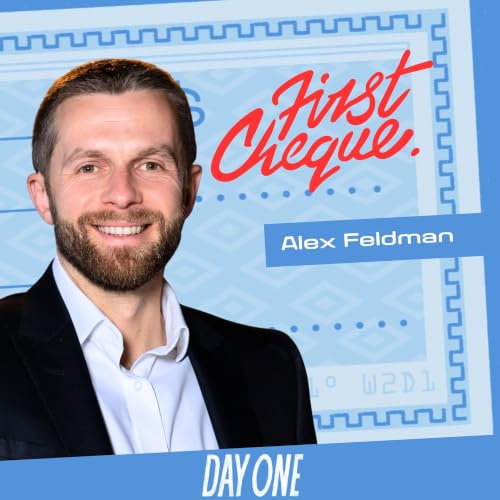
  • How to Think About M&A as a Startup with Alex Feldman
    2026/06/21
    Episode SummaryAlex Feldman is the founder of Tiger and Bear, an M&A advisory focused on tech and services businesses. Before that, he was Chief Strategy Officer and General Counsel at Amaysim, where he ran three acquisitions simultaneously during full lockdown in 2020 and 2021 to build a dominant player that was ultimately sold.In this episode, Cheryl and Maxine unpack how to buy and sell businesses when the world is doing crazy stuff around you. Alex breaks down why today's volatility isn't actually that different from the GFC or COVID, why timing is the single most important variable in any deal, and what the SaaSpocalypse means for tech companies thinking about selling when their natural buyers are struggling.You'll also hear why more than half of Tiger and Bear's recent deals involved European and Asian capital rather than American, why profitable venture-backed businesses are suddenly more attractive to strategics, and what happens when the IPO market disappears as an exit path. For founders who can't raise their next round, he offers blunt advice: never waste a crisis, cut costs to buy yourself runway, and remember that raising and selling are the same activity, you're just selling different amounts of shares.Alex closes with his Big Cojones moment: putting every spare $500 into the stock market during the GFC with no idea where the bottom was, buying Macquarie Bank shares at $30 and riding them back up.Time Stamps00:00 - Intro02:25 – Alex's first investment: going all in on the BHP Rio Tinto merger that never happened06:19 – How to do M&A in volatile markets and why this cycle isn't that different11:50 – Timing for buyers vs sellers: why uncertainty kills deals, not direction13:08 – The SaaSpocalypse: what happens when your natural buyer is struggling18:10 – Why European and Asian capital is replacing American buyers in Australia21:08 – What M&A looks like in the Australian tech ecosystem right now24:01 – When is a company big enough to buy and too small to be acquired28:30 – Mergers of equals: why similar-sized companies come together in downturns38:39 – How to become a disciplined buyer: capital, internal muscle, and integration43:08 – Why the hardest part of any deal is admitting the other side does it better47:54 – What to do when you can't raise: never waste a crisis55:01 – Big Cojones moment: investing every spare dollar during the GFCSponsors:First Cheque is supported by our wonderful sponsors:Deel: Founders scale faster on Deel. Set up payroll for any country in minutes, hire anyone anywhere, and get visas handled fast, so you stay focused on scaling. Deel takes care of onboarding, HR, IT, EOR, benefits, and compliance, so your team can grow without borders.It’s why more than 40,000 fast-growing companies trust Deel to move fast.Visit https://www.deel.com/dayone___Pear Tree: Pear Tree helps Australian and New Zealand founders build high-performing offshore teams without the agency middleman.As local hiring becomes more expensive and harder to fill, many operators are turning to offshore talent across engineering, development, marketing, accounting and operations at a fraction of local salary costs.The offshore horror stories you hear usually aren’t a talent problem. They’re the result of outsourcing agencies that overcharge clients while underpaying staff. Pear Tree takes a different approach through a direct, transparent model where your team is paid fairly, fully compliant, and focused entirely on your business.As part of the Day One community, you’ll receive a free team audit to identify where offshore talent could move the needle in your business, plus 20% off your first hire. Learn more at http://dayone.fm/peartreeFirst Cheque is part of Day One.Day One helps founders and startup operators make better business decisions more often. To learn more, join our newsletter to be notified of new First Cheque episodes and upcoming shows.Brought to you by Pear Tree. Pear Tree helps Australian and New Zealand founders build high-performing offshore teams without the agency middleman. As local hiring becomes more expensive and harder to fill, many operators are turning to offshore talent across engineering, development, marketing, accounting and operations at a fraction of local salary costs. The offshore horror stories you hear usually aren't a talent problem — they're the result of outsourcing agencies that overcharge clients while underpaying staff. Pear Tree takes a different approach: a direct, transparent model where your team is paid fairly, fully compliant, and focused entirely on your business. As part of the Day One community, you'll receive a free team audit to identify where offshore talent could move the needle in your business, plus 20% off your first hire. Learn more at https://dayone.fm/peartreeBrought to you by Deel. Founders scale faster on Deel — set up payroll in any country in minutes, hire anyone anywhere, get visas handled fast, and ...
    続きを読む 一部表示
    1 時間 1 分
  • How to Think About Equity as a Startup Employee
    2026/06/07
    Episode SummaryAlexey Mitko is a partner at Co-Ventures, the architect behind Eucalyptus' ESOP plan, and widely known in the Australian ecosystem as "ESOP Guy." He was around employee number twenty at Canva and one of the early employees at Koala, giving him a front-row seat to three of Australia's biggest consumer tech outcomes.In this episode, Cheryl and Maxine unpack how Alexey designed the ESOP plan that led to roughly $300 million distributed back to Eucalyptus employees, the largest ESOP payout in Australian history. He walks through the three questions every founder faces but rarely verbalises: who gets equity, how much, and why you have an ESOP plan in the first place.You'll also hear how he modelled allocation across multiple rounds and hundreds of hires to avoid giving too much away early, why he personally walked the first two hundred employees through their equity, and why Australia's lack of a secondary market keeps ESOP feeling like monopoly money. Alexey closes with his Big Cojones moment: proposing to his wife, the most nervous he's ever been despite having climbed Europe's highest mountain.Time Stamps00:00 – Intro03:01 – The three ESOP questions every founder needs to answer05:58 – How to model equity allocation across rounds and hundreds of hires09:10 – Using ESOP as your most powerful recruitment and retention tool12:02 – How walking 200 employees through their equity built culture and trust15:02 – Open financials, shrinking cash balances, and what went wrong along the way17:55 – Why Australia's ESOP ecosystem is still behind Silicon Valley26:48 – Teaching employees to understand equity: the Google Sheet that started at zero29:20 – High salary vs heavy equity: giving employees a real choice32:16 – Common ESOP mistakes founders make and how to avoid them35:03 – Why Australians treat startup equity like monopoly money39:11 – The secondary market problem: why liquidity changes everything for ESOP43:25 – Why your startup career is a portfolio of equity bets46:36 – What angel investors can do to help portfolio companies build better ESOP plansSponsors:First Cheque is supported by our wonderful sponsors:Deel: Founders scale faster on Deel. Set up payroll for any country in minutes, hire anyone anywhere, and get visas handled fast, so you stay focused on scaling. Deel takes care of onboarding, HR, IT, EOR, benefits, and compliance, so your team can grow without borders.It’s why more than 40,000 fast-growing companies trust Deel to move fast.Visit https://www.deel.com/dayone___Pear Tree: Pear Tree helps Australian and New Zealand founders build high-performing offshore teams without the agency middleman.As local hiring becomes more expensive and harder to fill, many operators are turning to offshore talent across engineering, development, marketing, accounting and operations at a fraction of local salary costs.The offshore horror stories you hear usually aren’t a talent problem. They’re the result of outsourcing agencies that overcharge clients while underpaying staff. Pear Tree takes a different approach through a direct, transparent model where your team is paid fairly, fully compliant, and focused entirely on your business.As part of the Day One community, you’ll receive a free team audit to identify where offshore talent could move the needle in your business, plus 20% off your first hire. Learn more at http://dayone.fm/peartreeFirst Cheque is part of Day One.Day One helps founders and startup operators make better business decisions more often. To learn more, join our newsletter to be notified of new First Cheque episodes and upcoming shows.Mentioned in this episode:Deel x PX_Script 1Deel x PX_Script 2Pear TreeIf you're a founder or operator trying to scale, here's the reality — Australian hiring is getting harder, salaries are at record highs, and the talent you need is increasingly out of reach. The best operators are quietly building offshore teams of engineers, marketers, accountants and analysts at a fraction of the cost. Pear Tree does it differently. We headhunt highly skilled talent from the Philippines and South Africa with full transparency on where every dollar goes, so your team is paid fairly and fully focused on your business. As a Day One listener, you’ll receive a free team audit to identify where offshore talent could move the needle in your business, plus 20% off your first hire.This podcast uses the following third-party services for analysis: Podtrac - https://analytics.podtrac.com/privacy-policy-gdrpSpotify Ad Analytics - https://www.spotify.com/us/legal/ad-analytics-privacy-policy/
    続きを読む 一部表示
    50 分
  • How to Pick Pre-Seed Winners Before There's Any Data
    2026/05/17
    Episode Summary

    In this 101 episode, Cheryl and Maxine go deep on the fundamentals of pre-seed investing, from how the stage came to exist to why the perceived risk gap between pre-seed and seed is much smaller than most investors think.

    They break down the history of how venture stages evolved from single rounds to alphabetized series, how seed investors eventually got pushed up the stack, and why pre-seed emerged around 2017 to 2019 as a distinct category. They unpack why PitchBook's definition of pre-seed as "whatever the investor calls it" muddies the water, how seed preempts from larger funds are inflating average valuations, and why thinking in risk stages rather than round labels is a better framework for evaluating early companies.

    You'll also hear why graduation rates from pre-seed to seed don't support the idea that pre-seed is two to three times riskier, why the Australian ecosystem is sitting on a talent surplus with a capital gap at pre-seed, and why this stage is particularly well suited for angels building diversified portfolios of 20 to 40 companies. Cheryl shares her framework for evaluating pre-seed opportunities through the lens of problem pain, frequency, and market size, and Maxine walks through how to think about return profiles, dilution, and valuation at a stage where there are no outputs to measure.

    Time Stamps

    00:00 Intro

    01:56 – A brief history of venture stages: how pre-seed became a thing

    07:14 – Why round labels are broken and risk stages are a better framework

    09:23 – Seed preempts: how big funds are blurring the line between pre-seed and seed

    11:48 – Is pre-seed actually riskier than seed? The case that it's not

    16:41 – Graduation rates: what the data says about pre-seed to seed conversion

    22:59 – Valuation dynamics: what pre-seed rounds look like in Australia vs the US

    28:36 – Why Australian founders are leaving for the US at pre-seed and what that means

    31:29 – How to evaluate pre-seed companies: inputs over outputs

    35:05 – Cheryl's pain framework: frequency, intensity, and willingness to pay

    38:28 – Why pre-seed is the best stage for diversifying who gets funded

    43:44 – The AI revenue problem: why getting in early matters more than ever

    Sponsors:First Cheque is supported by our wonderful sponsors:

    Deel: Founders scale faster on Deel. Set up payroll for any country in minutes, hire anyone anywhere, and get visas handled fast, so you stay focused on scaling. Deel takes care of onboarding, HR, IT, EOR, benefits, and compliance, so your team can grow without borders.

    It’s why more than 40,000 fast-growing companies trust Deel to move fast.

    Visit https://www.deel.com/dayone

    ___

    Pear Tree: Pear Tree helps Australian and New Zealand founders build high-performing offshore teams without the agency middleman.

    As local hiring becomes more expensive and harder to fill, many operators are turning to offshore talent across engineering, development, marketing, accounting and operations at a fraction of local salary costs.

    The offshore horror stories you hear usually aren’t a talent problem. They’re the result of outsourcing agencies that overcharge clients while underpaying staff. Pear Tree takes a different approach through a direct, transparent model where your team is paid fairly, fully compliant, and focused entirely on your business.

    As part of the Day One community, you’ll receive a free team audit to identify where offshore talent could move the needle in your business, plus 20% off your first hire. Learn more at http://dayone.fm/peartree

    First Cheque is part of Day One.Day One helps founders and startup operators make better business decisions more often.

    To learn more, join our newsletter to be notified of new First Cheque episodes and upcoming shows.

    Mentioned in this episode:

    Deel x PX_Script 1

    Deel x PX_Script 2


    This podcast uses the following third-party services for analysis:

    Podtrac - https://analytics.podtrac.com/privacy-policy-gdrp
    Spotify Ad Analytics - https://www.spotify.com/us/legal/ad-analytics-privacy-policy/
    続きを読む 一部表示
    48 分
  • Closing the Gender Investment Gap with Data with Noga Edelstein
    2026/05/04
    Episode Summary

    Noga Edelstein is the lead of the Equity Clear initiative, a not-for-profit effort to get Australian investors tracking pipeline diversity data with a common standard. She's also a former General Counsel at Yahoo, a multi-time founder, and has had her fingerprints across the Australian startup ecosystem for over a decade.

    In this episode, Cheryl and Maxine unpack why pre-seed funding to women is at its lowest level ever and how Equity Clear is building the data infrastructure to finally see where diverse founders are falling out of the pipeline. Noga shares what the UK's five-year head start has revealed, including that angel groups with at least 15% women invest in 10X the number of women-led companies, and why the mere act of tracking your own pipeline drives better outcomes.

    You'll also hear how a broken website form accidentally proved that women disproportionately use cold inbound to reach investors, why male founders and LPs should be asking their investors about diversity tracking, and what sport can teach us about leveling the playing field through systemic tweaks like funded childcare for founders. Noga closes with her Big Cojones moment: quitting her General Counsel role at Yahoo with a newborn to go all in on a startup.

    Time Stamps

    00:00 Intro

    02:27 – Noga's first investment: dollar-mite savings accounts in primary school

    10:02 – What is Equity Clear and why pipeline data is the missing piece

    14:40 – Why closing the gender gap matters now: productivity, economics, and AI bias

    19:27 – Pre-seed funding to women is at its lowest ever despite lower barriers to building

    24:44 – Why collecting diversity data feels hard but isn't

    28:32 – Lessons from the UK: what five years of tracking has revealed

    32:02 – Maxine's accidental experiment: when a broken form hid all the women founders

    37:39 – How male founders and LPs can push for change by asking simple questions

    48:16 – Why funds are missing a trick on sourcing diverse founders

    51:32 – Breaking the archetype: leveling the playing field with systemic tweaks

    57:15 – Big Cojones moment: quitting law with a newborn to start a company

    First Cheque is part of Day One.Day One helps founders and startup operators make better business decisions more often.

    To learn more, join our newsletter to be notified of new First Cheque episodes and upcoming shows.

    Mentioned in this episode:

    Deel x PX_Script 2

    Deel x PX_Script 1


    This podcast uses the following third-party services for analysis:

    Podtrac - https://analytics.podtrac.com/privacy-policy-gdrp
    Spotify Ad Analytics - https://www.spotify.com/us/legal/ad-analytics-privacy-policy/
    続きを読む 一部表示
    1 時間 1 分
  • How to Build a Global Pre-Seed Fund from Scratch
    2026/04/19

    Win $2,000 in credits with the Day One Network — take our 2-minute audience survey before 30 June: dayone.fm/survey

    Episode Summary

    Elizabeth Yin is the co-founder and General Partner of Hustle Fund, a pre-seed venture fund now on its fourth fund that backs companies globally. Before Hustle Fund, she was a partner at 500 Global, founded adtech company LaunchBit, and was an early employee at Google.

    In this episode, Cheryl and Maxine unpack how Hustle Fund sources deals across continents, why Elizabeth avoids noisy competitive markets in favor of "small waves" that will swell over five years, and why valuation discipline matters more than founder pedigree when product-market fit risk is the same at every stage.

    You'll also hear how Hustle Fund runs a 30-person team with only four on investments, why Fund 2 was the hardest fund to raise, how the AI wave is creating companies that hit $10M ARR and lose it overnight, and why international valuations still offer significant arbitrage. Elizabeth closes with her Big Cojones moment: being called a "meek Asian woman" by an angel investor while pitching LaunchBit, and how building a platform changed the power dynamic entirely.

    Time Stamps

    00:00 – Intro

    01:54 - Elizabeth's first investment: three shares of Coca-Cola at age 10

    06:50 – What Hustle Fund is investing in now and why vertical SaaS still matters in the AI era

    09:31 – How Hustle Fund sources deals globally through co-investors and content

    15:09 – Elizabeth's two-part framework: founder quality vs. idea quality

    18:10 – Why competitive markets are a double whammy for small-check investors

    22:57 – The surfing analogy: spotting small waves that grow big in five years

    25:06 – Biggest investing lessons from Fund 1 to Fund 4: valuation and follow-on discipline

    27:58 – Camp Hustle, content marketing, and running VC like a lead generation business

    30:09 – Does valuation really matter at pre-seed? When it does and when it doesn't

    37:39 – Growing AUM: why Fund 2 was the hardest and the "event ticket sales" fundraising pattern

    44:15 – Which fund graduation was hardest and the DPI reality at pre-seed

    46:21 – Big Cojones moment: confronting bias as a female founder and how platform changes power dynamics

    Mentioned in this episode:

    Deel x PX_Script 1


    This podcast uses the following third-party services for analysis:

    Podtrac - https://analytics.podtrac.com/privacy-policy-gdrp
    Spotify Ad Analytics - https://www.spotify.com/us/legal/ad-analytics-privacy-policy/
    続きを読む 一部表示
    51 分