エピソード

  • Why AI Breaks Without Real-World Data
    2026/03/03

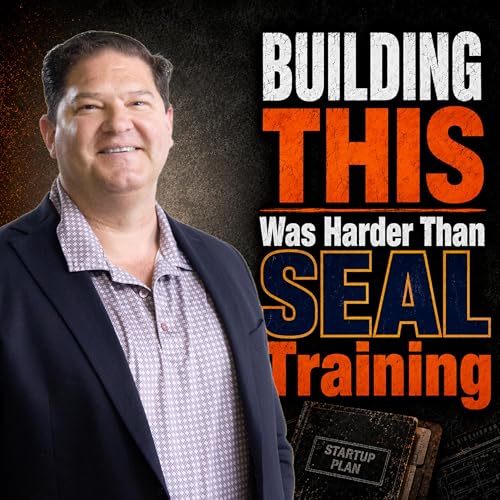
    Most AI conversations skip the hardest part: the real world.

    Chris Machut has spent several decades building technology where mistakes are expensive, visibility is limited, and nothing works the way the software world assumes it does. From safety cameras on cranes and tugboats to founding SiteTrax, his work lives at the intersection of physical operations, logistics, and data.

    00:00 Intro and catching up
    02:31 How Chris and Zack first met
    04:41 Selling his first company
    06:41 Operator vs fundraiser reality
    08:56 Angel investing and pitching challenges
    12:11 Start Norfolk and early startup days
    15:46 Life inside Hatch and building HoistCam
    18:56 Tugboats, cranes, and blind spots
    22:00 Technical founders and pitching lessons
    24:21 Valuation mistakes and investor education
    27:31 Hatch closing and ecosystem reflection
    31:16 Sales fear and picking up the phone
    36:41 Still showing up and giving back
    39:31 What SiteTrax is today
    43:56 Grants, computer vision, and early AI
    47:31 Pandemic impact and SiteTrax pivot
    50:21 Why data matters more than AI
    52:16 Humans in the loop
    54:26 The future of AI and logistics
    57:41 OpenClaw and agentic AI experiments
    1:01:11 Trust, cost controls, and safeguards
    1:04:41 Final thoughts on builders and adaptation

    In this episode of The Fervent Four Show, Chris breaks down why AI fails without clean, real-world data, how blind spots in industrial and supply chain environments create risk and inefficiency, and what it actually takes to turn unstructured environments into usable intelligence. He also shares hard-earned lessons from bootstrapping companies, choosing operations over fundraising, and building products that integrate into existing systems instead of fighting them.

    This conversation is for founders, operators, and anyone tired of AI hype that ignores how work actually gets done.

    Learn more about SiteTrax: https://www.sitetrax.io

    Produced by Innovate Hampton Roads: https://www.innovate757.org

    続きを読む 一部表示
    1 時間 12 分
  • What Grit Looks Like When a Business Collapses
    2026/02/24

    What happens when something you spent more than a decade building disappears almost overnight?

    Angela M. Keaveny shares the unfiltered story behind ROWDYDOW bbq, from rapid growth and national contracts to a supply chain collapse that nearly ended everything. This is a conversation about grit, resilience, leadership, and why some founders keep going when others walk away.

    This is not a food story.
    It's a perseverance story.

    00:00 Eleven years to build, five minutes to lose it
    03:40 Turning a family recipe into a real business
    08:15 Scaling fast and landing national contracts
    14:10 The supply chain warning signs most founders miss
    22:05 The moment everything started to fall apart
    31:50 Losing Walmart, Sodexo, and momentum
    41:30 How close she came to walking away
    49:20 Why grit matters more than strategy
    56:40 Rebuilding, mentoring, and what comes next

    About The Fervent Four Show
    The Fervent Four Show is a weekly podcast hosted by Tim Ryan and Zack Miller, featuring candid conversations with entrepreneurs, innovators, and leaders shaping Hampton Roads and beyond. Each episode focuses on real stories, hard lessons, and what it actually takes to build something that lasts.
    Learn more at https://www.innovate757.org/ferventfour/

    Innovate Hampton Roads exists to tell the real stories of entrepreneurship happening across our region and beyond. We highlight founders, leaders, and builders who are shaping the future through action, not hype.

    If you care about entrepreneurship, leadership, and building something that lasts, subscribe and explore more at https://www.innovate757.org

    続きを読む 一部表示
    不明
  • Stop Caring What People Think or You'll Never Survive Being Seen
    2026/02/17

    Public exposure sounds exciting until you live inside it.

    Years of live television forced Kristen Crowley into visibility before she was ready, stripping away approval, confidence, and privacy. What followed wasn't polish. It was survival. This conversation explores what public pressure does to identity, why most people break under scrutiny, and how repeated exposure reshapes who you become.

    If you're building something publicly, whether in entrepreneurship, leadership, or creative work, this episode confronts the psychological cost no one prepares you for. Halfway through, Crowley explains the exact moment she stopped caring what people thought, and why everything changed after that.

    00:00 – Pressure is not a metaphor
    03:12 – Thrown into live TV with no training
    08:41 – Public criticism and psychological cost
    14:27 – When confidence stopped mattering
    20:05 – Identity versus approval
    26:18 – From television to entrepreneurship
    32:44 – "We have fun and we get shit done"
    36:10 – "Fuck your feelings" explained
    41:52 – Visibility, ego, and survival
    48:30 – Why most people break under exposure
    55:40 – What survives when approval is gone

    Learn more about Kristen's work at ReFRAME Your Brand:
    https://reframeyourbrand.com/

    続きを読む 一部表示
    1 時間 3 分
  • Why Ignoring AI Is Riskier Than Adopting It, A CEO Explains
    2026/02/10

    Pratik Kothari, CEO of TechArk, shares how he built a 120+ person global technology company spanning the US and India, and why embracing AI early has become a leadership imperative, not a risk.

    From launching TechArk while still employed full-time, to building a 24-hour global delivery model, to leading AI adoption internally before selling it externally, this conversation dives deep into modern leadership, global communication, and navigating rapid technological disruption.

    Topics include building trust across cultures, why waiting on AI is more dangerous than testing it, how leaders earn buy-in through execution, and why small community-driven events often matter more than massive conferences.

    This is a candid look at what it actually takes to build a resilient, future-ready company.

    00:00 Why leaders fear AI and how teams really respond
    02:03 The origin story of TechArk and its early experiments
    03:35 Growing to 120+ employees across the US and India
    04:42 Building a true 24-hour global operations model
    06:33 Why offshore tech projects fail and how to fix them
    09:25 How Pratik ended up in Norfolk and Hampton Roads
    12:48 The power of authentic startup communities
    18:42 How great leaders earn buy-in through listening
    22:48 TechArk's evolution from software to digital growth
    26:53 Why networking works better when money isn't the goal
    34:14 The AI challenge that changed TechArk internally
    38:38 Global attitudes toward AI, US vs India vs China
    44:07 How CEOs should evaluate AI risk and adoption
    49:10 Firing bullets before cannonballs, a growth strategy
    56:06 Advice for entrepreneurs building long-term relevance
    59:19 A local food recommendation that defines Hampton Roads

    1. Full conversation with Pratik Kothari on leadership, AI adoption, and organizational alignment, Fervent Four Show

    2. Learn more about TechArk and its AI-forward approach: https://www.techark.com

    3. AI Collective Hampton Roads, a community-led initiative focused on the human side of artificial intelligence and responsible AI education: https://www.theaicollective.ai/hampton-roads

    Want more stories like this on innovation, leadership, startups, and what's being built across Hampton Roads?

    👉 Subscribe to This Week in 757 — a curated weekly snapshot of the region's most important business, tech, and startup news.
    https://www.innovate757.org/newsletter

    続きを読む 一部表示
    1 時間 2 分
  • AI Is Moving Faster Than Anyone Is Ready For (Jobs, Robots, and What Comes Next)
    2026/02/03

    Artificial intelligence is advancing faster than most people are prepared for. Jobs are already being eliminated, AI agents are operating with real-world consequences, and robots are moving from novelty to inevitability.

    This conversation breaks down what's actually happening beneath the surface of the AI boom, why "today is the worst AI will ever be," and how economic disruption from AI is unfolding right now, not years from now. It explores job displacement that is already underway, the rise of agentic AI, how businesses are misusing tools without guardrails, and why safety and control are becoming urgent concerns.

    Rather than focusing on hype or tools of the week, the discussion stays grounded in how AI is being adopted, misunderstood, and accelerated in the real world, and what individuals and organizations need to understand before assumptions fall behind reality.

    00:00 AI economic disruption and what is coming
    02:10 Today is the worst AI will ever be
    06:05 Agentic AI and bots acting without guardrails
    11:05 AI job displacement is already happening
    13:27 Why junior roles are disappearing first
    16:10 Robots and the shift in physical labor
    25:10 Why AI needs a human layer and community
    35:20 A simple prompting framework anyone can use
    39:40 How to choose AI tools without shiny object syndrome
    51:25 AI safety AGI and the lack of an off switch

    About AI Collective Hampton Roads
    AI Collective Hampton Roads is building a practical, people-first AI ecosystem across the region, focused on education, responsible adoption, and real-world use cases for businesses, students, and organizations.
    Learn more: https://www.meetup.com/aicollectivehr/

    Follow AI Collective Hampton Roads: https://www.linkedin.com/company/ai-collective-hampton-roads/

    About Innovate 757
    Innovate 757 documents and shares what's being built across Hampton Roads, highlighting founders, operators, and the ideas shaping the region's innovation economy.
    Explore more stories: https://www.innovate757.org

    Follow Innovate 757: https://www.linkedin.com/company/innovate757/

    Stay in the loop: This Week in 757
    Get a curated snapshot of startup news, business stories, opportunities, and events across Hampton Roads delivered straight to your inbox.
    Subscribe to this week in 757: https://www.innovate757.org/newsletter

    続きを読む 一部表示
    1 時間 8 分
  • Why Smart Founders Make Bad Decisions Under Pressure
    2026/01/27

    Most founders don't make bad decisions because they lack discipline or intelligence. They make them under pressure, with reduced cognitive bandwidth they don't recognize.

    In this episode of The Fervent Four Show, Tracy Lamar-Ray breaks down how stress, threat response, and habit formation quietly shape founder decision-making. This is not a conversation about motivation or hustle. It's a practical look at how the brain actually works under pressure, and why founders often misread what's happening when execution stalls, clarity fades, or burnout creeps in.

    We explore why stress shrinks thinking, how habits form and lock in under pressure, why businesses can't outgrow the founder's internal capacity, and what it really takes to create space for better decisions. If you're building a company and feel like everything is harder than it should be, this episode explains why.

    00:00 – Why founders struggle to think clearly under pressure
    03:45 – Cognitive bandwidth explained and why stress changes decisions
    07:30 – Survival mode, threat response, and shrinking judgment
    12:10 – Why businesses can't outgrow the founder's willingness to grow
    16:55 – Self-awareness vs. self-criticism in founder development
    21:40 – Strengths, habits, and how behavior actually changes
    27:15 – Why willpower fails and repetition wins
    33:30 – Burnout as an operational risk, not a badge of honor
    39:10 – Why founders wait too long to ask for help
    45:20 – Creating space for better decisions before desperation
    50:45 – Closing thoughts on capacity, growth, and leadership

    Learn more about Glom: https://www.glominitiatives.com/

    続きを読む 一部表示
    1 時間 6 分
  • Why Most Founders Never Execute — And How to Fix It
    2026/01/20

    Most founders don't fail because their ideas are bad.
    They fail because execution breaks down.

    In this episode, Luke Scrivanich, cofounder of Logentiq, breaks down why founders stall, how poor execution kills momentum, and what actually fixes it. The conversation spans stoic philosophy, startup operations, AI agents, and the systems founders need to turn ideas into real progress.

    Luke explains how Logentiq and its platform, Clairvoya, help founders operationalize goals, prioritize work, and eliminate the friction that causes startups to spin their wheels. From college entrepreneurship and student debt to sprint-based execution and AI-powered workflows, this episode focuses on what actually moves companies forward.

    This episode covers:
    • Why most founders struggle with execution, not ideas
    • Stoicism as a framework for leadership and resilience
    • Personality types and startup team dynamics
    • The real impact of college entrepreneurship programs
    • Why student debt is crushing early-stage builders
    • What AI agents actually are (without the hype)
    • How Logentiq removes the need for prompt engineering
    • Sprint-based execution, accountability, and momentum
    • Navigating cofounder role changes without stalling growth
    • Why the future of work is becoming more entrepreneurial

    If you're building a startup, leading a team, or stuck between ideas and action, this episode explains how to fix the execution gap.

    00:00 Why Founders Struggle With Execution
    04:09 Stoicism and Turning Setbacks Into Leverage
    08:24 Personality Types and Startup Teams
    14:40 Motivation, Purpose, and Accountability
    21:35 Becoming an Entrepreneur
    27:00 Do Entrepreneurship Programs Actually Work?
    31:49 The Post-Grad Job Market Reality
    36:54 AI as the New Confidence Engine
    38:08 What Logentiq and Clairvoya Do
    41:07 Eliminating Prompt Engineering
    44:21 Sprint-Based Execution Systems
    47:49 Building in Public
    50:43 What an AI Agent Really Is
    53:00 Choosing the Right AI Model
    56:35 Cofounder Role Changes
    58:45 Where Logentiq Is Today

    https://www.logentiq.com/

    続きを読む 一部表示
    1 時間 5 分
  • Why Good Ideas Stall — and What Actually Moves Them Forward
    2026/01/13

    Most good ideas don't stall because they're bad — they stall when execution breaks down. In this episode, Chris Davidson, founder of Orca Strategies, shares how complex initiatives actually move forward, why business and government are more connected than most people realize, and what leaders must stop doing if they want real momentum. Drawing on experience across entrepreneurship, chambers of commerce, public policy, and community building, this conversation explores execution, leadership, and long-term impact.

    0:00 Early leadership lessons and public speaking roots
    3:59 Growing up on stage and learning how to lead
    9:33 Why ideas are cheap and execution is hard
    10:20 Removing perceived barriers to entry
    11:11 Why progress takes longer than people expect
    14:45 Entrepreneurship driven by necessity
    16:38 Builders vs credentials and what actually dazzles
    19:37 Bridging business and government
    20:07 Why public policy affects everyone
    24:56 Inside the chaos of the General Assembly
    25:36 Thousands of bills, compressed timelines, and hallway decisions
    29:53 Regional differences across Virginia
    34:53 Politics as performance vs reality
    35:50 Why "balance" is often BS
    37:07 Getting spread too thin and learning to let go
    39:09 Founding an AI startup and stepping back as a leader
    42:58 The power of reps and long-term consistency
    47:56 Building conduits between ecosystems
    49:01 Being an ambassador for Hampton Roads
    53:37 What leaders must stop doing to move big initiatives forward
    56:57 The future of Fort Monroe
    1:00:04 Identity, leadership, and loving people
    1:01:20 The food debate and closing thoughts

    続きを読む 一部表示
    1 時間 4 分