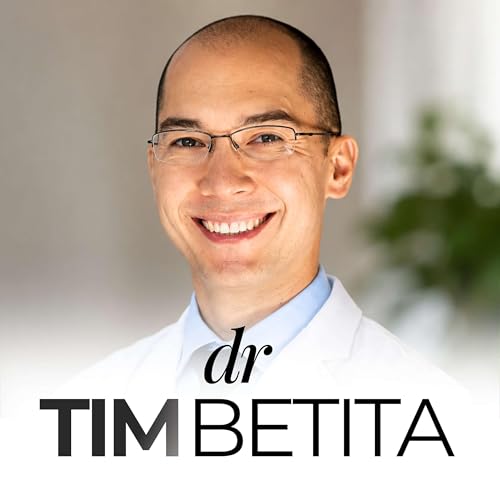
『Face Forward with Dr. Tim Betita: Answers about Oral and Facial Surgery』のカバーアート

Face Forward with Dr. Tim Betita: Answers about Oral and Facial Surgery

Face Forward with Dr. Tim Betita: Answers about Oral and Facial Surgery

著者: Tim
無料で聴く

Is your jaw pain something nobody can figure out? Have you been to oral surgeon after oral surgeon with nothing to show for it? Were you told you're not a candidate for implants and sent home with no real plan?

Dr. Tim Betita is a board-certified oral and maxillofacial surgeon and physician who has treated thousands of TMJ and full arch dental implant patients across Southern California. He trained as both a dentist and a medical doctor, has performed thousands of jaw and implant surgeries, and now trains other surgeons in the procedures he pioneered.


On this podcast he breaks down what most doctors get wrong about jaw pain and tooth loss and shows you exactly what a real path forward looks like.

If you've been dismissed, misdiagnosed, or told to just live with it, you're in the right place.

New episodes every week.

© 2026 Face Forward with Dr. Tim Betita: Answers about Oral and Facial Surgery
衛生・健康的な生活
エピソード
  • The Biggest Lie in Implant Surgery (And What To Do Instead)
    2026/06/11

    📌 Learn more: https://dentalimplantsgps.com/

    Almost everything you've read about full arch dental implants tells you what you're getting. Almost nothing tells you what you're losing. And what you're losing is something that cannot be fully restored once it's gone.

    You came in to fix your teeth. You may be leaving with less jaw than you arrived with. Most patients never know this is a decision at all.

    In this episode, I'm going to walk you through exactly what the standard surgical approach does to your bone, why surgeons do it that way even when they don't have to, and what a different philosophy produces for the patient over the long run.

    ⏱️ TIMESTAMPS
    0:00 – What full arch surgery takes from you that nobody talks about
    1:13 – Point 1: Bone loss on surgery day is permanent
    2:48 – How bone loss changes the shape of your face over time
    3:28 – Point 2: Why surgeons remove more bone than necessary
    4:50 – Your bone is being shaped around the prosthetic, not your anatomy
    6:01 – Point 3: How to evaluate whether your consultation is built around your bone
    7:23 – The thinner bridge approach that protects bone most patients never know to ask for
    9:21 – The correct planning sequence: anatomy first, prosthetic second
    10:03 – Point 5: What to do before your next consultation
    11:39 – How to find a surgeon trained in bone-protective techniques

    ❓ QUESTIONS ANSWERED
    Q: Do dental implants cause bone loss?
    A: Full arch surgery can cause significant bone loss if the standard approach is used. Surgeons often shave down the bone ridge to make room for the prosthetic bridge. That bone does not grow back.

    Q: What questions should I ask before full arch dental implant surgery?
    A: Ask your surgeon how much bone will be removed and why that amount is specific to your anatomy, not the prosthetic. Ask to see a 3D digital planning model showing how the bridge design was matched to your bone before options were presented to you.

    Q: What is a bone-protective approach to full arch dental implants?
    A: A bone-protective approach uses a thinner bridge design that requires less bone removal, with implants placed deeper in the jaw to preserve the ridge. It takes more planning time but protects the facial foundation that your appearance depends on for decades.

    📱 RESOURCES

    Youtube: https://www.youtube.com/channel/UCza50nmI16PXpDVHOmphB6w/
    Website: https://dentalimplantsgps.com/
    Practice: https://www.niguelcoastoralsurgery.com/
    Instagram: https://www.instagram.com/dentalimplantsgps/
    Facebook: https://www.facebook.com/dentalimplantsgps
    TikTok: https://www.tiktok.com/@dentalimplantsgps

    🔔 Subscribe to this podcast for weekly episodes on jaw pain, full arch dental implants, and what to actually expect when oral surgery is on the table. If you've been dismissed, misdiagnosed, or told to just live with it, you're in the right place.

    ABOUT DR. TIM BETITA: Dr. Tim Betita is a board-certified oral and maxillofacial surgeon, licensed dentist, and physician. He holds a DDS from the University of the Pacific and an MD from UT Health San Antonio. After treating thousands of full arch implant and TMJ patients across Southern California, he now trains other surgeons in the minimally invasive techniques he has pioneered. His approach: find strong bone, build around it, and protect what doesn't need to go.

    #OralSurgeon #DentalImplants #TMJ #FullArchImplants #JawPain

    続きを読む 一部表示
    13 分
  • You Don't Have TMJ. You Have One of These Two Things Instead
    2026/06/04

    📌 Learn more: https://dentalimplantsgps.com/

    Most TMJ diagnoses are technically wrong. Not because your pain isn't real, but because "TMJ" is just the name of the joint. It tells you where the pain is, not what is actually causing it. Two completely different problems live in that region with opposite treatments, and if no one has separated them for you, you are very likely being treated for the wrong one.

    In this episode, I'm going to walk you through a 6-question screening that tells you whether your jaw pain is even TMJ-related, the critical difference between a joint problem and a muscle problem, and exactly what to start doing tonight if your pain is on the muscle side.

    ⏱️ TIMESTAMPS
    0:00 Why most TMJ diagnoses miss the point entirely
    0:40 The 6-question TMJ screening test (99% sensitivity)
    1:46 How to score the questionnaire and what it means for you
    3:33 TMJ is a location, not a diagnosis: what that actually means for you
    4:47 The two problems hiding under one label
    5:48 Joint problems vs. muscle problems: what each one looks and feels like
    9:16 The specific questions that tell you which category you are in
    11:30 Why treatment sequence matters more than the treatment itself
    14:06 What to start doing tonight if your jaw pain is muscle-driven

    ❓ QUESTIONS ANSWERED
    Q: Is TMJ actually a diagnosis?
    A:TMJ stands for temporomandibular joint, which is simply the name of the joint. Saying you have TMJ is like saying you have a knee. It identifies a location, not a condition.

    Q; How do I know if my jaw pain is a joint problem or a muscle problem?
    A: Joint problems typically produce consistent clicking at the same point when you open or close, and sometimes a jaw that physically locks. Muscle problems tend to produce tender spots along the jaw and temple that recreate your exact pain when pressed. Locking is a strong indicator of a joint issue; trigger point tenderness points toward muscle.

    Q: Can muscle tension in the jaw cause the same symptoms as a damaged joint?
    A: Yes. The muscles surrounding the jaw can generate the same sensations of pain and tightness as a damaged joint. Up to 85% of people walking around with a TMJ diagnosis actually have a muscle or nerve problem, not a structural joint issue.

    📱 RESOURCES
    Website: https://dentalimplantsgps.com/
    Practice: https://www.niguelcoastoralsurgery.com/
    Instagram: https://www.instagram.com/dentalimplantsgps/
    Facebook: https://www.facebook.com/dentalimplantsgps
    TikTok: https://www.tiktok.com/@dentalimplantsgps

    Youtube: https://www.youtube.com/channel/UCza50nmI16PXpDVHOmphB6w/

    🔔 Subscribe to this podcast for weekly episodes on jaw pain, full arch dental implants, and what to actually expect when oral surgery is on the table. If you've been dismissed, misdiagnosed, or told to just live with it, you're in the right place.

    ABOUT DR. TIM BETITA: Dr. Tim Betita is a board-certified oral and maxillofacial surgeon, licensed dentist, and physician. He holds a DDS from the University of the Pacific and an MD from UT Health San Antonio. After treating thousands of full arch implant and TMJ patients across Southern California, he now trains other surgeons in the minimally invasive techniques he has pioneered. His approach: find strong bone, build around it, and protect what doesn't need to go.

    #OralSurgeon #DentalImplants #TMJ #FullArchImplants #JawPain

    続きを読む 一部表示
    17 分
  • I'm an Oral Surgeon. Surgery Is Almost Never My First Answer
    2026/06/04

    📌 Schedule a consultation: https://www.niguelcoastoralsurgery.com/contact-our-oral-surgeons-dana-point-ca/

    I am a dentist, a physician, and a surgeon. I trained for over a decade to operate on patients with the most severe cases. And I'm going to tell you right now that surgery is never where I start.

    If you've been told you need something removed, something replaced, or something reconstructed, and you're not sure whether that's actually true, this video is for you.

    After treating thousands of patients and training other surgeons in the procedures I use, I started seeing a pattern in the cases that went wrong. It almost never had to do with surgical skill. It had to do with doing too much.

    ⏱️ TIMESTAMPS
    0:49 You've been told you need something done: here's what to know first
    1:05 What I found: the outcomes that fell short weren't from poor surgery
    1:26 Point 1: A referral to a surgeon is not a prescription for surgery
    3:31 Point 2: Removing bone you didn't have to remove is a permanent
    6:24 Point 3: Three questions that tell you everything about your surgeon
    7:45 Point 4: The patients who get the best outcomes show up differently
    8:59 Point 5: What to do before you walk into a surgeon's office
    10:50 Second opinions, specialists, and what "not a candidate" usually means

    ❓ QUESTIONS ANSWERED

    Q: If my dentist referred me to an oral surgeon, does that mean I definitely need surgery?
    A: No. A surgical consultation is a diagnosis appointment, not a surgery approval. The first job is to figure out what is actually going on and what the right next step is for your specific case. Some patients who arrive ready for surgery have options they were never told about. Slow down, ask questions, and make sure the diagnosis is clear before agreeing to anything.

    Q: Why do some practices remove so much bone during full arch implant surgery?
    A: A thicker dental bridge requires more clearance, so bone gets removed to make space. Patients are told this is just part of the process. But bone is living tissue, it gives your face shape, supports how you chew, and determines what options you have years from now. When you take bone that didn't need to go, you cannot put it back. The surgical philosophy I use is to find the strong, healthy bone that still exists, plan precisely around it using 3D imaging, and take nothing that doesn't have to go.

    Q: What are the three questions I should ask any surgeon before agreeing to a procedure?
    A: First: what is the most conservative option here and what would have to be true for that to work for my situation? Second: how much bone gets removed in this procedure and does it have to be that much? Third: if I need something revisited in ten years, what am I working with? A surgeon who is thinking about you will answer all three directly. If the answers are vague or the questions get dismissed, that is useful information too.

    📱 RESOURCES
    Website: https://www.niguelcoastoralsurgery.com/ https://dentalimplantsgps.com/
    Instagram: https://www.instagram.com/dentalimplantsgps/
    Facebook: https://www.facebook.com/dentalimplantsgps
    TikTok: https://www.tiktok.com/@dentalimplantsgps

    Youtube: https://www.youtube.com/channel/UCza50nmI16PXpDVHOmphB6w/

    🔔 Subscribe to this podcast for weekly episodes on jaw pain, full arch dental implants, and what to actually expect when oral surgery is on the table. If you've been dismissed, misdiagnosed, or told to just live with it, you're in the right place.

    ABOUT DR. TIM BETITA: Dr. Tim Betita is a board-certified oral and maxillofacial surgeon, licensed dentist, and physician. He holds a DDS from the University of the Pacific and an MD from UT Health San Antonio. After treating thousands of full arch implant and TMJ patients across Southern California, he now trains other surgeons in the minimally invasive techniques he has pioneered. His approach: find strong bone, build around it, and protect what doesn't need to go.

    #OralSurgeon #DentalImplants #TMJ #FullArchImplants #JawPain

    続きを読む 一部表示
    11 分
adbl_web_anon_alc_button_suppression_t1
まだレビューはありません