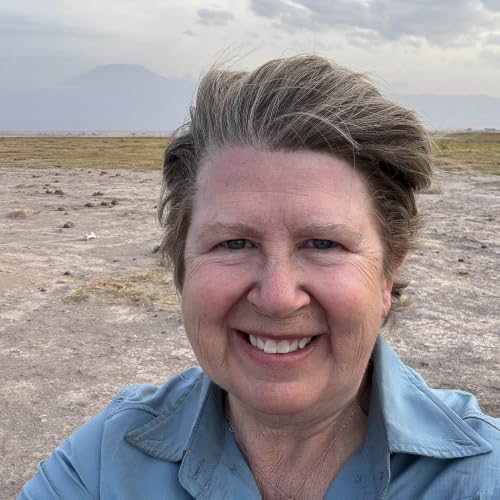
• Reinventing Yourself Through Photography | Jules Oldroyd
    2026/11/09

    For episode 499 of F-Stop Collaborate and Listen, host Matt Payne talks with Jules Oldroyd, a London-based wildlife photographer who pivoted from a 35-year television career—including Channel 4 and National Geographic—to full-time photography in her mid-50s. Jules Oldroyd describes how her first safari ignited her love for wildlife photography, the power of community, and how the challenges of COVID and personal loss led her to reinvent her professional life. She outlines lessons learned from transitioning to a print business, navigating website traffic and social media hurdles, and the tension between portfolio growth and marketing efforts.

    They dive into gender issues in wildlife photography, highlighting low competition entry rates for women and the impact of male-coded language and networking. Jules Oldroyd explains how her financial independence lets her focus on creative projects, conservation efforts, and specific wildlife, while also acknowledging the carbon footprint of travel. She also discusses her selective use of AI tools and the importance of authenticity over perfection. The episode wraps with practical encouragement for anyone contemplating a late-career passion pursuit and recommendations for other inspiring photographers. Resources and Links

    1. Get a copy of the Muench Workshops Destinations Magazine
    2. Jules Oldroyd Photography
    3. Support the show on Patreon
    4. The Tripod Podcast
    5. GDT European Wildlife Photographer of the Year
    6. Sandra Bartocha's Post About the GDT
    7. Tom Way
    8. Richard Peters
    9. Ellie Rothnie
    10. Federico Veronesi
    11. Natural Landscape Photography Awards

    00:00 GDT Contest Stats & Intro 01:02 Meet Jules Oldroyd 03:06 TV to Photography Pivot 08:16 Building Community 10:34 COVID’s Impact & Reinvention 14:17 Learning Print Sales 18:26 Social Media & Algorithms 22:16 Financial Stability & Creativity 28:19 Conservation and Travel 30:33 Gender Dynamics 41:31 Marketing, AI, and Authenticity 47:49 Advice for Third Acts 53:08 Guest Recommendations 56:02 Wrap Up

    続きを読む 一部表示
    57 分
  • How to Tell If a Photo Is AI Generated | Franz Xaver Bayerl
    2026/11/02

    For episode 498 of F-Stop Collaborate and Listen, host Matt Payne sits down with Franz Xaver Bayerl, founder of Lumethic, to dive deep into the question: How can you tell if a photograph is AI-generated? Drawing from his roots in software engineering and landscape photography, Bayerl lays out the personal and technical motivations behind Lumethic, a tool that links raw files to final images to verify authenticity.

    They explore why image verification is increasingly important, from journalism and politics to the world of photography competitions. The discussion covers how raw files act as photographic "alibis," how AI and Photoshop challenge traditional notions of proof, and why current contest rules often fail to keep pace. Bayerl shares how Lumethic provides tangible evidence, heatmaps for edits, and customizable vetting thresholds, while addressing the limits of forensics and the need for transparency in a computational age.

    Listeners will come away with a clearer sense of what's possible (and what isn't) in image verification, and how they can use tools like Lumethic to protect the integrity of their work. Resources and Links:

    1. Get a copy of the Muench Workshops Destinations Magazine
    2. Lumethic (photo verification platform)
    3. Content Authenticity Initiative
    4. C2PA (Coalition for Content Provenance and Authenticity)
    5. Forensically (online image forensics tools)
    6. Natural Landscape Photography Awards
    7. PetaPixel: An Award-Winning Owl 'Photo' Ruffled a Lot of Feathers
    8. PetaPixel: AI-Generated 'Photo' Disqualified From Hasselblad Masters 2026
    9. PetaPixel: Tokina Pulls Photo Contest Winner
    10. Support the show on Patreon

    Timestamps:

    00:00 AI & Authenticity Stakes 03:17 Lumethic Origin Story 07:12 Raw Files as Alibi 10:42 Automating Verification 14:38 Contest Rule Gaps 26:23 What Raw Files Prove 31:00 Sensor Physics & AI Limitations 44:07 Defining Authentic in a Computational World 52:13 Free Tools & Who They're For

    続きを読む 一部表示
    57 分
  • Panoramic Film Photography | John Shephard
    2026/10/26

    For episode 497 of F-Stop Collaborate and Listen, host Matt Payne welcomes panoramic film photographer John Shephard of Woodinville, Washington. Over a thirty-year journey, John Shephard has photographed the breadth of his home state using the Noblex swing lens and Hasselblad XPan II, predominantly with Velvia 50 film. He recounts his roots as a photographer and teacher, the influence of a place-based life and field companions outside photography, and formative years assisting Australian legend Ken Duncan.

    The conversation explores technical challenges and artistic rewards of panoramic film, comparing Noblex and XPan systems, composition strategies, and problems unique to swing-lens cameras. John Shephard shares insights on embracing unpredictability, learning from field failures, and evolving as a photographer through patience, persistence, and a willingness to experiment. Both John Shephard and Matt Payne discuss research methods—maps, satellite, and fieldwork—as well as the joy and importance of exploration.

    A highlight of the episode is John Shephard's new book "Washington Wide," featuring panoramic images and a foreword by Colville elder Randy Lewis. They discuss the value of indigenous perspectives and the significance of storytelling in both image and place.

    Links and Resources:

    1. Get a copy of the Muench Workshops Destinations Magazine
    2. John Shephard
    3. John's Book, Washington Wide Use code FSTOP for 10% off, free continental US shipping
    4. Ken Duncan
    5. Leo Meier
    6. Atlas Obscura
    7. Gaia GPS
    8. Google Earth
    9. Copernicus Satellite Imagery
    10. Support the show on Patreon
    11. Matt Payne Photography

    00:00 Show Intro 00:23 Meet John Shephard 01:45 Teaching & Place-rooted Photography 06:33 Falling for Panoramic Film 13:47 Noblex vs XPan Systems 22:14 Digital vs Film Panoramas 26:00 Experimentation & Change 35:39 Learning from Non-photographers 41:02 Patience & Letting Go in the Field 47:04 Research, Maps, and Google Earth 55:17 Iconic vs Unknown Subjects 1:04:20 "Washington Wide" Book Process 1:18:22 Bookmaking Reflections 1:21:32 Guest Recommendations 1:23:22 Wrap Up

    続きを読む 一部表示
    1 時間 24 分
  • What Scotland Teaches You About Photography | Adam Bulley
    2026/10/19

    For episode 496 of F-Stop Collaborate and Listen, host Matt Payne welcomes Scotland-based landscape photographer Adam Bulley for a conversation about embracing presence in the field, the power of local exploration, and how Scotland’s moody light influences creative process. Adam Bulley shares insights from a decade photographing Edinburgh and surrounding landscapes, stressing the value of knowing your local terrain intimately in all weather conditions and avoiding creative frustration by responding to what draws your attention rather than chasing preconceived ideas. The discussion covers transitioning from rigid visualization to improvisational shooting, using detail and storytelling to build a robust portfolio, and addressing common workshop challenges—such as overthinking and self-doubt—with mindset shifts and playful experimentation. Together, Matt Payne and Adam Bulley recount on-the-ground anecdotes, from amusing Star Wars cosplay photo sessions to unexpected inspiration along Scottish roadsides. They offer strategies for nurturing creativity, learning to see in challenging light, overcoming expectation-driven disappointment, growing through mistakes, and leading supportive workshops. The episode closes with guidance for enjoying the photographic journey, building confidence, and workshop recommendations for aspiring photographers. Links:

    1. Get a copy of the Muench Workshops Destinations Magazine
    2. Adam Bulley
    3. James McCormack
    4. Archie MacFarlane
    5. Somhairle MacDonald
    6. Matt Payne's Book, The Colorado Way
    7. Support the show on Patreon
    8. The Tripod Podcast
    9. Scotland Workshop

    00:00 Show Intro, Meet Adam Bulley 01:36 Edinburgh and Local Photography Philosophy 05:08 Intimacy with Place and Iconic Locations 11:31 Storytelling through Detail 13:31 Workshop Experiences and Learning to See 20:29 Creative Muscle and Constraints 35:13 Planning vs. Reacting in Fieldwork 45:53 Workshop Mindset and Growth 49:03 Learning Light and Woodland Photography 58:02 Building Fun and Community through Workshops 65:05 Guest Recommendations, Closing Remarks

    続きを読む 一部表示
    1 時間 10 分
  • How Art and Science Extend Human Perception | William Fox
    2026/10/12

    For episode 495 of F-Stop Collaborate and Listen, Matt Payne welcomes Bill Fox, poet, author of 16 nonfiction books, and founder of the Institute for Art and Environment at the Nevada Museum of Art. Bill Fox, whose wide-ranging work explores how humans transform space into place, shares decades of insight from documenting and collaborating with photographers, artists, and scientists in extreme environments like Antarctica, the Atacama Desert, and the Arctic.

    Fox describes the neurologically rich processes behind how we perceive new landscapes, and how our evolved cognitive patterns both serve and limit us. He introduces the concept of “cultural prosthesis”—tools, art, and narrative—as means humans use to adapt when faced with environments beyond our biology’s capacities. They discuss the impact of interdisciplinary curiosity, the value of collaborating with experts from outside photography, and how knowledge from climbing, surfing, or urban life reshapes the way we observe and photograph the world.

    Bill Fox also explores idea-driven photographers, innovative projects using natural materials, and photography as an agent of nature picturing itself. He offers reading, research, and collaborative strategies for photographers who want to deepen their creative process. Resources and Links:

    1. Get a copy of the Muench Workshops Destinations Magazine
    2. Bill Fox
    3. Center for Art + Environment, Nevada Museum of Art
    4. Marc Klett
    5. Radius Books
    6. Michael Light
    7. Tristan Duke
    8. Metabolic Studio
    9. Museum of Jurassic Technology
    10. Kim Stanley Robinson
    11. Kim Stanley Robinson's Ministry for the Future
    12. Kim Stanley Robinson's The High Sierra
    13. Victoria Sambunaris
    14. Rebecca Solnit's Wanderlust
    15. William Fox's The Void, The Grid, and the Sign
    16. William Fox's Aeriality
    17. Support the show on Patreon
    18. Matt Payne's Book, The Colorado Way

    00:10 Episode Intro 01:09 Meet Bill Fox 02:30 Early Encounters with Art 04:16 “Second View” Photography History 07:26 Space into Place 12:24 Building Photographic Knowledge 17:10 Value of Interdisciplinary Learning 25:00 Cultural Prosthesis Explained 43:04 Photography Documents Nature's Self-Awareness 50:46 Reinventing the Photographic Medium 58:44 Expanding Photographers’ Perspectives

    続きを読む 一部表示
    1 時間 13 分
  • How to See What Your Brain Is Hiding From You | Roxanne Bouché Overton
    2026/10/05

    For episode 494 of F-Stop Collaborate and Listen, host Matt Payne sits down with Roxanne Bouché Overton, a Pacific Northwest–based photographer known for her imaginative approach to creativity through intentional camera movement (ICM), multiple exposures, and unconventional ways of seeing. Overton reveals her origin story—starting with a film SLR and a curiosity about multiple exposures—before delving into the neuroscience of perception, how our brains filter visual information for survival, and why breaking from this default allows for greater artistic vision.

    Together, they unpack actionable strategies for cultivating creativity, such as seeking details rather than subjects, training your awareness for shifts in light and shadow, letting go of rigid photographic “rules,” and embracing unique viewpoints—even with simple gear or an iPhone. Overton shares philosophies like working in “liminal time” (always shooting toward the future) and reframing negative self-talk with positive, exploratory language. She highlights workshops, community, and varied education as keys to unlocking your own voice—not just copying others. The episode closes with Overton’s book and Substack newsletter recommendations, plus names four inspiring photographers for future interviews.

    Links and Resources:
    1. Get a copy of the Muench Workshops Destinations Magazine
    2. Roxanne Bouche Overton
    3. Support the show on Patreon
    4. Roxanne Bouche Overton's Book, Awaken Creativity
    5. Roxanne Bouche Overton's Creativity Newsletter (Substack)
    6. Bluristic (iPhone app for creative long exposures)
    7. Santa Fe Workshops
    8. Shelly Vandegrift
    9. Michael Clark
    10. Jennifer Spelman

    00:00 Podcast Introduction 01:09 Meet Roxanne Bouché Overton 04:11 How Perception Shapes Photography 06:54 Peripheral Vision & ICM 12:31 Community and Creative Kinship 17:43 Technical and Creative Aspects of ICM 22:27 Mobile and iPhone Creative Tools 25:00 Learning to See Creatively 33:02 The Infinite Journey of Creative Work 36:07 Cameras as Recording Devices 41:45 Gear Minimalism for Creative Freedom 43:13 Mindset Shifts for Awareness 52:19 Vocabulary & Positive Framing 65:10 Overton’s Book & Substack 74:33 Guest Recommendations 80:48 Wrap Up

    続きを読む 一部表示
    1 時間 23 分
  • What Makes an Award Winning Wildlife Photograph | David Lloyd
    2026/09/28

    For episode 493 of F-Stop Collaborate and Listen, Host Matt Payne sits down with David Lloyd, a New Zealand-born wildlife photographer acclaimed for his black and white minimalism and unwavering commitment to ethical, unmanipulated imagery. David Lloyd shares his journey from London’s Richmond Park to world-renowned wildlife destinations, unpacking how years of experience and a background in design shaped his artistic vision (00:10). The episode runs deep into practical and philosophical territory: minimalism in composition, the benefits of returning to the same locations, and developing vision through persistence, not just natural talent (06:03; 11:19).

    The conversation tackles the ethical line in post-processing, what honesty in wildlife photography really means, and why digital manipulation and AI-generated images risk undermining public trust (23:28; 33:12). David Lloyd reflects on the pressures of wildlife competitions and what separates exceptional images from the technically perfect but forgettable (37:57), as well as the growing problem of safari overcrowding and impacts on animal behavior (42:52).

    Both photographers call for greater transparency and humility in the field, online, and within themselves. They close with insights into what guests underestimate about wildlife safaris and the unpredictable delight of the “one-in-a-decade” photograph (50:46). Don't miss our bonus episode on Patreon where David discusses some absolutely awesome wildlife encounters! Links and Resources:

    1. Get a copy of the Muench Workshops Destinations Magazine
    2. David Lloyd Wildlife Photography
    3. Support the show on Patreon
    4. Wildlife Photographer of the Year Awards
    5. Greg du Toit
    6. Richmond Park (London)
    7. Masai Mara National Reserve

    00:00 Intro & Meet David Lloyd 06:03 The Giraffe Cover Shot & Minimalism 11:19 Developing Vision and Voice 23:28 Ethics of Editing & Manipulation 33:12 AI, Authenticity, and Competition 37:57 Award-Winning Wildlife Images 42:52 Safari Crowding & Animal Welfare 50:46 Managing Expectations on Safari

    続きを読む 一部表示
    58 分
  • Balancing Commercial Photography and Fine Art | Scott McDermott
    2026/09/21

    For episode 492 of F-Stop Collaborate and Listen, Host Matt Payne welcomes photographer/director Scott McDermott, a New York City–based professional with 25+ years spanning sports, fitness, celebrity portraiture, commercial campaigns, directing, and fine art. McDermott describes learning through five years assisting across genres, then building a career by pivoting as opportunities changed, including ongoing cityscape images from his Queens window. He contrasts mindsets between commercial photography (client-driven deliverables), directing (big-picture storytelling for the edit), and fine art (freedom without external endpoints). McDermott explains his Backline fine art series, inspired backstage at a Red Hot Chili Peppers show, photographing road-worn instruments and gear as “modern relics,” plus a cassette-tape print project marketed via separate branding, galleries, art fairs, and Instagram. He discusses developing style through experimentation, differentiating over-photographed subjects, pricing uncertainties, balancing personal and commercial work, and sustaining longevity through stubborn persistence, risk tolerance, and adaptability, including surviving a year without work during COVID.

    Links and Resources:

    1. Get a copy of the Muench Workshops Destinations Magazine
    2. Scott McDermott Commercial Photography
    3. Scott McDermott Fine Art
    4. The Backline Series
    5. Scott McDermott on Instagram
    6. Support the show on Patreon
    7. Matt Payne's Book, The Colorado Way
    8. Nadav Kander
    9. David Westphal
    10. Reuben Wu Podcast Episode

    00:00 Show Intro

    00:51 Meet Scott McDermott

    02:09 Career Path NYC

    04:47 Queens Skyline Project

    08:13 Generalist Skills Lighting

    10:41 Photo vs Directing Art

    15:10 Backline Origins

    18:32 Cassette Tape Prints

    21:17 Selling Fine Art Online

    24:01 Finding Visual Style

    27:21 Experimentation Weird Gear

    30:08 Standing Out De Niro

    33:32 Eiffel Tower Photo Rights

    34:23 Balancing Art and Ads

    36:17 Finding Patronage Again

    38:12 Pricing and Budget Games

    44:29 Commercial Skills to Fine Art

    48:07 Landscape Adaptation Tactics

    51:42 Authenticity Versus AI

    53:54 Staying in the Game

    57:42 Making Money in Landscapes

    01:01:14 Guest Recommendations

    01:04:40 Wrap Up

    続きを読む 一部表示
    1 時間 7 分