

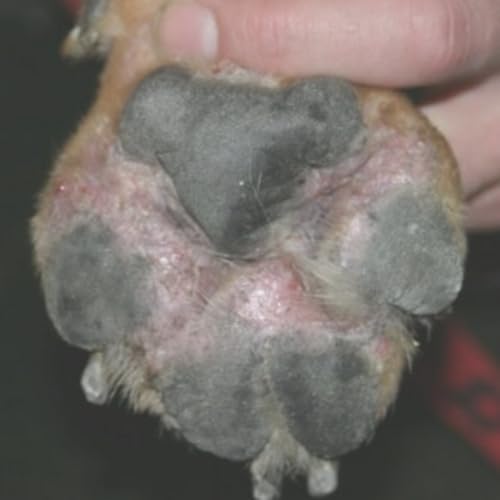
Etiology and Management of Canine Pododermatitis
カートのアイテムが多すぎます
カートに追加できませんでした。
ウィッシュリストに追加できませんでした。
ほしい物リストの削除に失敗しました。
ポッドキャストのフォローに失敗しました
ポッドキャストのフォロー解除に失敗しました

Etiology and Management of Canine Pododermatitis
-
ナレーター:
-
著者:
概要
Canine pododermatitis is not a single disease but a complex reactive pattern resulting from the dynamic interaction between primary causes, predisposing factors, and perpetuating elements. Though frequent in clinic, its management remains frustrating as it masks considerable etiological diversity, ranging from environmental allergy (CAD) to autoimmune disorders (pemphigus) or metabolic diseases (hepatocutaneous syndrome).
Inadequate management, often limited to empirical antibiotic therapy, inevitably leads to chronicity. This state is established through furunculosis and irreversible dermal fibrosis, promoting the emergence of multidrug-resistant strains (MRSP).
The diagnostic approach must be sequential and exhaustive (history, scrapings, cytology). Treatment, which is inherently multimodal, relies on the new ISCAID 2025 guidelines that prioritize topical therapy to combat antibiotic resistance. Innovations like Fluorescence Biomodulation (Phovia) offer new perspectives for accelerating the healing of deep forms. The key to success lies in elucidating and managing the primary cause for lasting recovery.