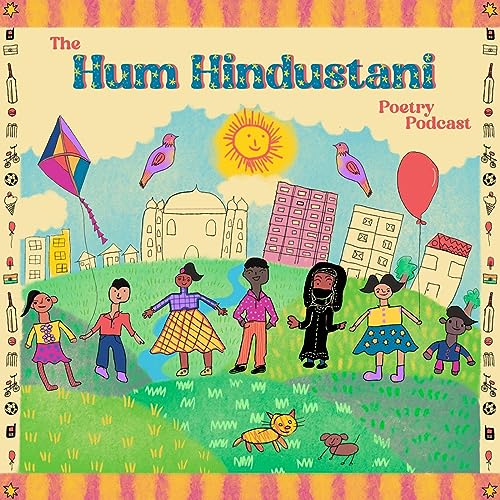
『Episode 8: Are Those My People?』のカバーアート

Episode 8: Are Those My People?

Episode 8: Are Those My People?

無料で聴く

ポッドキャストの詳細を見る

このコンテンツについて

The poem narrated in this episode was written as part of an exercise in which children were asked to reflect on their everyday life and when they had felt a sense of belonging. The poet is 14-years old and studies in a municipal school in Govandi, Mumbai. She lives in a densely packed compound of high rise buildings where people who lived in slums and pavements from all over Mumbai were rehoused. Living in such a space means coping with the lack of facilities such as poor sanitation, no safe play areas and uncertain power and water supply. What do children experience in such circumstances? How does that affect their relationships with those around them? And from where do they draw their sense of belonging? About the GuestNatasha Badhwar is a writer, film-maker, teacher. She has a graduate degree in Psychology from Delhi University and a post-graduate degree in Mass Communications from Jamia Millia Islamia University, and is a Professor in the Media Studies Department at Ashoka University. Natasha started her career as one of India’s first women camerapersons in news television with New Delhi Television (NDTV). She quit 13 years later as Vice President, Training and Development. A popular columnist, Natasha's columns are published in BBC Hindi, The Tribune, Mint Lounge and The Morning Context. She is the author of the memoirs, My Daughters’ Mum and Immortal For a Moment, published by Simon & Schuster India. With Harsh Mander and John Dayal, she has co-authored Reconciliation, Karwan e Mohabbat’s Journey of Solidarity Through a Wounded India, published by Westland Books. With Harsh Mander and Anirban Bhattacharya, Natasha has co-authored When The Mask Came Off – Lockdown 2020: A People’s History of Cruelty and Compassion. She has received the Laadli Media & Advertising Award for Gender Sensitivity in 2016 and 2022, in the reporting and web documentary categories.Find more at:Natasha Badhwar on Twitter, Instagram, Amazon, LinkedIn, The Tribune and Mint LoungeMy Daughters’ Mum — Natasha BadhwarImmortal for a Moment — Natasha BadhwarNatasha Badhwar’s newsletter on SubstackNatasha Badhwar’s old blog on BlogspotNatasha Badhwar’s Memoir Writing CourseParenthood — Episode 43 of The Seen and the Unseen (w Natasha Badhwar)Reconciliation: Karwan e Mohabbat’s Journey of Solidarity through a Wounded India — Edited by Harsh Mander, John Dayal and Natasha Badhwar Why my daughters don’t go to school anymore — Natasha Badhwar interviewed by Manisha Natarajan. (Full video.)The most important lesson learnt as an #unschooling parent — Natasha Badhwar The Joys of Walking Out — Natasha Badhwar and Sahar BegTo Fail Without Feeling Like A Failure — Natasha BadhwarThe real difference between my husband and me — Natasha Badhwar Roger Ebert and me: How tragedy and Twitter bonded us across continents — Natasha BadhwarIn Conversation with Roger Ebert — Natasha BadhwarA welcome note for new husbands and wives — Natasha BadhwarFive things to learn from the man you love — Natasha BadhwarFatherhood is a funny thing — Natasha BadhwarImposter Syndrome.What we say and what we mean, the fine art of small talk — Natasha BadhwarFor more on the project, follow uson Instagram@themagickeycentreor visit our websitehum-hindustani.inCREDITS The Hum Hindustani Poetry Podcast is a production of The Magic Key Centre for the Arts and Childhood. Conceived, Written, and Hosted bySamina Mishra Poems read byAanvi, Arudra, Danyal, Haniya, Ishanvi, Labina, Lakshmi, Kashvi, Kyra, Rohan, Ronish, Samaa, Sarah, Sediqa, Ulfa Children reading the poems mentored by Anannya Tripathyi Studio recordingsAmartya Ghosh, Quarter Note Studios Music Shireen Ghosh Vocals Ishaan Chintamani ArtworkAlia Sinha Additional Research Rhea Kuthoore Co-WriterS Gautham Hindi TranslationTazeen AliProduced by Vaaka Media AcknowledgementsAnannya TripathyiGaurav ChintamaniPriya MathewsShikha SenSimurgh CentreTESF IndiaAll the children who participated in the Hum Hindustani workshops and wrote the poemsSupport for this podcast comes from Rohini Nilekani Philanthropies.The Hum Hindustani research project is part of TESF India.
まだレビューはありません