

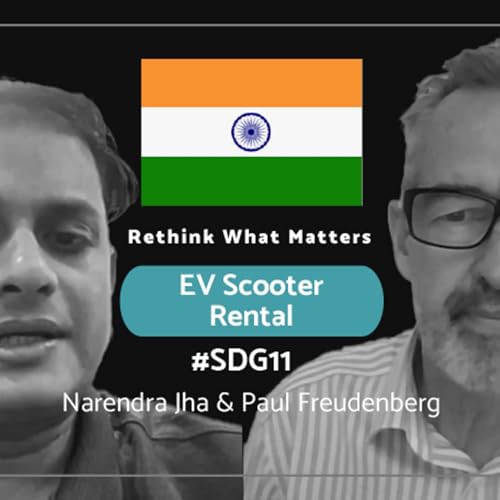
EV Scooter Rentals: Insights from Narendra Jha, Founder & CEO of EVA2Z
カートのアイテムが多すぎます
カートに追加できませんでした。
ウィッシュリストに追加できませんでした。
ほしい物リストの削除に失敗しました。
ポッドキャストのフォローに失敗しました
ポッドキャストのフォロー解除に失敗しました

EV Scooter Rentals: Insights from Narendra Jha, Founder & CEO of EVA2Z
-
ナレーター:
-
著者:
EV Scooter Rentals & Sustainable Mobility in India | Rethink What Matters Podcast
In this episode of Rethink What Matters, Paul is joined by Narendra Jha from EVA2Z to explore the rapid growth of electric scooter rentals and the future of sustainable mobility in India.
Narendra shares the journey behind EVA2Z, which launched in 2022 and has quickly expanded across multiple cities with a growing fleet of electric two-wheelers. The company currently operates hundreds of EV scooters focused primarily on last-mile delivery services for major businesses including Zomato, Uber, Blinkit, and Zepto.
The discussion explores how electric scooter rental models are helping businesses reduce operational costs while supporting cleaner urban transportation. Narendra explains that electric scooters offer major advantages over traditional petrol-powered vehicles, including zero tailpipe emissions, lower noise pollution, and significantly reduced running costs. In India, operating an electric scooter can cost up to 80–90% less per kilometre compared to petrol vehicles, making them highly attractive for commercial delivery operations.
Paul and Narendra discuss the difference between low-speed and high-speed electric scooters in India. Low-speed vehicles, limited to 25 kilometres per hour, do not require a driving licence, while high-speed scooters offer greater performance but require full registration and licensing. Narendra explains that the industry is gradually shifting towards high-speed vehicles due to safety concerns and evolving regulations, with low-speed models potentially being phased out in the future.
A key focus of the episode is battery-swapping technology. Rather than waiting for scooters to recharge, EVA2Z operates battery-swapping stations where riders can exchange depleted batteries for fully charged replacements within minutes. This approach helps reduce downtime and addresses concerns around charging infrastructure and range limitations.
The conversation also highlights the operational challenges of scaling EV fleets in demanding urban environments such as Delhi and the wider NCR region. Narendra explains how high temperatures, heavy rainfall, road conditions, and intensive daily usage place significant wear and tear on vehicles originally designed for personal rather than commercial use. As a result, EVA2Z is working closely with manufacturers to develop more durable commercial-grade scooters with stronger steel frames, improved battery positioning, and reduced reliance on fragile plastic components.
Paul and Narendra also discuss the role of government incentives in accelerating EV adoption across India, including reduced GST rates and subsidies through the FAME programme designed to support electric mobility growth.
The episode explores the future of the EV rental market and the transition from B2B operations into consumer-focused mobility solutions. Narendra shares plans to expand into universities, metro stations, and urban mobility hubs through all-electric bike taxi services and wider B2C offerings.
The conversation concludes with a broader discussion about sustainability, urban air pollution, and the role electric mobility can play in improving quality of life in rapidly growing cities. Narendra explains that EVA2Z’s fleet has already helped reduce significant levels of carbon emissions while supporting cleaner, more affordable transportation solutions for riders and businesses alike.