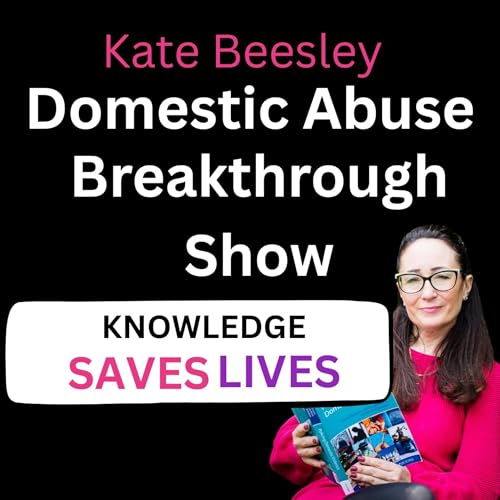
『Domestic Abuse Breakthrough Show | Kate Beesley』のカバーアート

Domestic Abuse Breakthrough Show | Kate Beesley

Domestic Abuse Breakthrough Show | Kate Beesley

著者: Kate Beesley - Say No Das CIC
無料で聴く

The Domestic Abuse Breakthrough Show – Where risk is understood, not missed. This podcast explores hidden patterns of domestic abuse, including coercive control, trauma responses, and overlooked risk. Hosted by trauma-informed domestic abuse and risk awareness specialist Kate Beesley, each episode helps professionals & survivors recognise danger earlier and respond more effectively. Voted 2nd favourite UK Health Radio show in 2025, recognised for outstanding contribution to the health industry. Visit www.sayno-das.co.uk to request access to our support hub for Professionals & Survivors.Kate Beesley - Say No Das CIC
エピソード
  • “Silent Voices: When the System Fails the Most Vulnerable”
    2026/05/29

    In this deeply powerful and distressing episode of the Domestic Abuse Breakthrough Show, Kate is joined by Tamsyn Raven, a mother turned advocate fighting for justice for her seven-year-old daughter, Kaylee.

    Kaylee is nonverbal, severely autistic, and medically vulnerable — and was assaulted while in the care of someone trusted to protect her. The incident was captured on CCTV.

    Yet nearly a year later, the courts have still not reviewed the footage.

    This conversation exposes the devastating reality of what happens when:

    • Evidence is ignored
    • Safeguarding systems fail
    • Disabled children are overlooked
    • And risk is minimised in favour of “convictability”

    Together, Kate and Tamzin unpack:

    • How nonverbal children are left without a voice in the justice system
    • Why behavioural changes must be recognised as critical evidence
    • The dangers of downgrading charges for vulnerable victims
    • Ongoing stalking, intimidation, and failures in protection
    • The impact of trauma on a child who cannot communicate what happened
    • The emotional and psychological toll on families forced to fight alone

    This is not just one case.
    It highlights a much wider systemic issue affecting some of the most vulnerable children in society.

    Kaylee’s story is also one of resilience. With distance from harm, she is beginning to rediscover her voice, her personality, and her sense of safety — showing just how profound the impact of abuse truly is.

    Tamzin is now working to create Silent Voices Advocacy Ireland, a project dedicated to ensuring that children who cannot speak are still heard, protected, and properly represented.

    This episode is essential listening for:

    • Safeguarding professionals
    • Healthcare and education staff
    • Legal professionals
    • Parents and carers
    • Anyone committed to protecting vulnerable children

    Because when a child cannot speak…
    it is the system’s responsibility to listen harder — not look away.

    If you are navigating abuse or safeguarding concerns, support links are available in the link tree
    If you are a professional seeking to deepen your trauma-informed understanding, you can also register your interest in training and resources.

    https://linktr.ee/breakthecyclemovement

    続きを読む 一部表示
    1 時間 8 分
  • “When Risk Is Missed: Why Domestic Abuse Isn’t just an Incident”
    2026/05/22

    In this episode of The Domestic Abuse Breakthrough Show, I’m joined by law enforcement specialist Captain Eric Threlkeld to explore one of the biggest failures in how domestic abuse is understood and investigated.

    Too often, cases are treated as isolated incidents — a single argument, a single injury, a single call-out.

    But domestic abuse is not an incident.
    It’s a pattern.

    And when professionals fail to recognise that, risk isn’t just misunderstood — it’s missed entirely.

    We discuss:

    • Why incident-based policing puts victims at risk
    • The importance of pattern recognition in domestic abuse cases
    • How coercive control operates without visible violence
    • The role of multidisciplinary teams in preventing escalation
    • Why risk assessment tools are failing in practice — and what’s really going wrong
    • How subtle threats, especially involving weapons, create fear and compliance without action

    This episode is essential listening for professionals working in policing, safeguarding, family law, and support services — and for anyone who wants to understand what risk really looks like behind closed doors.

    Because when we don’t understand risk…
    we don’t just miss it.
    We create the conditions for harm.


    If you are navigating abuse, support links are in the linktree.
    If you’re a professional or survivor ready to deepen your understanding, you can also register your interest in trauma-informed training and resources via the link provided.

    https://linktr.ee/breakthecyclemovement

    https://www.linkedin.com/in/ericthrelkeld/

    続きを読む 一部表示
    50 分
  • “The Illusion of Freedom: How Victims End Up Isolated”
    2026/05/18

    In this episode, I break down one of the most misunderstood aspects of coercive control:

    Isolation that doesn’t look like isolation.

    Because the reality is—
    Perpetrators don’t always say:
    “You can’t go out.”
    “You can’t see your friends.”

    Sometimes, they do the opposite.

    They encourage it.

    And then punish you for it.

    Through personal experience, I walk you through how this plays out in real life:

    • Being encouraged to go out… then met with abuse, chaos, or crisis
    • False emergencies designed to create panic and pull you back
    • Emotional punishment for doing exactly what you were told to do
    • How repeated patterns condition you to stop going anywhere at all

    Over time, it becomes easier to withdraw.
    Not because you were told to—
    But because the consequences became too much to manage.

    And that’s the part that’s often missed.

    To the outside world, it can look like:

    • A supportive partner
    • A “fairy tale” relationship
    • A victim choosing to stay home

    But behind closed doors, the environment has been shaped so that:
    Isolation feels like the safest option.

    This episode also challenges how professionals assess risk.

    Because asking:

    “Did they ever stop you from going out?”

    …is not enough.

    We need to be asking:

    • What happened when you did go out?
    • Did it ever feel easier not to go?

    Because victims are not the experts in naming abuse.
    Professionals are supposed to be.

    If we don’t understand this dynamic, we don’t just misunderstand victims—
    we miss risk entirely.


    If you are navigating abuse, support links are in the link tree.
    If you’re a professional or survivor ready to deepen your understanding, you can also register your interest in trauma-informed training and resources via the link provided.

    https://linktr.ee/breakthecyclemovement

    続きを読む 一部表示
    21 分
adbl_web_anon_alc_button_suppression_t1
まだレビューはありません