

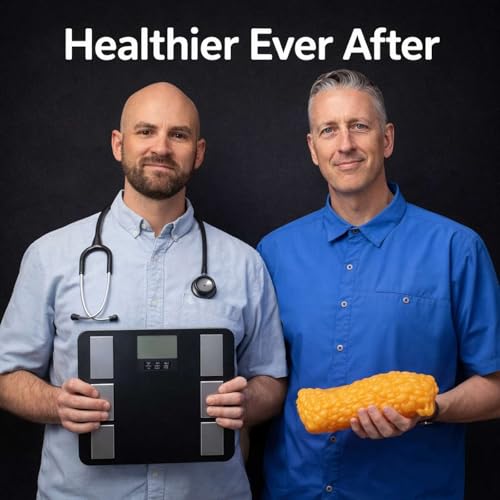
Diet Myth Busting
カートのアイテムが多すぎます
カートに追加できませんでした。
ウィッシュリストに追加できませんでした。
ほしい物リストの削除に失敗しました。
ポッドキャストのフォローに失敗しました
ポッドキャストのフォロー解除に失敗しました

Diet Myth Busting
-
ナレーター:
-
著者:
Diet Myths, Busted — Part 1: Late-Night Eating, Spot Reduction, Exercise & Carbs
After a month-long detour into hormones, Rick and Greg are back to the bread-and-butter of Healthier Ever After: the everyday diet myths they field constantly, both in the clinic and in the ER. In this first installment of a two-part series, they take four of the most common beliefs about weight loss and hold each one up against what the studies actually show.
The theme running through the whole episode is nuance. A few of these myths are technically true on the surface but misleading in practice, and the guys walk through why people believe each one before explaining what's really happening in the body.
In this episode:
Myth 1 — Eating late at night makes you gain weight. Your fat cells don't keep time, and weight change tracks total daily intake, not the hour on the clock. The real culprit is "calorie creep" — roughly 500 extra calories that sneak in during late-night grazing (and it's never a salad). Their rule of thumb: set an eating cutoff three to four hours before bed.
Myth 2 — You can spot-reduce fat. No number of crunches will target belly fat. Fat breakdown happens body-wide, and where you lose it first comes down to genetics and hormones. A 12-week trial found that adding ab exercises to a diet burned no more belly fat than dieting alone. Abs really are made in the kitchen.
Myth 3 — Exercise alone will melt the weight off. Some of their hardest-working patients are proof it doesn't. People routinely overestimate calories burned, and a single muffin on the drive home can undo the whole session. Exercise shines for maintaining weight — but it's the diet that creates the deficit.
Myth 4 — Carbs are the enemy. Sorry, keto crowd. Between them they've known almost no one who keeps keto weight off long term. Carbs aren't the villain; refined sugars and easy-to-overeat calories are. Balance and sustainability win.
This is Part 1 — more myths (plus a promised deep dive on insulin sensitivity) are coming next week.
—
Disclaimer: This episode is for educational and informational purposes only. Talk to your medical provider before beginning any weight loss program, dietary supplement, or exercise regimen.
Healthier Ever After with Rick and Greg — small, sustainable choices for a longer, better-feeling life. Learn more at supportmyweightloss.com.