エピソード

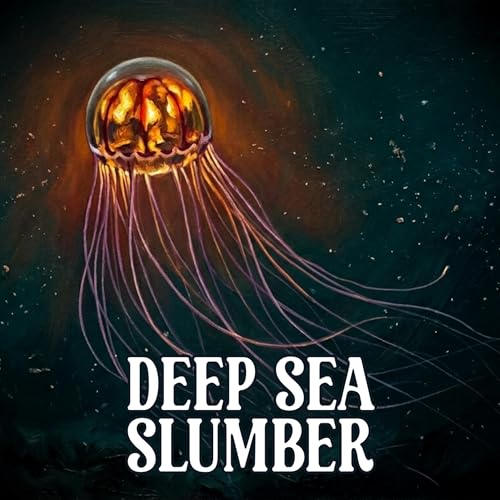
  • The Midnight Zone Explained | The Largest Living Space on Earth Has Never Seen the Sun
    2026/06/17

    Below a thousand meters, sunlight disappears. Not dimly, not gradually, but completely, and it has been this way for four billion years. What remained in that darkness was not emptiness. It was life, patient and extraordinary, built entirely from the world it kept choosing to inhabit.


    🌊 In this episode:

    • The anglerfish and its living lure, a glowing organ powered by bioluminescent bacteria housed inside the body

    • The vampire squid, drifting on gentle fins through the dark, gathering marine snow with long retractile filaments

    • The hatchetfish and counterillumination, vanishing by producing exactly the right light to erase its own shadow from below

    • The barreleye fish, with tubular eyes inside a transparent dome that rotates to track silhouettes passing overhead

    • The dragonfish and its private red bioluminescence, a wavelength almost no other deep-sea creature can perceive

    • The tripod fish, standing above the seafloor on elongated fin rays, reading the current for what drifts near

    • The dumbo octopus, hovering on ear-like fins through water deeper than most submarines can reach

    • The siphonophore, a colony that is also one body, trailing stinging filaments across hundreds of meters of midnight water

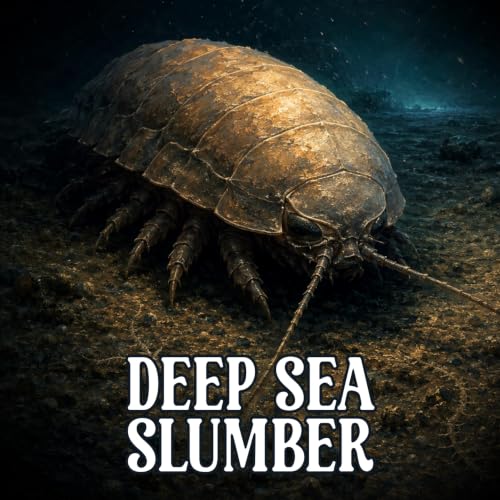
    • The giant isopod, armored and unhurried on the seafloor, capable of going years between meals

    • A full Day in the Life of the vampire squid, from first drift through the gathering dark to stillness


    Let the cold water hold you now. You are suspended in the midnight zone, unhurried and weightless, exactly where you belong.

    Perfect for falling asleep, unwinding, or anyone curious about ocean life.


    🔔 Subscribe for more: @DeepSeaSlumber


    #MidnightZone #DeepSea #SleepDocumentary #Bioluminescence #DeepSeaSlumber

    Hosted on Acast. See acast.com/privacy for more information.

    続きを読む 一部表示
    3 時間 55 分
  • The Sunfish Explained | The Giant Fish That Looks Unfinished but Isn't
    2026/06/10

    The ocean sunfish drifts through the open blue like a creature no one expected to work. It is the heaviest bony fish alive, a strange giant with no true tail, winglike fins, and a body that looks unfinished until the sea explains it.


    In this episode:

    - Why the ocean sunfish looks so different from most fish

    - How a tiny larva can grow into one of the largest bony fish on Earth

    - How its tall dorsal and anal fins carry it through open water

    - Why it feeds on soft drifting prey like jellyfish, salps, and comb jellies

    - How a day in the life of a sunfish moves between sunlight, cold depth, and slow turning


    Let the sunfish carry you through warm surface water and down into the cooler blue, where strange shapes make perfect sense and the open ocean becomes a quiet home.

    Perfect for falling asleep, unwinding, or anyone curious about ocean life.


    Subscribe for more: @DeepSeaSlumber


    #Sunfish #MolaMola #MarineBiology #NatureDocumentary

    Hosted on Acast. See acast.com/privacy for more information.

    続きを読む 一部表示
    2 時間 40 分
  • Mantis Shrimp Facts for Sleep | The Most Dangerous Reef Animal Nobody Talks About
    2026/06/03

    The mantis shrimp waits near the reef like a small secret with impossible machinery folded beneath its body. It can strike so fast that water itself reacts, and it watches the reef through eyes built for colors and patterns we can barely imagine.


    In this episode:

    - how the mantis shrimp strike uses stored energy, cavitation, and sudden force

    - why its spring-loaded limbs have become a model for natural engineering

    - how its unusual eyes read color, depth, and polarized light in a different way

    - what life is like at the burrow entrance, from hunting to signaling and care

    - a slow Day in the Life narrative inside the hidden room beneath coral and sand


    Let the reef narrow into one quiet doorway. You can drift beside the burrow, watching the water soften, while this small ancient animal keeps its patient watch in the dark.

    Perfect for falling asleep, unwinding, or anyone curious about ocean life.


    Subscribe for more: @DeepSeaSlumber


    #MantisShrimp #DeepSeaCreatures #OceanDocumentary #MarineBiology

    Hosted on Acast. See acast.com/privacy for more information.
    続きを読む 一部表示
    3 時間 3 分
  • Twilight Zone Facts for Sleep | Cold, Dark, and Home to the Ocean's Great Migration
    2026/05/28

    Somewhere between the sunlit surface and the permanent dark below, the ocean keeps a layer almost nobody talks about. It begins where daylight starts to lose its color and ends where light disappears entirely. Between those two depths lies one of the strangest, most important ecosystems on Earth.


    🌊 In this episode:

    • How sunlight gets filtered and sorted as it descends, leaving only blue by the time it reaches the mesopelagic

    • The daily vertical migration, one of the largest synchronized animal movements on the planet, happening in the dark every night

    • How creatures like lanternfish, hatchetfish, and transparent squid use bioluminescence, mirror-like skin, and near-invisibility to survive

    • The twilight zone's quiet role in the biological carbon pump, moving carbon away from the atmosphere-facing surface into the deep

    • A journey through the twilight zone from dusk to dawn: drifting through cold water where the rules of light no longer apply


    Tonight you drift through a layer the sun barely reaches. Something moves in the dim blue ahead of you, turns silver for a moment, and is gone. The cold is steady. The ocean carries its business without hurry. There is nothing you need to do.

    Perfect for falling asleep, unwinding, or anyone curious about ocean life.


    🔔 Subscribe for more: @DeepSeaSlumber


    #SleepDocumentary #OceanFacts #DeepSea #Bioluminescence

    Hosted on Acast. See acast.com/privacy for more information.

    続きを読む 一部表示
    3 時間 1 分
  • Nautilus Facts for Sleep | The Shell That's Older Than Every Fish in the Sea
    2026/05/26

    On the outer slope of a reef, where the water grows cold and the light fades into blue-gray, an animal rises each night that most people have never seen alive. It carries a spiral shell divided into sealed rooms, manages its depth by slowly filling those rooms with gas, and navigates the dark with dozens of delicate arms and two eyes that have no lens. In its essential form, it has been here for five hundred million years.


    🌊 In this episode:

    • The siphuncle, the nautilus's internal tube that moves fluid in and out of its sealed chambers to control buoyancy with quiet precision

    • The mathematics of the shell, an equiangular spiral that grows without changing its proportions and records the animal's entire history in stone

    • The nightly ascent, how the nautilus rises from resting depth each evening, follows scent gradients through the dark, and descends before the light returns

    • Sixty to ninety cirri, not tentacles, not equipped with suckers, but the sensory arms that replace sight as the nautilus's primary way of knowing its world

    • Five hundred million years of continuity, how the nautilus lineage survived the extinction that took the ammonites and every other cephalopod with a shell

    • A Day in the Life: one full night on the reef slope, rising, foraging, hovering, and descending as the dark water moves around a body that has always known exactly what it is


    Let the slope hold you tonight. The water is cold and still, the shell is turning slowly, and somewhere in the dim deep of the Indo-Pacific, the nautilus is doing what it has always done. You don't need to follow it anywhere. You only need to go quiet, and let the current carry you down.

    Perfect for falling asleep, unwinding, or anyone curious about ocean life.


    🔔 Subscribe for more: @DeepSeaSlumber


    #SleepDocumentary #OceanDocumentary #ScienceForSleep #Nautilus

    Hosted on Acast. See acast.com/privacy for more information.

    続きを読む 一部表示
    2 時間 24 分
  • The Mariana Trench Explained | The Creatures That Live Eleven Kilometers Down
    2026/05/24

    Eleven kilometers below the surface of the Pacific Ocean, the seafloor drops away into the deepest known place on the planet. No sunlight has ever reached it. The pressure there would collapse most structures humans have ever built. And yet life continues in that darkness, not by hardening against the weight, but by softening into it.


    🌊 In this episode:

    • How the hadal snailfish survives crushing pressure by becoming soft, flexible, and chemically tuned to the abyss

    • The amphipods that arrive in crowds where marine snow lands, turning scarcity into a brief abundance

    • Xenophyophores: single cells that grow large enough to build architecture, raising fragile houses from gathered sediment

    • The molecular chemistry inside hadal shrimp that keeps proteins folded where most bodies would fail

    • A full Day in the Life of a dumbo octopus drifting on slow fin-beats above the abyssal plain


    The trench has been here for millions of years. It is patient in a way that most things are not. You can let it carry your attention somewhere very deep, very still, and very far from anything that needs to be solved tonight.


    Perfect for falling asleep, unwinding, or anyone curious about ocean life.


    🔔 Subscribe for more: @DeepSeaSlumber


    #MarianaTrench #SleepDocumentary #DeepSea #OceanDocumentary

    Hosted on Acast. See acast.com/privacy for more information.

    続きを読む 一部表示
    3 時間 59 分
  • Blue Whale Facts for Sleep | The Largest Animal to Have Ever Lived on Earth
    2026/05/22

    The blue whale is the largest animal to have ever lived on Earth. Larger than any dinosaur, heavier than anything most minds reach for when trying to picture a living creature, it moves through cold open water with the kind of patience that belongs to something built not for speed but for distance. It breathes air, nurses its young, and crosses entire ocean basins guided by sound, season, and the slow certainty of a body that has been doing this for a very long time.


    🌊 In this episode:

    • The biology of a body scaled beyond ordinary imagination, including a heart weighing hundreds of pounds and a tongue as heavy as an elephant

    • How the blue whale feeds, lunging into dense swarms of krill and filtering the ocean through long curtains of baleen

    • The science of blue whale migration, the seasonal routes connecting polar feeding grounds to warm calving waters across entire ocean basins

    • How blue whales communicate through low, slow calls that can carry through vast stretches of dark water

    • A Day in the Life, following a blue whale from its first breath at dawn through a full day of feeding, travel, and rest in the deep


    Somewhere far below any surface you can see, the largest life on Earth is moving through the dark with a patience that has no need for hurry. Let it carry you down.

    Perfect for falling asleep, unwinding, or anyone curious about ocean life.


    🔔 Subscribe for more: @DeepSeaSlumber


    #BlueWhale #SleepDocumentary #OceanDocumentary #WhaleDocumentary

    Hosted on Acast. See acast.com/privacy for more information.

    続きを読む 一部表示
    3 時間 10 分
  • Gulper Eel Facts for Sleep | The Deep Sea Fish That Became a Mouth
    2026/05/20

    Somewhere between a thousand and three thousand meters below the surface, in water that has never seen the sun, a long and patient creature drifts. Its most notable feature arrives first: a mouth that opens wider than the body behind it, hinged loose and vast, built for a world where meals arrive without warning and may not come again for days.

    The gulper eel is not trying to look strange. It is trying to survive. And everything about it, the jaw, the elastic body, the faint red light trailing at the end of an improbably long tail, is the answer to the same question: how do you live in a place that gives you almost nothing?


    🌊 In this episode:

    • The mechanics of the gulper eel's hinged jaw: why it opens wider than the body it belongs to, and how loose articulation replaced precision as the dominant feeding strategy

    • The elastic body and expandable stomach, capable of accommodating prey nearly the size of the eel itself, and what this reveals about survival in conditions of extreme scarcity

    • Life in the deep: pressure, perpetual cold, near-total darkness, and how the gulper eel's every adaptation is a direct answer to those conditions

    • The bioluminescent tail organ: why it glows red in a world where red light is functionally invisible, what it may lure, and what it may signal

    • A Day in the Life: drift alongside the gulper eel through black water, feeling the cold and the pressure, the long patient intervals and the rare moment when the jaw falls open


    Let your body settle into the dark tonight. Something thin and ancient is drifting just ahead, trailing its small red light through water that has held its kind for longer than there are words for. You don't need to go anywhere. Just let the current carry you.


    Perfect for falling asleep, unwinding, or anyone curious about ocean life.


    🔔 Subscribe for more: @DeepSeaSlumber


    #GulperEel #DeepSea #SleepDocumentary #Bioluminescence

    Hosted on Acast. See acast.com/privacy for more information.

    続きを読む 一部表示
    2 時間 27 分