『Decision Points』のカバーアート

Decision Points

Decision Points

著者: True North Advisors
無料で聴く

The Exit Planning Institute© recently released a survey that said 75% of business owners regret selling their business 12-18 months post sale.

At Decision Points, we are committed to preparing and inspiring business owners to successfully operate, and one day sell, their business with maximum fulfillment in all aspects of their personal and professional lives. We’re speaking with business leaders, strategic coaches, exited entrepreneurs, mentors, and technical experts sharing their successes and failures, at key decision points in their careers, to help you lead a more prosperous entrepreneurial journey. Let’s take a walk…


© 2026 Decision Points
マネジメント・リーダーシップ リーダーシップ 経済学
エピソード
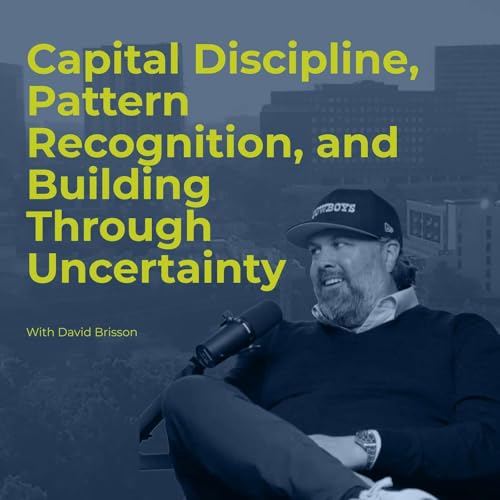
  • Decision Points E91 – David Brisson: Capital Discipline, Pattern Recognition, and Building Through Uncertainty
    2026/05/26

    Some operators build careers by following a defined path. Others build by recognizing patterns across industries, capitalizing on them, and moving before the market fully understands the opportunity. David Brisson has spent his career doing exactly that.

    In this episode of Decision Points, David Brisson, CEO of Austin Pretzel Company, shares a non-linear path that spans professional golf, sports marketing, private equity advisory, and consumer packaged goods. His career began through relationships built in competitive environments, where performance, discipline, and access to the right networks created early opportunities. Those relationships ultimately led to building and exiting a niche headwear business tied to professional sports and global distribution channels.

    From there, David transitioned into a role that sits between operators and capital. He focused on identifying opportunities, structuring deals, and connecting founders with the right investors. Over time, that experience shaped a clear point of view. Capital is not scarce. Discipline in deploying it is. He explains that many businesses fail not from lack of funding, but from misallocation of resources, poor timing, and an inability to execute against a clear plan.

    The conversation then shifts to Austin Pretzel Company, a business that did not follow a traditional sourcing or diligence path. The opportunity emerged quickly, required immediate capital, and demanded conviction before full visibility. David walks through the early decisions to acquire, scale, and vertically integrate the business, including building manufacturing capabilities and expanding distribution into major retail channels. What began as a single product inside a gift basket operation has rapidly evolved into a scaled consumer brand competing in one of the most competitive categories in retail.

    David also speaks candidly about the realities of entrepreneurship. The volatility, the daily uncertainty, and the responsibility that comes with managing investor capital. He emphasizes the importance of being a disciplined steward of capital, maintaining credibility with investors, and continuing to execute even when outcomes are unclear. For him, the role is not defined by a single success, but by the ability to consistently navigate risk and move forward.

    For investors and operators, this episode offers a clear perspective on pattern recognition, capital deployment, and the difference between opportunity and execution. Markets will always present ideas. The separating factor is how decisions are made under pressure, and how consistently those decisions compound over time.

    続きを読む 一部表示
    51 分
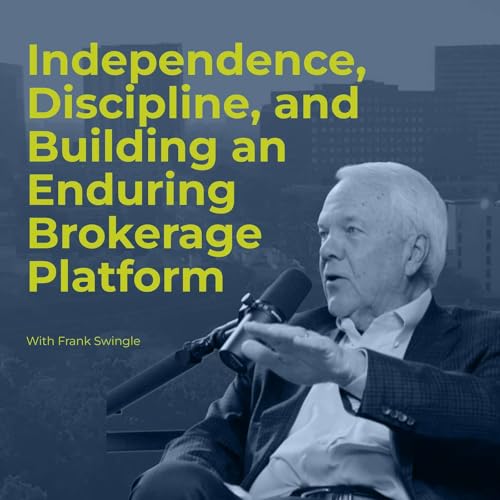
  • Decision Points E90 – Frank Swingle: Independence, Discipline, and Building an Enduring Brokerage Platform
    2026/05/05

    Enduring businesses are built through disciplined decisions, consistent execution, and a clear understanding of where value is created. Frank Swingle has spent more than four decades applying those principles to build Swingle Collins into one of the leading independent insurance brokerage firms in North Texas.

    In this episode of Decision Points, Frank Swingle, Founder and CEO of Swingle Collins & Associates, reflects on the decisions that shaped both his career and the firm’s long-term trajectory. He describes an unplanned entry into the insurance business, the early influence of mentorship, and the moment that led him to pursue independence. After his original firm was acquired and leadership changed, Frank made the decision to build something of his own. That decision required conviction, especially in a business where access to carrier relationships and product breadth determines the ability to compete.

    Frank explains how early relationships with insurance carriers allowed the firm to establish a foothold, and how a clear focus on a defined market segment helped guide growth. Rather than pursuing scale for its own sake, Swingle Collins built its model around entrepreneurial clients and high-net-worth individuals, where responsiveness, advisory capability, and long-term relationships create differentiation.

    The conversation also examines the decision to remain independent. In an industry shaped by consolidation and private equity investment, Frank chose a different path. He discusses the importance of maintaining control over strategy, protecting the firm’s culture, and creating a structure that allows ownership to pass to future generations. The firm’s perpetuation model reflects a long-term view of value creation, one that prioritizes continuity over liquidity.

    Frank shares his approach to building teams and sustaining performance over time. Hiring is deliberate, expectations are aligned, and culture is reinforced through shared goals. He emphasizes that the firm’s success is not attributable to any one individual, but to the collective strength of its people. That philosophy extends to leadership, where responsiveness, accountability, and transparency remain central to client relationships.

    The discussion also addresses industry evolution. Frank reflects on past market disruptions, including regional banking crises and broader economic downturns, and explains how maintaining a low-debt structure and operational discipline allowed the firm to navigate periods of stress. Looking forward, he outlines the role of technology and artificial intelligence in improving efficiency, while reinforcing that the core function of the business remains unchanged. Provide expertise, manage risk, and deliver value to clients.

    For investors, operators, and business leaders, this conversation offers a clear view into building a durable platform in a fragmented and evolving industry. The fundamentals remain consistent. Align incentives, invest in people, and focus on long-term relationships that compound over time.

    続きを読む 一部表示
    38 分
  • Decision Points E89 – Calvin Carter: Building the Future by Removing Friction: AI, Healthcare, and Human-Centered Innovation
    2026/04/21

    For Calvin Carter, technology has never been the starting point. People are.

    In this episode of Decision Points, Calvin Carter, Founder and CEO of Matic, shares a career defined by identifying friction and building systems to remove it. From the earliest days of the internet to the rise of mobile and now artificial intelligence, Calvin has consistently operated at the edge of major technological shifts. His work focuses on translating emerging capabilities into real-world outcomes.

    He reflects on his early exposure to entrepreneurship, his instinct to recognize where technology is heading, and the belief that has guided his work from the beginning. Start with human problems, not technical possibilities. That approach shaped his path from building early web experiences for major brands to founding Bottle Rocket, where his team helped define the modern mobile ecosystem for companies like Chick-fil-A, Southwest Airlines, and NPR.

    With Matic, Calvin is applying that same discipline to healthcare. He explains why many AI efforts fail. They begin with the technology instead of the user. Matic takes the opposite approach. The company studies the daily experiences of doctors, patients, and administrators, then embeds intelligence directly into those workflows. The goal is simple. Reduce friction, improve care, and return time to the people inside the system.

    Calvin also shares his perspective on leadership. He emphasizes culture, empathy, and surrounding yourself with people who are motivated to serve others. He outlines a framework built on passion, persistence, and conviction. His view is direct. Long-term success is not defined only by outcomes. It is defined by how those outcomes are achieved.

    This conversation offers a clear view into building at the edge of innovation while staying grounded in human impact. For investors, operators, and business leaders, it reinforces a simple principle. The most valuable systems are built by understanding where the system is broken.

    続きを読む 一部表示
    1 時間 5 分
adbl_web_anon_alc_button_suppression_c
まだレビューはありません