• E21 : Seattle Theater Voices: A conversation with Moumita Bhattacharya
    2025/10/27

    "Keep your eyes and mind open."

    - Moumita Bhattacharya

    Keywords

    theater, directing, choreography, Seattle theater, Moumita Bhattacharya, audience interpretation, artistic influences, House of Joy, casting, storytelling

    Summary

    In this episode of Curtains Up, Rohan interviews Moumita Bhattacharya, a prominent theater director and choreographer in Seattle. They discuss her journey from Indian classical dance to theater, her experiences in the Seattle theater scene, and the artistic influences that shape her work. Moumita shares insights on audience interpretation, the challenges of choreography, and the intricacies of casting characters. She concludes with valuable advice for aspiring directors, emphasizing the importance of storytelling and continuous learning.

    Takeaways

    • Moumita's journey into theater began with Indian classical dance.
    • Abhinaya, the act of emoting, is integral to storytelling in dance.
    • The Seattle theater community is receptive to diverse stories.
    • Artistic influences come from various sources, including cinema and dance.
    • Audience reactions can differ greatly from the director's expectations.
    • Choreographing movement in a play without explicit direction is challenging.
    • Casting requires understanding the essence of each character.
    • Performers should embody their characters rather than just play them.
    • Aspiring directors should watch many shows to learn and absorb.
    • Telling relevant stories is crucial for connecting with audiences.


    続きを読む 一部表示
    24 分
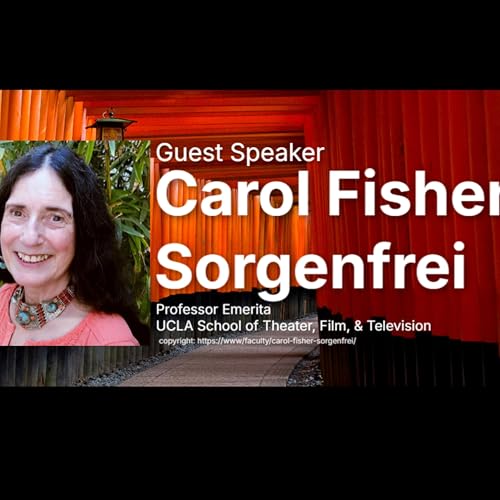
  • E20: Unravelling the mysteries of Noh and Kabuki theater : A conversation with Carol Fisher Sorgenfrei, Professor Emerita, UCLA
    2025/10/13

    In this episode of Curtains Up, host Rohan Sengupta engages with Dr. Carol Fisher Sorgenfrei, a renowned expert in Japanese and intercultural performance. They explore Dr. Sorgenfrei's journey into Japanese theatre, the fusion of Noh and Greek theatre, and the distinct differences in performance styles between Japanese and Western theatre. The conversation also delves into the significance of design elements in Japanese theatre, memorable performances, and advice for young theatre students interested in global performance traditions.

    takeaways

    • Dr. Sorgenfrei was inspired by a professor to study Japanese theatre.
    • Her first experience in Japan solidified her passion for avant-garde theatre.
    • She wrote a play combining Medea with Noh style, which won a contest.
    • There are intriguing similarities between Greek tragedy and Japanese Noh.
    • Noh has a continuous performance history unlike Greek theatre.
    • Design elements like masks in Noh carry deeper meanings.
    • Experiencing a powerful performance can transcend consciousness.
    • Navigating between cultures enriches creative work.
    • Young theatre students should explore global performance traditions.
    • The elegance of Noh and the energy of Kabuki are captivating.

    Japanese theatre, Noh, Kabuki, intercultural performance, theater studies, Dr. Carol Fisher Sorgenfrei, global performance traditions, avant-garde theater, Greek tragedy, cultural dialogue

    続きを読む 一部表示
    22 分
  • E19 : Seattle Theater Voices: A conversation with UW’s Jerik Fernandez
    2025/09/20

    summary

    In this episode of Curtains Up, host Rohan interviews rising star Jerik Fernandez, who shares his unique journey into the world of theater, his experiences in the MFA acting program at the University of Washington, and his aspirations for the future. Jerik discusses the importance of storytelling in acting, the challenges and rewards of pursuing a career in the performing arts, and offers valuable advice for aspiring actors. The conversation highlights the vibrant Seattle theater community and the transformative power of theater.

    Takeaways

    • Jerik's journey into theater began unexpectedly at a mall play.
    • He found his passion for acting during high school despite limited exposure to the arts.
    • The MFA program at UW is an all-consuming experience focused on honing craft.
    • Jerik emphasizes the importance of storytelling in acting.
    • He believes that making people feel good is a primary goal of acting.
    • The pandemic highlighted the need for connection through theater.
    • Jerik's friends from college also pursued acting, creating a supportive community.
    • He values the experience gained from understudying professional actors.
    • Jerik encourages aspiring actors to follow their passion despite practical concerns.
    • The magic of theater is felt when performing for an audience.


    Sound Bites

    • "I just remember that play a lot."
    • "I had never done a play before."

      "I just want to make people feel good."

    続きを読む 一部表示
    22 分
  • Ep 18: Samurai, Shadows, and Stagecraft : The Worlds of Noh and Kabuki
    2025/09/01

    "The emotions are raw, the stakes are high."In this episode, Rohan delves into the rich tapestry of Japan's theatrical traditions, focusing on Noh, Kabuki, and Bunraku. Each form of theater offers a unique perspective on culture, emotion, and storytelling, showcasing the evolution of performance art in Japan from the Edo period to the present day. The discussion highlights the distinct characteristics of each style, their historical significance, and their emotional impact on audiences.takeaways

    • Kabuki is known for its boldness and scandalous themes.
    • Noh Theatre emphasizes atmosphere over action.
    • Bunraku puppetry can evoke deep emotional responses.
    • The Edo period was a time of cultural explosion in Japan.
    • Noh performances often explore themes of ghosts and spirits.
    • Kabuki performances are characterized by elaborate costumes and makeup.
    • Bunraku requires extensive training for puppeteers.
    • Kabuki actors are often seen as celebrities in their own right.
    • The stories told in these theaters reflect historical and cultural values.
    • Each theatrical form offers a unique lens into human experience.

    • Sound Bites
      • "Watching Noh is like walking through a dream."
      • "Kabuki isn't just theater, it's an event."

    続きを読む 一部表示
    8 分
  • E17 Stitching Stories: Bringing Characters to Life with Brooke Thomas
    2025/07/20
    • "No two theater careers are alike."
    • In this episode of Curtains Up, host Rohan speaks with Brooke Thomas, a costume shop assistant, about the vital role of costuming in theater. Brooke shares her journey into costume design, detailing the intricate processes involved in creating costumes, the differences between her role and that of a costume designer, and the often unseen work that goes into costume preparation. She also offers valuable advice for aspiring costume designers, emphasizing the importance of sewing skills and gaining practical experience.

      Takeaways

      • There's so much that goes into costuming and trying to get actors in a costume.
      • I do a lot of purchasing for the actors.
      • Learning how to construct costumes is essential for any costume designer.
      • There's a lot of research that goes into the costume world.
      • The costume designer is responsible for the overall look and feel of the costumes.
      • Measurements are really important for trying to get a very precise fit on clothes.
      • There's so much time and energy that goes into what somebody is wearing on stage.
      • We pride ourselves in making sure that clothes actually fit really well.
      • Sewing is a very good life skill to have.

      Chapters

      00:00 The Importance of Costuming in Theater

      04:20 Brooke's Journey into Costume Design

      09:13 Roles and Responsibilities in Costume Design

      12:40 Behind the Scenes: The Unseen Work of Costumers

      15:16 Advice for Aspiring Costume Designers

      17:24 educational-intro-high-short.wav


    続きを読む 一部表示
    18 分
  • E16: Illuminating the Stage: A Conversation with Grace McIntyre
    2025/07/10
    • "You can't have a show with one person."

    • Summary

      In this episode of Curtains Up, host Rohan interviews lighting designer Grace McIntyre, who shares her journey into lighting design, the importance of collaboration in theatre, and her creative process. Grace discusses how she associates colors with characters, the challenges she faces in designing lighting for different productions, and offers advice for aspiring lighting designers. The conversation highlights the significance of lighting in enhancing the audience's experience and the collaborative nature of theatre production.

      Takeaways

      Lighting design can be one of the most overlooked yet powerful parts of a production.

      Grace started in theatre acting before transitioning to lighting design.

      She associates each character with a specific color to enhance storytelling.

      Collaboration with directors and other designers is crucial for a successful production.

      Actor safety is a key consideration in lighting design.

      The audience's focus is influenced by what they see on stage.

      Grace emphasizes the importance of asking for help and collaboration in learning.

      Balancing school and lighting design can be challenging but rewarding.

      Creating a signature lighting moment involves creativity and technical skill.

      Grace dreams of designing lighting for musicals like Six and The Little Mermaid.


    続きを読む 一部表示
    19 分
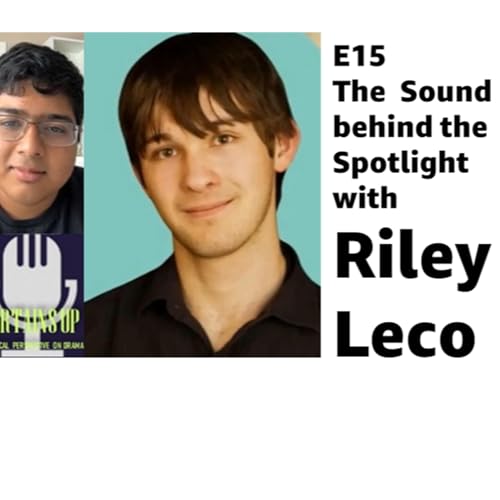
  • E15: The Sound behind the Spotlight with Riley Leco
    2025/07/07

    "Sound can make or break a mood."Summary

    In this episode of Curtains Up, host Rohan speaks with sound designer Riley about the integral role of sound in theatre. They discuss Riley's journey from acting to sound design, the collaborative nature of theatre production, the emotional impact of sound on audiences, and the challenges faced in sound design. Riley shares valuable advice for aspiring sound designers and emphasizes the importance of sound in storytelling, illustrating how it can enhance or detract from a performance.

    Takeaways

    Riley transitioned from acting to sound design, finding a passion for it.

    Tech Week is a crucial learning experience for sound designers.

    Collaboration with lighting designers is essential for cohesive production.

    Sound can significantly influence audience emotions and character journeys.

    Riley emphasizes the importance of pre-recorded sound effects in productions.

    The software QLab is a key tool for running sound during shows.

    Negative feedback can be challenging but is part of the learning process.

    Dedication and hard work are vital for success in sound design.

    Sound design requires a deep understanding of the narrative and mood.

    Riley values the collaborative relationship with lighting designers.


    Chapters

    00:00 The Magic of Sound in Theatre

    03:18 Riley's Journey into Sound Design

    06:11 Collaboration in Theatre Production

    09:14 The Emotional Impact of Sound

    12:06 Challenges in Sound Design

    15:21 Advice for Aspiring Sound Designers

    18:17 The Importance of Sound in Storytelling


    続きを読む 一部表示
    19 分
  • E 14 Illuminating the Stage: A Conversation with Kathy Perkins
    2025/07/05

    "You can't be afraid of the word no."

    In this enlightening conversation, Professor Kathy Perkins shares her journey from aspiring actress to a renowned lighting designer and theater historian. She discusses her commitment to amplifying the voices of Black women in theater, the collaborative nature of lighting design, and her artistic philosophy that prioritizes storytelling over ostentation. Perkins also offers valuable advice for aspiring theater artists, emphasizing the importance of mentorship and the courage to seek help in a competitive industry.

    takeaways

    • Professor Perkins emphasizes the importance of mentorship in the theater industry.
    • She began her journey in lighting design after a friend's suggestion.
    • Her work focuses on amplifying the voices of Black women playwrights.
    • Lighting design is a collaborative process involving directors and other designers.
    • Perkins believes that subtle lighting enhances storytelling.
    • She has designed over 300 productions, each with a unique approach.
    • The importance of understanding the script and director's vision is crucial.
    • Perkins advocates for a balance between technology and storytelling in lighting.
    • She encourages young artists to explore various lighting opportunities.
    • The theater industry requires resilience and the ability to handle rejection.

    続きを読む 一部表示
    24 分