Somewhere around 1930, a child sat in a classroom and learned to be ashamed of her own grandmother.
Between 1921 and 1940, the harm of the official school was finally named out loud. The lesson itself had become the weapon: a history book that erased the child, a separate "Americanization" room that called her Spanish a deficit, a federal curriculum built to scrub a Native nation out of a child, a classroom where no adult could speak her language. Carter G. Woodson gave the harm its sharpest name in The Mis-Education of the Negro: teach a child she is an outcast, he wrote, and she will go to the back door without being told.
But this is also the episode where the season's idea steps fully into the open. In the same years, a particular kind of person stepped forward in each community, a teacher, a scholar, an advocate, a lawyer, who shared the very background of the children being harmed. And what they proved, each in a different corner of the country, is the thing the research would one day call ethnic matching: that who stands in front of the child, who speaks for the child, and who fights for the child is the difference between a school that sees a deficit and a school that sees a gift.
What does it cost a child when the lesson itself teaches her to doubt the people who love her, and what does it take to refuse that cost?
In this episode:
• Carter G. Woodson and The Mis-Education of the Negro (1933); the "misrecognition tax" written into the curriculum
• Alice Fong Yu, first Chinese American teacher in San Francisco, and the Square and Circle Club; George I. Sánchez and Forgotten People; Ruth Muskrat Bronson at Haskell ("Indians are people too")
• Jovita Idar, the Lemon Grove "Mexican Student Strike" and Roberto Alvarez (1931), and Farrington v. Tokushige (1927)
• Mary McLeod Bethune and the NYA's Division of Negro Affairs; Charles Hamilton Houston, who trained the lawyers who would win Brown
• Ethnic matching, named directly: the families called it "being seen," long before the research measured it
Chapters:
00:00 A child taught to be ashamed
03:37 Part 1: The lie, and the man who named it (Woodson)
07:17 Part 2: The ones who matched the child
09:36 George I. Sánchez and Forgotten People
11:49 Ruth Muskrat Bronson at Haskell
14:37 Lemon Grove and the Mexican Student Strike
16:18 Mary McLeod Bethune and the New Deal
17:26 Charles Hamilton Houston and the road to Brown
18:46 Part 3: The match, and the tax it refuses
23:51 Do this this week
Draws on Carter G. Woodson, George I. Sánchez, Ruth Muskrat Bronson, Mary McLeod Bethune, and Charles Hamilton Houston. Continues Season 3's argument that ethnic matching began as community practice, and sets up the next episode, the long road to Brown, and the victory that quietly removed the very teachers who had been the answer.
Listen next: Season 3, Episode 5. New to the show? Start with Season 3, Episode 3, "The Schools Built Against Them."
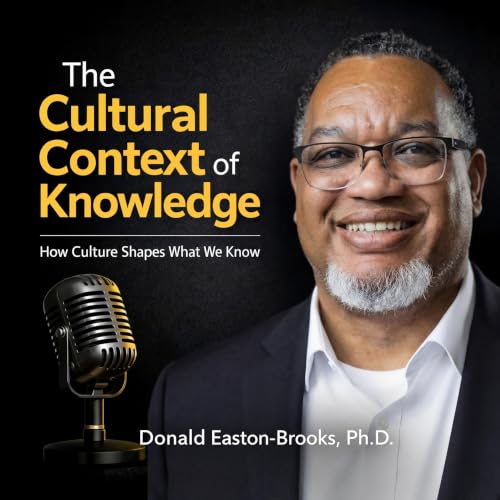
The Cultural Context of Knowledge is a narrative podcast with Dr. Donald Easton-Brooks on how culture, power, and institutions shape what counts as knowledge, and what that means for learners, classrooms, and the U.S. education system.
Follow on Spotify, Apple Podcasts, or Amazon Music. Learn more at donaldeastonbrooks.com.
#CulturalContextOfKnowledge #TheInheritanceTax #EthnicMatching #CarterGWoodson #HistoryOfEducation


 2026/06/2434 分
 2026/06/1017 分