The Connected by Health episode explores how trauma can affect not only those who directly experience it, but also their families and communities across generations. It discusses historical trauma in Native American and Alaska Native communities, Black Americans, Japanese Americans incarcerated during World War II, Latino families affected by immigration enforcement, and Jewish families shaped by the Holocaust. These histories are distinct, but each raises questions about how past events can continue to influence health.
The episode emphasizes that claims about trauma being passed down through DNA are still scientifically uncertain. Instead, there are clearer pathways through which history affects health: disrupted families, lost property and wealth, discrimination, displacement, reduced access to education and health care, and changes to neighborhoods and cultural connections.
Chronic exposure to stress can also affect the body over time. The episode discusses allostatic load, the cumulative strain associated with repeatedly activating the body's stress response, and weathering, a framework for understanding how ongoing social and economic adversity may contribute to earlier health problems. These concepts help explain how current conditions—not ancestry itself—can shape health disparities.
The discussion also stresses that trauma is not destiny. Communities have maintained and rebuilt cultural traditions, families, institutions, and support networks. Health-care providers should avoid assumptions based on ethnicity, listen to patients' experiences, offer culturally responsive and trauma-informed care, and address barriers such as housing, food access, transportation, discrimination, and health-care costs.
The episode's central message is that history influences the conditions people live in, and those conditions influence health. Because many of those conditions are shaped by society, they can be changed through investment in communities, better access to care, and efforts to reduce discrimination and poverty. Trauma can echo across generations, but so can healing, opportunity, connection, and resilience.
Where Health, Society, and Innovation Intersect
Connected by Health is a forward-thinking podcast built on a simple but powerful truth: healthcare is not a cost to be cut — it is an investment that shapes the future of everything around us.
Millions of people struggle with healthcare challenges each year — whether it's lack of insurance, unaffordable costs, limited access to care, or managing chronic disease — affecting not only their health, but their financial stability and overall quality of life. Their stories are not isolated — they are all connected. From economic growth and workforce productivity to education, technology, national security, and community stability, health is the thread weaving them together.
Each episode blends real-world stories with data-driven insight to show how strategic healthcare investment drives innovation, reduces long-term costs, strengthens public health infrastructure, and fuels economic resilience.
Grounded in evidence but driven by purpose, Connected by Health reframes healthcare not as a line item expense, but as foundational infrastructure — because when we invest in health, we invest in people, potential, and the strength of our entire society.
────────────────────────────────────────
🤝 If today's conversation resonated with you, share it with someone who needs to hear it.
⭐ If you found value in this episode, please take a moment to leave a review, it truly makes a difference.
🎧 And don't forget to follow the podcast on your favorite platform so you never miss a new episode when it drops.
#PublicHealth #HealthEquity #SocialDeterminantsOfHealth #TraumaInformedCare #GenerationalHealth #Generationaltrauma #Indigenousday


 25 分
25 分 16 分
16 分 37 分
37 分 40 分
40 分 30 分
30 分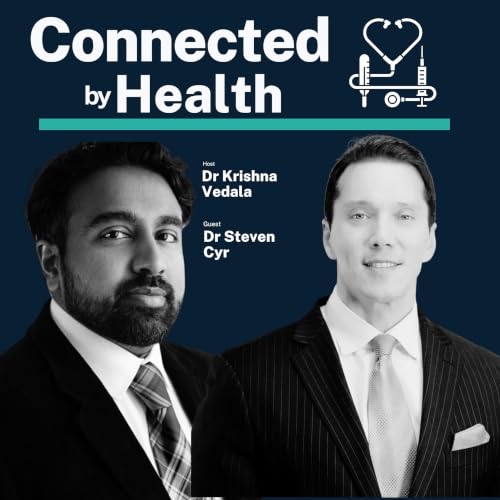 35 分
35 分 44 分
44 分 2026/09/1451 分