エピソード

  • S1 Ep 4: Christopher Parkening, J.S. Bach, and Banana Boxes
    2026/06/26
    THEMEToday’s Dispatch comes from my hometown in rural Pennsylvania on Thanksgiving Day in 1988. I was twelve years old, and doing my best to avoid food-prep chores when the doorbell rang. It was Brian, a friend of my dad’s, who had recently been baptized at the Brethren in Christ Church my family attended. The Brethren are full-immersion dunkers, and had an oversized bathtub installed directly under the altar, accessible by a trap door. Pastor Rick forgot to heat the water before the morning service, so Brian’s proclamation of faith was a particularly dramatic affair. After his third dip, he gasped and shivered through pledges to remove temptations of all sorts from his life.Standing outside our family home, Brian revealed that one of his temptations was an extensive collection of vinyl records, which he decided to gift me. He passed me a hand trolley, lowered the tail gate of his pickup truck, tore off a plastic tarp that would contain a deer carcass later that season, and said, “ OK, kid, have fun.” The records were piled high in a series of cardboard boxes with the Chiquita Banana logo. Apparently, Brian and, for once, my parents found themselves unbothered by how those boxes of temptation might negatively impact my moral fiber, and to this day I remain grateful for their oversight.After green bean casserole and pumpkin pie, the fancy dishes were washed, and I was free to start in on the banana boxes. The discovery process began with the usual suspects: the Doors, the Beatles, the Stones. But at the bottom of the first box was a record cover featuring the profile of a handsome, pouty-faced man, with the title Parkening Plays Bach in bold white and orange lettering. I thought the man in the photo looked a bit like Harrison Ford, and the prospect of Han Solo playing the music of Bach piqued my curiosity, so I dropped the needle. About 45 seconds into the first track, I forgot about all the other records.VARIATION 1Parkening Plays Bach was released by Angel Records, a Capitol/EMI subsidiary, in 1972. Christopher Parkening was in his mid-20s and had already recorded three other albums for the label. His playing is confident and mature, and there’s a freshness to his interpretations that is unusual for classical guitar records of that time period. The looming, grandfatherly presence of the era’s dominant guitar figure, Andres Segovia, is barely detectable. Parkening places Bach’s melodic material squarely on the beat, and doesn’t go ham with the rolled chords and swooping portamenti that permeate Segovia’s 1969 Bach album. The influence of John Williams—six years Parkening’s senior and a fellow star pupil in the Segovia lineage—is far more apparent. The Williams influence is particularly present in Parkening’s sound, which is warm yet direct. That’s thanks in part to the 1967 cedar-top MT Ramirez guitar he plays on the record, which is currently on display to be seen but not heard at the Metropolitan Museum of Art.For me, the standout track on the album is Rick Foster’s arrangement of “Jesu, Joy of Man’s Desiring,” from Cantata BWV 147. It’s a deceptively tricky arrangement. Foster set the material in the key of C, which limits the availability of open bass strings, so producing any semblance of legato requires prolonged contact with the fretboard. That means by the first repeat of the A section, the left hand is pooped, and there are still two minutes to go in the piece. Parkening makes tidy work of Foster’s arrangement, and considering they were cutting the record onto two-inch magnetic tape controlled by massive reel-to-reels, I can’t imagine there were many edits in those sessions.Parkening Plays Bach was an immediate success, and helped establish the young American guitarist squarely alongside the likes of Segovia and John Williams at the peak of Mount Classical Guitar. But there were early indications that a conventional, public-facing career with up to 90 concerts annually was ill-suited to Parkening’s demeanor. In one bizarre incident, he cut off his nails in the middle of a tour in what he called an “act of self-sabotage.” Now, if you’re not familiar with the classical guitar, cutting off your right-hand fingernails in the middle of a tour may not seem like a big deal, but it is. Right-hand nails are the primary way we guitarists produce a sound, so Parkening’s move was basically the equivalent of a pop singer showing up to Coachella and refusing to use a microphone. I’ve devoted a not-insubstantial number of hours to imagining how concert organizers and the PR team at Columbia Artists Management began squirming as one of the most recognizable faces on their artist roster began to fray at the edges.The fraying eventually unraveled, leading to a 4-year wholesale retreat from the planks. As far as retreats go, Parkening pretty much set the industry standard. He bought a ranch in Montana, announced his retirement at the ripe old age of 30, and...
    続きを読む 一部表示
    17 分
  • S1 Ep 3: The Noble Profession, Part 2
    2026/06/19
    THEMEI had a wonderful education. I came into the music degree process underprepared and a bit terrified, but hungry to devour as much music and art as I could cram into my soft, still underdeveloped frontal lobe. I hit the conservatory scene at a moment when libraries were still the best place to locate hard-to-find scores and recordings. By the way, there was a time when every piece of music ever recorded wasn’t just…available.There were hi-fi systems in the listening cubicles, and headphones you could check out at the library by leaving your dorm key or student ID badge. There was a single desktop computer in the main hall of my school, and students, the maintenance team, and professors all lined up together to look something up or write an email on the old dial-up network. Seems quaint now. Handheld phones were reserved as movie props for douchebags in Porsches who always get their comeuppance in Act 3, so people standing in line actually had to interact with each other or just stand there, suffering the indignity of their own thoughts.These days, I spend a lot of time on university campuses, mostly as a visiting performer or composer-in-residence. Campuses are noticeably quieter places now than they were when I was a student. What little human interaction there is before masterclasses or lectures tends to come from two or three people commenting on the same 15-second clip that an algorithm coughed up on their tiny screens.And I know, I know, I’m coming off as a fuddy-duddy, “things-were-better-in-my-day” Gen Xer. But that’s only because a) I am a Gen Xer, and b) a lot of things were better. If you wanted to listen to music, you had to put in a bit of effort. You had to buy or borrow the music, or make a friend. CDs sounded better than the compressed MP3 garbage the streamers serve to us now. Chit-chat at the bank teller was more pleasant because people had to practice it in order to function. You could arrive at the airport at least two hours later than you do now. Dating was…not what it is. You could get in a car and actually get lost. If you left the house, nobody knew where you were most of the time. It was an inconvenient era to be alive, and it was glorious.It’s likely because of nostalgia for that time that I wholeheartedly believe in the value of higher education, mostly as a jumping-off point for a lifetime of learning and intellectual growth, and less as a direct path to gainful employment. And if you listened to the first installment of this series, you heard quite a bit from late Baby Boomers and Gen Xers like me bemoaning the cultural, demographic, and economic shifts that led to the current state of institutional education. Like me, all three guests devoted the lion’s share of their careers to institutional teaching. Also like me, they got into the field when the system was a bit easier to navigate. Not easy, but easier. Today, we’ll hear from people who are my age or younger. They had to navigate a downshifting education system, which either spat them out entirely or was so inaccessible that it propelled them to innovate. And here’s the thing: as a direct result of their difficulties, they’re all thriving. We’ll hear from Candice Mowbray, who put adjunct life in the rear view with a can of tuna fish and a bottle of diet root beer. We’ll talk to Thomas Viloteau, who, with apologies to The Boss, had a wife and kids in Baltimore, Jack. They packed up for France, and they never went back. Finally, we’ll talk to Brandon Acker, who says he’s found exactly where he’s best suited.Let’s get started.Variation I: Candice Mowbray, A Can of Tuna Fish, and a Diet Root BeerCandice Mowbray does enough different things that it takes her a minute to describe all of them:“I am a performer, a scholar, and an educator.As a performer, that’s been a huge part of my career and primarily it’s been as a classical guitarist. A large percentage of that has been as a chamber musician, which I absolutely love. I often play pops concerts with orchestras or play in the pit for musical theater.Right now I’m really focusing my teaching on adult learners and offering classical guitar lessons and classes but also music theory and performance practice, which is another word for performance anxiety, for people who are nervous about performing. Trying to create environments in which they learn a bit about their nervous system and some tools that maybe they can apply to feel a bit more comfortable performing.Scholarship was an unexpected part of my career. I have done a lot of research on the history of women in classical guitar and written, published, and lectured. Those are my big three umbrellas of work but I’ll also arrange and compose and write grants. Anything that has to do with music I’m in.”Well, almost anything. Candice started out in the adjunct circuit, teaching guitar, music history, music theory, ensembles, and pedagogy. In a typical week, she bounced between ...
    続きを読む 一部表示
    47 分
  • S1 Ep 2: The Noble Profession, Part 1
    2026/06/12
    THEMEToday’s Dispatch comes from the teaching studio. I’ve occupied a number of them over a 25-year span, ranging in aesthetic appeal from a dingy backroom owned by a guy who won the lottery and spent his winnings mismanaging a guitar shop to the vestibule of a 17th-century cathedral.Most of the musical personalities I admire also occupied teaching studios, from Bach to Beethoven to Aaron Copland. A number of the direct influences on this podcast were also educators, such as Carl Sagan and Leonard Bernstein, and though they weren’t associated with any particular institution, I consider Anthony Bourdain and Julia Child to be among the great educators of the television age.The guitar’s history is rife with great teachers, such as the 19th-century icons Fernando Sor and Mauro Giuliani, and the 20th-century pioneers like Andres Segovia and Aaron Searer, whose efforts helped pave the way for the instrument’s inclusion in conservatories and universities.With all this vaunted pedagogical history, it’s tempting to see the teaching profession as providing the essential springboard for greatness in the lives and careers of the artists I mentioned. But a casual read-through of the historical materials left behind by various composers and performers provides a more nuanced view. Beethoven, in particular, had a thorny relationship with teaching. His letters indicate that he would clearly have preferred to spend his days creating, but teaching helped him pay the bills. And it seems he had a lot of bills.I frequently hear the phrase “teaching is a noble profession,” and my thoughts reflexively turn to a friend of mine whose student brought an incontinent goat to a lesson at a university campus. I wonder if my friend felt noble as he spread a layer of paper towels on the studio carpet and fogged the room with Febreze in an unsuccessful attempt to mitigate the remnants of that encounter. Considering I most often hear that phrase from those who left the classroom to climb the income ladder and become administrators, it seems to me a more accurate amendment to that phrase would be “teaching is a profession.”VARIATION I: KEVIN VIGILThe first stop on our educator tour brings us to one of the success stories in the contemporary teaching racket. If you’ve ever sat through a school board meeting, you’re aware that cost-cutting measures are a perennial topic. While middle and high school band and orchestra programs are generally expensive, savvy administrators figured out a while ago that guitar programs are comparably cheap to build and maintain. Buy a couple of dozen Yamaha C-40s, hire one of the many fresh-faced graduates from a reputable doctoral program, guide the new hire through a certification process, and in many cases, you find yourself with an if-you-build-it-they-will-come situation. Add a bit of can-do attitude and a sprinkling of advocacy to the mix, and you get…you know what? I’ll just let him introduce himself:“Well, uh, my name is Kevin Vigil. I have been teaching in the public school system for the last 21 years at Heritage High School in Loudoun County, Virginia. You know, I get paid to teach people how to play guitar.”To this day, many public high school music programs in the U.S. with a guitar component are taught by non-guitarists. The poor band or choir director gets assigned a guitar class and, of course, they try their best, but that Guitar Methods course from their undergrad was no match for a 15-year-old shredder who showed up with a Van Halen solo under their fingers. Loudoun County public schools happen to be just a stone’s throw away from several excellent conservatories. Those conservatories pump out guitarists with doctoral degrees at a much faster rate than colleges and universities produce the jobs those degrees are designed to fill. Loudoun County Public Schools saw a hiring opportunity, and for over 20 years, they’ve employed an impressive stable of guitar instructors, whose work, like Kevin’s, doesn’t stop at the classroom:“We do a lot of things outside of the building, right? So, we started the year playing for the Department of Education’s Board of Education. That was our first gig a week into the school year. We played for the State school board. We played for the Loudon County school board. We’ve played at Yale University many times; we just did Appalachian State’s festival this year. Reaching out like that, I think it’s kind of a form of advocacy, and I guess I’m just an advocate for the kids and for the programs.”That advocacy currently includes a turn as vice president of the Virginia Guitar Directors Association and chair of the National Association for Music Education’s Council for Guitar Education.“In terms of paying it forward, I just started seeing, year by year, seeing more and more what was going on. Not just in my district and other districts. And as I started working with organizations like the Virginia Music ...
    続きを読む 一部表示
    42 分
  • S1 Ep 1: Cochran & McAllister in Sutherland, Scotland
    2026/06/05
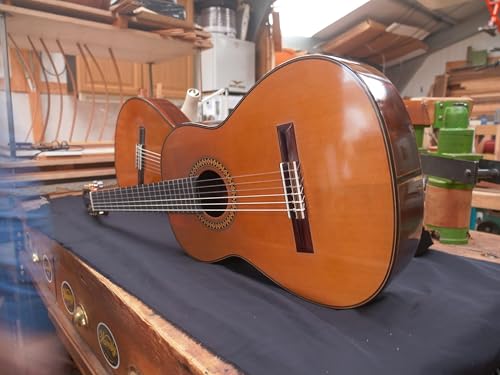
    THE CLASSICAL GUITAR DISPATCHS1 Ep 1: Cochran & McAllister in Sutherland, ScotlandI’m Matthew Cochran. Welcome to the first episode of the Classical Guitar Dispatch, a new podcast dedicated to telling the story of the guitar. The first season of the show covers music from Asencio to Dowland to Tárrega. I speak with current and former members of the Los Angeles Guitar Quartet, discuss economic and demographic trends affecting students and educators, and I go behind the scenes at international guitar festivals. I’ll dig into arranging and recording, and you’re all invited to join the Classical Guitar Dispatch Book Club. This summer’s read covers A Life On the Road, Tony Palmer’s fly-on-the-wall account of Julian Bream at the peak of his career. This week’s show is part memoir and part travelogue, a format I plan to return to from time to time. As the show finds its footing, I’d love to hear your ideas and suggestions. My hope is that the Classical Guitar Dispatch provides a sounding board for all members of the guitar community. Wherever you are in the world, whatever your interests, whether you’re just starting out or you’re a grizzled, road-hardened pro, or, if the sound of my voice just helps you get to sleep, all are welcome. Today’s Dispatch comes from County Sutherland in Scotland, where Matthew McAllister and I visit luthier Michael Ritchie, busk at a bakery, lead an accidental singalong, and take home a brand-new guitar. Let’s get started.It’s not easy to travel from my home in Traverse City, located in Michigan’s northwestern Lower Peninsula, to Strath Halladale in the northern part of mainland Scotland. But the promise of a new guitar from luthier Michael Ritchie and the start of a spring tour with my duo partner, Matthew McAllister, more than justified the effort. After a series of flights, Matthew and I met in Inverness. He flew from his home base in Belfast, Northern Ireland, and was in jolly spirits as he retrieved his bag from the luggage carousel, which he balanced alongside two guitar cases, one containing a traditional six-string guitar and another with a ten-string instrument. Matthew has made this trip several times, and he has that “just wait until you see this” face that I’ve come to expect from trips like this. I arrived in Inverness after flying without a guitar for the first time in recent memory. It was an eerily peaceful experience, traveling without the constant, low-grade anxiety of handing over the primary tool of my livelihood to an overworked baggage handler or an irritable flight attendant. As the throng of golfers and salmon anglers passed by, Matthew and I met the men we had come to see, master luthier Michael Ritchie, flanked by his son, Hamish. We loaded guitars and gear into Michael’s Volvo, one of those classic wagon models with a mileage counter that loses its relevance long before the car loses functionality. We began the last two-and-a-half hours of our trip starting on the commercialized A9 and then moving onto a 40-mile stretch of single-lane road that’s more populated by grazing sheep than motorists. We passed iconic dry-stone boundary walls through the Flow Country of Caithness and Sutherland, where the world’s first peatland, designated as a UNESCO World Heritage Site, teems with birdlife and bog moss. The dirt road narrowed, and we arrived at a stone cottage on an idyllic piece of farmland in Strath Halladale, featuring a handful of outbuildings dedicated to the two ventures that keep the family busy, Michael Ritchie’s guitar shop and his partner Susan Wallace’s small batch pop-up bakery, Loaf, known online as the Peat Bog Baker.In his previous life, Michael Ritchie was a guitar tech traveling for months-long stints with indie bands like Belle and Sebastian and Franz Ferdinand, who rode to prominence during the heyday of the corporate touring economy in the 90s and early aughts. Michael problem-solved overheating amps, readjusted truss rods, and maintained fussy vintage gear while thousands of concert goers chanted along to “Take Me Out.” Meanwhile, Susan was (and still is) the lead singer of the Glasgow-based trip-hop duo Cinephile, who built their reputation on television and film soundtracks. On paper, it might be difficult to square Michael and Susan’s transition from road-dog to peat bog, but after spending a couple of days with the Ritchies, it’s easy to see the appeal of a mostly off-grid lifestyle in rural Scotland devoted to family, bread, and guitars. Michael showed me to the cabin where I would stay, a cozy hut just big enough for a bed, a heating unit, and a toilet-and-sink combo. Meanwhile, Matthew got the in-house option, bunking in Hamish’s room alongside Legos and remote-controlled cars. It was Friday, which meant Susan and her assistant Paco were busy in the baking shed, preparing the 350 or so individual sourdoughs, pastries, loaves, and cakes that would go to market the next morning. ...
    続きを読む 一部表示
    26 分
  • Guitar in Scottish Flow Country and Hard Goodbyes
    2026/04/24

    This is a snippet from the first episode of the Classical Guitar Dispatch, where Matthew McAllister and I visit master luthier Michael Ritchie and his partner, master baker Susan Wallace, who runs a small batch bakery, Loaf. Michael and Susan live at the northern tip of Scotland, on a stunningly beautiful peat bog. The show chronicles the commissioning process for a new guitar, my switch from a loud, modern instrument to a refined traditional build, a concert, an accidental sing-along, and pushing my gluten intolerance past the safe zone. The full episode drops Friday, June 5.


    Get full access to Classical Guitar Dispatch at classicalguitardispatch.substack.com/subscribe
    続きを読む 一部表示
    2 分
  • Searching for the Soul of the Guitar
    2026/04/16
    Searching for the Soul of the GuitarI’m Matthew Cochran, host of the Classical Guitar Dispatch, this brand-new podcast that you are kind enough to be listening to. Normally, the tagline that I’ll use to end my intro is that the show is dedicated to telling the story of the guitar. And while that statement is true, it’s not the whole, entire truth.The whole, entire truth is that I’m on a mission to find the soul of the guitar. And look, I know how that sounds. It’s a frankly embarrassing statement for me to make. I worry that you will think it’s pretentious, cheesy, and self-indulgent. And maybe it is. But I turn 50 this year, which means I’m on the back nine of my time as a conscious entity on this little blue orb. And so far, most of my good memories involve the guitar. Most of the beauty I’ve experienced has been in some way shaped by the guitar. I play the guitar, write music for it, record myself and others playing it, and I love it. I just love it.But there’s a frustrating element to loving the guitar, particularly the classical guitar. And that is how profoundly misunderstood the instrument is. Even in specialist circles, it’s often portrayed as the cartoon version of itself. You know, the hyper-macho, Spanish Romance version of the instrument. That may have something to do with the fact that every regional, semi-professional, or professional orchestra puts the Aranjuez on its Valentine’s Day concert or its "Spanish Fire Fundraising Extravaganza" once every five seasons or so. Yet, if you’d like to hear one of the hundreds of other guitar concertos available by any composer whose name is not Rodrigo, I mean, just forget it. As far as music institutions go, there’s a constant drumbeat from administrators to sell the guitar as the everything instrument, which, of course, dilutes the quality of their offerings and makes the guitar into an advertising tagline. Like, “come to our school, and our single-person guitar faculty who by the way studied classical guitar performance will magically make you an expert in jazz slash rock slash songwriting slash composition slash music production slash classical/flamenco blah blah blah…which, if you know anything about how hard each one of those individual artistic disciplines are, then you know that those admissions programs, development offices, and marketing teams are, knowingly or not, slinging a load of horseshit just to get another student in the door because they care way more about their job security than they care about actually educating the students who pay those salaries. By the way, if this sounds heretical, don’t take my word for it, just look up dwindling enrollment numbers, demographic shifts, and superimpose those numbers onto how many eliminated positions, cost-cutting measures, and music school closures there have been over the past decade or so, and do your own math.That’s the way I view the state of affairs in the most visible areas of the mainstream classical music profession, so it’s no wonder how superficially the guitar is presented to the general public. But I’m sooooo tired of seeing the guitar as a prop in press photos and Instagram posts that aren’t about the guitar at all; they’re just thirst traps that want me to buy stuff or click on a link or whatever. And I’m exhausted by my YouTube or TikTok channel’s dumb algorithm that thinks I want to hear Leyenda. Again. Played pretty well. Again. By yet another person that the algorithm thinks I will find attractive. Again. Please don’t misunderstand me here, I have nothing against youth and beauty. It’s a time-tested mechanism to get people’s attention. If that’s what you’ve got to offer, go for it. And if that’s all you need from the guitar, you know, have fun or whatever. But for me, it’s just not enough. I mean, we live in an age when most of the music written for the guitar is available for us to play, to listen to, to enjoy. Much of the repertoire has been recorded, in some cases multiple times, by some of the greatest artists to ever play the instrument. The guitar has breadth, depth, history, and profound expressions of the human condition. Yet, if my feed has anything to say about it, I’m supposed to be happy with advertising. I’m supposed to be satisfied with the most superficial AI-generated, Spotify playlist-type crap. To just gobble it up as if I don’t know the difference between quality and garbage. But I think I do know the difference, and that’s exactly why I’m not satisfied. And I bet a lot of you know the difference between quality and garbage, too. And you aren’t satisfied. Especially if you’re even vaguely aware that the level of performance at the professional level is as high as it’s ever been; there are resources, there are festivals, there are student-level opportunities, there is a growing adult learner community out there, it is truly a golden age for lovers of the classical ...
    続きを読む 一部表示
    7 分