

Cannabis and the Heart: Atrial Fibrillation, Arrhythmias, Stroke, Myocardial Infarction and Sudden Cardiac Risk Explained
カートのアイテムが多すぎます
カートに追加できませんでした。
ウィッシュリストに追加できませんでした。
ほしい物リストの削除に失敗しました。
ポッドキャストのフォローに失敗しました
ポッドキャストのフォロー解除に失敗しました

Cannabis and the Heart: Atrial Fibrillation, Arrhythmias, Stroke, Myocardial Infarction and Sudden Cardiac Risk Explained
-
ナレーター:
-
著者:
概要
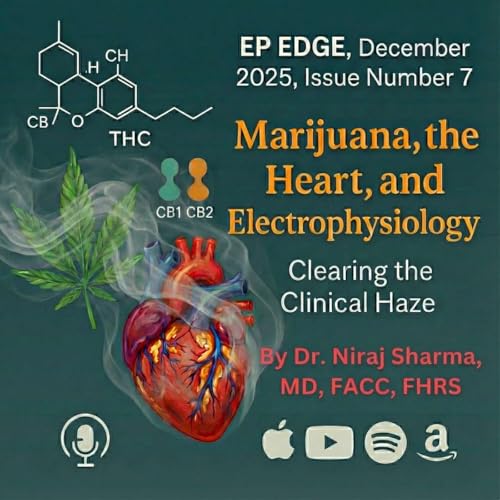
In this EP-EDGE podcast episode, Dr. Niraj Sharma, cardiac electrophysiologist, breaks down the latest evidence linking modern high-THC cannabis to cardiovascular and electrophysiologic risk. Drawing from large real-world datasets, mechanistic studies, and global meta-analyses, this episode explains how today’s cannabis products—vapes, edibles, dabs, and synthetic cannabinoids—are very different from the low-potency marijuana of the past.
We explore the science behind CB1 receptor activation, autonomic imbalance, endothelial dysfunction, platelet activation, and how these mechanisms translate into real-world clinical outcomes—including:
- Atrial fibrillation and supraventricular tachycardia
- Premature atrial and ventricular beats
- Ventricular tachycardia and ventricular fibrillation
- Myocardial infarction and stroke in young adults
- Endothelial dysfunction as an early vascular warning sign
- Why high-potency THC and route of use (vaping, edibles, dabs) matter
This episode reviews landmark studies from JACC Advances, Heart, JAMA Cardiology, European Heart Journal, and Heart Rhythm, including massive EHR-based cohorts involving millions of patients. We also address common misconceptions, including why some older studies show neutral risk—and why those findings do not apply to modern high-potency cannabis use.
Whether you are a cardiologist, electrophysiologist, primary care clinician, or an informed patient, this episode provides a clear, evidence-based framework to understand why modern cannabis is not cardiovascularly benign and how it should be discussed in clinical practice—especially in patients with atrial fibrillation, ventricular arrhythmias, or unexplained cardiac events.
References, infographics, and detailed study breakdowns are available in the EP-EDGE LinkedIn Newsletter (December 2025 issue).