

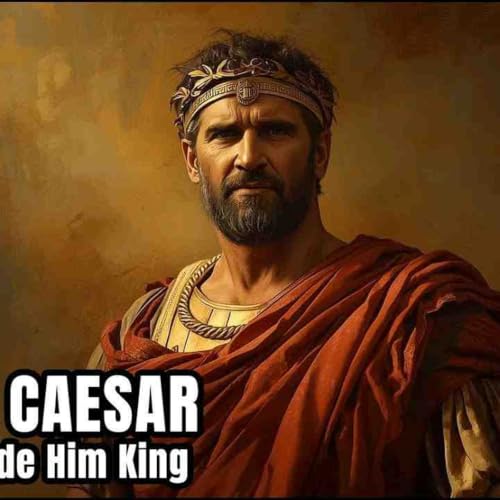
Caesar How a Kidnap Sparked an Empire overlay vignette zoom pan
カートのアイテムが多すぎます
ご購入は五十タイトルがカートに入っている場合のみです。
カートに追加できませんでした。
しばらく経ってから再度お試しください。
ウィッシュリストに追加できませんでした。
しばらく経ってから再度お試しください。
ほしい物リストの削除に失敗しました。
しばらく経ってから再度お試しください。
ポッドキャストのフォローに失敗しました
ポッドキャストのフォロー解除に失敗しました

Caesar How a Kidnap Sparked an Empire overlay vignette zoom pan
-
ナレーター:
-
著者:
In this episode, we explore how the audacity of a 25-year-old Julius Caesar, captured by Cilician pirates near the island of Pharmacussa around 75 B.C.[citation:1][citation:4][citation:6], foreshadowed his entire career. When the pirates set his ransom at 20 talents—a heavy weight of precious metal—the young nobleman reportedly scoffed and insisted they raise it to 50 talents, deeming the original sum an insult to his stature[citation:6][citation:11]. During his 38 days of captivity, Caesar joined the pirates' games but treated them as his subordinates, shushing them when he slept and threatening to hang them all. He even recited his poetry and speeches to them, berating them as "illiterate barbarians" when they weren't sufficiently impressed[citation:6][citation:7].
After his ransom was paid, Caesar's actions spoke louder than his threats. He immediately raised a fleet in Miletus, captured the pirates who were still anchored at Pharmacussa, and reclaimed his ransom[citation:6][citation:11]. He then took them to the prison in Pergamum, and, though he lacked the legal authority to do so, he personally oversaw their crucifixion, mocking them by first cutting their throats "to make it easier for them to die"[citation:1][citation:6][citation:7]. The story, likely told by Caesar himself, became a cornerstone of his legend. While historians debate some details, such as the exact year and the identity of the governor he dealt with, the core of the narrative is widely accepted as historically grounded[citation:6][citation:14][citation:15]. What matters is what the story reveals about the man who would go on to conquer Gaul, cross the Rubicon, and become dictator of Rome. It showcased his characteristic audacity, his ability to command allegiance without official power, and his chilling willingness to do whatever was necessary to get what he wanted. This was the origin story of a man who would change the Roman Empire forever. Subscribe and hit the bell for more deep dives into the moments that shaped history.
adbl_web_anon_alc_button_suppression_t1
まだレビューはありません