エピソード

  • Traditional Paths and Innovative Paths to Immigration Visas For International Student Athletes
    2026/07/09

    This is Courtside Counsel Law Firm and thank you for tuning in. We are joined here today with Jill McBride Baxter, and McGeorge School of Law Students, Jade Smith, Makyla DaPonte, Gara Miner, and Mayra Vega.

    Today we will discuss F1, P1, and O1 visas. F1 visas apply to international high school and college athletes, P1 visas apply to international recognized athletes or teams including but not limited to the: NFL and NBA, and O1 visas apply to Professional and Olympic Athletes.

    For each of the topics we will discuss:

    1. What we found out in researching this topic and what was overall was most interesting.

    2. When an F1, P1, or an O1 visa apply.

    3. And we would provide some real world examples.

    続きを読む 一部表示
    25 分
  • Everybody Gets Paid, But the Cowboy!
    2026/06/25

    Jill and Cory Rockhold, discuss with John Baxter, a calf roper and college football coach the need for sports agents in rodeo a world where contracts hold the only guaranteed money, exposure is scarce, and the cowboy is always last to get paid.

    Go to Jill's Jill's Website to set up a meeting for representation. If you liked this episode please share and subscribe to my Podcast Born to Be a Sports Agent.

    続きを読む 一部表示
    32 分
  • Recruiting, NIL, and the Reality of Sports Agents with Coach John Baxter
    2026/05/24

    In this episode, Briant Mjia Rodelo, and Inderjit Pandher students enrolled in Jill's Sports Law class at the McGeorge School of Law, had
    the unique experience of interviewing Coach John Baxter about his experiences dealing with
    professional sports agents, the recruiting process in sports, and what it means to represent an
    athlete. The interview discusses how the recruiting process is carried out, how an agent can
    establish trust and develop lasting relationships with the players, and the things that a new agent
    needs to consider before signing their first athlete. This episode also provides insights on Coach
    Baxter's passionate views on sports agents with his over forty years of experience as a coach.
    Additionally, the interview explores the mentality required to become a top player in college
    football and the mindset that separates elite athletes from the rest. Coach Baxter also discusses
    the methods and approaches used at the collegiate level to help players develop the habits,
    discipline, and mental approach necessary to think and perform like elite athletes.

    If you need Representation please email jillbaxter@me.com or text Jill at 559-250-0151 and visit my website:

    https://www.jillmcbridebaxter.com

    続きを読む 一部表示
    23 分
  • Does Your Student-Athlete Need an Agent? What Every Parent Must Know!
    2026/05/04

    When your child is pursuing college or professional athletics, one of the biggest questions parents face is: Do they need an agent—and if so, when? In this episode, I break down the realities behind that decision from both a legal and practical perspective.

    We'll cover the differences between an agent and sports attorney, when it makes sense to bring in an agent/attorney, and the risks of getting it wrong. I'll also explain how NIL (Name, Image, and Likeness) has changed the landscape, what role agents can legally play for student-athletes today, and how parents can protect their child.

    Whether your athlete is just starting to get recruited or already competing at a high level, this episode gives you a clear, straightforward framework to make informed decisions—with your child's future in mind.

    続きを読む 一部表示
    16 分
  • Diego Pavia vs NCAA: 3 Legal Views about this Case
    2026/04/02

    Beau Elite is a Sports Law firm in Sacramento California guided by Bryan Pritchard, Solina Sanchez and Gary Alvarez analyze the Pavia Case. Currently, the Diego Pavia v. NCAA case is at the forefront of Sports Law headlines as it calls into question whether an athlete's time at a Junior College should apply when transferring to the University Level. Beau Sports Law analyzes three different perspectives in the ongoing Pavia case and the repercussions they would create for Junior college football athletes. The arguments are as follows:

    1. Diego Pavia: The JUCO rule violates the Sherman Anti-Trust Act by restraining competition among athletes and schools. The JUCO rule should not apply because it is in the student's best interest to maintain the status quo for eligibility as it allows players to maintain longevity in their athletic career. Not allowing the JUCO years to apply would adversely affect low income or first-generation students to transition into the NFL, which secures benefits like NIL revenue at the professional level. More time allows student athletes to train longer and gain an advantage when transferring into the university level, securing victories for their team, school and for the possibility of a professional career later down the line.
    2. School: The eligibility rule restricts economic opportunity in the college athletics marketplace by limiting student athletes' ability to participate and earn NIL money. College sports are currently a real economic market because of athlete's early exposure along with Name, Image and Likeness opportunities. To not count JUCO years falls squarely within the principles of the Sherman Act which protects fair trade by regulating unfair and unreasonable business practices. As it stands currently, the JUCO rule is overly broad and does not serve a clear competitive purpose.
    3. NCAA: Eligibility limits are necessary to keep college sports fair and balanced, not to control the labor market. Eligibility caps prevent older players from dominating college rosters and creating an unfair advantage over younger athletes. JUCO seasons still provide a real competitive experience for student athletes allowing room for their physical and professional development. The Sherman Act isn't a business restriction; it is a rule that regulates how the sport functions at the collegiate level.
    続きを読む 一部表示
    21 分
  • Betting on Himself: Camryn Bracha's Road from JC to the NFL Draft
    2026/03/26

    n this episode, I sit down with Fresno State safety Camryn Bracha, one of the most inspiring underdog stories heading into the 2026 NFL Draft.

    Camryn takes us through his journey from junior college to walking on at Fresno State, and what it really takes to earn your place at the Division I level. With no guarantees and everything to prove, he shares how mindset, resilience, and relentless work ethic helped him turn opportunity into a legitimate NFL future.

    We dive into:

    • The reality of the junior college path

    • What it means to be a walk-on at a Division I program

    • The mindset required to compete and earn respect every day

    • His development at Fresno State and rise as a safety

    • Preparing for the 2026 NFL Draft

    This is a must-listen for athletes, coaches, and anyone who believes in betting on themselves when no one else will.

    続きを読む 一部表示
    23 分
  • The Resilience Play Book: A Conversation with 8 Year NFL Veteran Marlon Moore
    2026/03/12

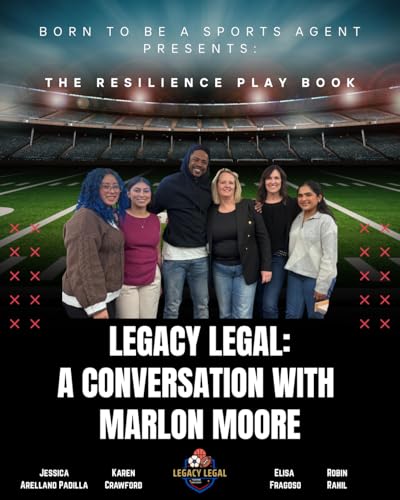
    Marlon Moore was an undrafted free agent who made the 53 man Roster and Played for 8 years in the NFL. This scenario is rare in the NFL. He talks about his journey from college, NFL, losing his dad, and now coaching. Marlon tells you what he wishes he would have told his 22 self during the interveiw. My McGeorge School of Law Sports law in Practice students Jessica Padilla, Karen Crawford, Elisa Fragoso, Robin Rahil did a great job with the questions.

    Do You Need Representation

    Call Jill 559-250-0151

    Visit Jill's Website

    Schedule a Free Consultation https://www.calendly

    続きを読む 一部表示
    17 分
  • "Students Ask: Draft or Pass? With Coach Baxter"
    2026/03/04

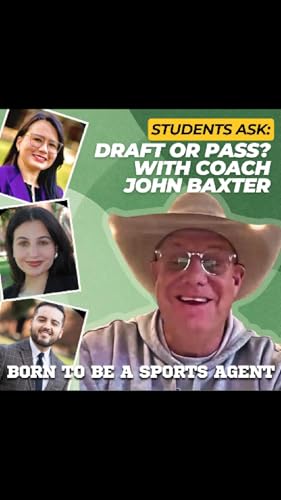
    Collegiate Consultants sits down to interview John Baxter, Special Teams Coach at Fresno State, to talk about the NFL Draft and how teams actually approach the drafting process. Coach Baxter explains his philosophy that his job isn't to create pro players, but to win college games, and how that mindset better develops his teams. He also shares his love for coaching and reflects on the most talented player he coached. The conversation looks at what teams value on draft day and how college success factors into those evaluations.

    Questions Asked:

    1. What is the scouting process like from start to finish?
    2. Do players know when scouts are observing?
    3. Do you tell players if scouts are interested in them?
    4. What do scouts look for when evaluating players?
    5. What is the difference between a player who is just "good" versus one that is draftable?
    6. What changes in the drafting process have you seen throughout your career?
    7. Do you Need Represenation? Visit Jill's Website
    8. jillbaxter@me.com
    9. Buy Jill's Book

    続きを読む 一部表示
    25 分