エピソード

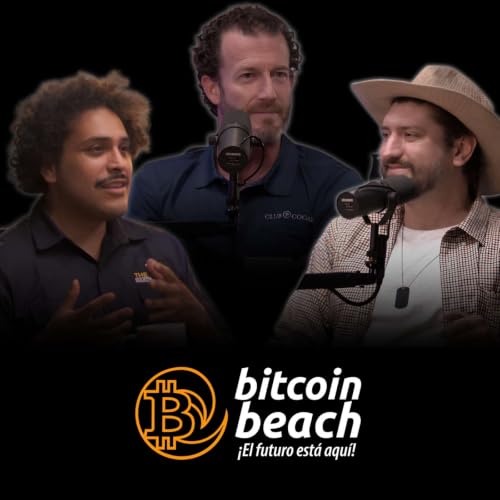
  • El Salvador's Bitcoin Experiment Just Reached a New Milestone & Nobody Is Talking About It | Renato Salazar of New Story Homes
    2026/07/25

    Should families in El Zonte, El Salvador who've never owned anything pay their mortgage in Bitcoin, or does charity work better when it's free? New Story bet on the mortgage, and 122 families are about to become homeowners because of it. Mike Peterson sits down with Renato Salazar (@HolaIAmRenato) to talk about the project turning some of the most expensive land in El Salvador into first-time property ownership for families who've been living in shacks and on land they don't own.

    Renato explains why charging a small mortgage beats giving homes away. Paying every month builds financial education, and once families hit a payment, they start thinking about a motorcycle or a small pupuseria next to the house. The nonprofit has built almost 1,000 homes in El Salvador, and the pattern repeats: homeownership turns new neighbors into a community with its own local economy, and owning land in El Zonte means these families can build generational wealth for the first time.

    The payment rails are where maxis will lean in. Families scan a QR code from their phone or a K1 Bitcoin ATM and pay using tools built by Salvadoran companies Tianki and Blink, with WhatsApp notifications and a dashboard that shows New Story who's falling behind so they can help. Many of these families are learning to use email for the first time, so the project is driving a digital transformation in a community that started with voice notes.

    Then the conversation turns to legacy banking in Bitcoin country. A banker told Renato that any company with Bitcoin in its name goes to the blacklist, credit card payments stack up to 12% in fees while the Bitcoin page cost cents to run, and you still can't pay payroll taxes in Bitcoin in the nation that made it legal tender. They close with Stay at Bitcoin Beach, the vacation rentals running on a Bitcoin standard anyway: Punta Mango Villas open seven months and orange-pilling curious guests, plus the new Bitcoin Beach Suites in El Zonte, walking distance from the beach and priced for Bitcoiners who'd rather stack sats than splurge.

    If this episode made you want to pay a mortgage by scanning a QR code, or at least book a surf trip, subscribe, share it with a friend, and drop a comment. Renato says the tienditas are asking to be paid in Bitcoin now, so the comment section should catch up.


    —Bitcoin Beach Team


    Learn more about Renato Salazar:
    X: https://x.com/HolaIAmRenato
    X: https://x.com/NewStoryHomes
    Web: https://www.newstoryhomes.org/


    Support and follow Bitcoin Beach:
    X: https://www.twitter.com/BitcoinBeach
    IG: https://www.instagram.com/bitcoinbeach_sv
    TikTok: https://www.tiktok.com/@livefrombitcoinbeach
    Web: https://www.bitcoinbeach.com

    STAY AT BITCOIN BEACH:
    https://www.stayatbitcoinbeach.com/punta-mango-villas


    Browse through this quick guide to learn more about the episode:
    00:00 Intro
    00:57 How did Renato Salazar help launch Strike in El Salvador?
    03:55 Can you actually build affordable housing on a Bitcoin standard?
    06:12 How do families pay a mortgage over Lightning with a QR code?
    09:11 What does a Bitcoin mortgage dashboard look like in the real world?
    11:46 Does Bitcoin teach financial sovereignty better than charity handouts?
    13:30 Is Bitcoin adoption pricing locals out of El Zonte or protecting them?
    17:06 Who are the first families in the world paying mortgages in Bitcoin?
    21:16 Why does the legacy banking system blacklist Bitcoin businesses in Bitcoin country?
    27:49 Why pay 12% to credit card rails when Lightning costs cents?

    Live From Bitcoin Beach

    続きを読む 一部表示
    41 分
  • How El Salvador's Bitcoin Ecosystem Launched a Tech Company in 28 Countries | Edgar Borja of K1 Technology
    2026/07/18

    Why trust a custodian with your sats? Edgar Borja (@k1elsalvador) breaks down K1's self-custody Bitcoin ATM, on-chain and Lightning buying, and Bitcoin in Bolivia.

    Edgar walks through K1's new update, buying Bitcoin on the Lightning Network and on-chain, what's happening with Bitcoin adoption in Bolivia, and what it's like pitching investors 5,000 times. K1's machines now support on-chain and Lightning purchases with full self-custody, cutting out Strike, Blink, and OpenNode entirely. Edgar demos a live on-chain purchase and explains why every K1 transaction is RBF disabled, so once it's broadcast, it's final.

    K1 machines now run in 28 countries. That growth reflects real tech innovation in Bitcoin hardware, built for the global market from day one. The team solved for different bill sizes, currencies, and KYC rules in every country they shipped to. Edgar covers how KYC gets configured machine by machine, why K1 stays buy-only for now, and a cash-dispensing module already demoed at the Adopting Bitcoin conference.

    Small business owners get a direct pitch here. Edgar walks through the three K1 tiers, Mini, Mini Plus, and Mini Global, plus pricing and why the bill acceptor is the hardest part to build. If you're exploring digital asset management or a new source of business growth, a Bitcoin ATM in a coffee shop or corner store is a low-friction way to start.

    Then there's Bolivia. Edgar saw a fiat currency failing in real time, banks offering 6 Bolivianos to the dollar while the street rate hit 10. The government built its own workaround digital payments network just to keep money moving. This is what pulls people toward hard money. Watching their savings shrink every week, people in Cochabamba are turning to Bitcoin.

    Edgar also shares K1's education tools: a crayon-and-paper workshop that teaches private keys, and a board game called MerkColor that teaches Merkle trees in under a minute. He talks about pitching investors an estimated 5,000 times on a Bitcoin startup accelerator and reality show, plus his advice for founders: fall in love with the problem you're solving. Hit subscribe, share this with someone who thinks Bitcoin ATMs are just coin machines, and tell us in the comments if you'd trust a machine with your private key.

    —Bitcoin Beach Team


    Learn more about Edgar Borja:
    X: https://x.com/K1ElSalvador
    Facebook: https://www.facebook.com/k1elsalvador
    Instagram: https://www.instagram.com/k1elsalvador
    LinkedIn: https://www.linkedin.com/company/k1elsalvador/
    Web: k1.sv
    Email Address: borja@k1.sv

    Support and follow Bitcoin Beach:
    X: https://www.twitter.com/BitcoinBeach
    IG: https://www.instagram.com/bitcoinbeach_sv
    TikTok: https://www.tiktok.com/@livefrombitcoinbeach
    Web: https://www.bitcoinbeach.com

    STAY AT BITCOIN BEACH: https://www.stayatbitcoinbeach.com/punta-mango-villas

    Browse through this quick guide to learn more about the episode:
    00:00 Intro
    01:40 How many countries run K1 Bitcoin ATMs now?
    02:07 How does a self-custody Bitcoin ATM let you buy Bitcoin on-chain?
    08:49 Can you buy Bitcoin from an ATM without KYC?
    13:08 Where are Bitcoin ATMs actually installed in the real world?
    16:23 Why are Bolivians turning to Bitcoin as their currency collapses?
    25:18 What is it like pitching a Bitcoin company on a startup accelerator reality show?
    37:42 How do you teach kids about private keys and self-custody using crayons?
    47:31 Which self-custody Bitcoin ATM should you buy and how does shipping work?
    57:29 Is Bitcoin still winning in El Salvador after the IMF deal?

    Live From Bitcoin Beach

    続きを読む 一部表示
    1 時間 3 分
  • Why Bitcoiners Who Rage Quit El Salvador After the IMF Deal Will Regret It | Will Lehr of Club Cocal, James of Beef Back Better & Bitcoin Farmers Market, Ronny Avendano of the Bitcoin Hardware Store
    2026/07/11

    Is El Salvador still Bitcoin country, or did the world move on the moment the IMF deal got signed? Mike sits down with Will Lehr (@thewilliamlehr) from Club Cocal, James (@beefbackbetter) from Beef Back Better, and Ronny Avendano (@ronnyavendano_) from the Bitcoin Hardware Store to talk about the Bitcoin farmers market, El Salvador real estate, self custody, and what life on a Bitcoin standard actually looks like on the ground today.

    The conversation starts with the Bitcoin farmers market, which just hit its three year anniversary. What began as a small gathering in El Zonte has grown into a real engine of local commerce, connecting Salvadoran vendors, ranchers, and artisans directly with the people buying from them. No intermediaries or faceless supply chain, just a producer, a buyer, and Bitcoin changing hands. The group traces how it moved from El Zonte to its current home at Club Cocal and why it's become the meeting point for Bitcoiners from all over the country.

    From there the talk shifts to why so many people are choosing to build their lives here in the first place. Will calls it a reverse brain drain, skilled people and capital flowing into El Salvador instead of out of it, drawn by a level of freedom and safety they say they can't find at home anymore. Several guests point to what they see as government overreach elsewhere, unrealized capital gains taxes in the Netherlands, wallet registration requirements in the EU, Bitcoin ATMs disappearing in Canada, as the exact pressure pushing people toward a country that's betting the other direction.

    That bet shows up clearest in El Salvador real estate. Will walks through what he calls a Bitcoin floor underneath land values here, and makes the case that El Zonte now holds some of the most expensive property per square foot in the entire country. Whether that's a sign of a healthy market or a bubble waiting to pop is left for the viewer to decide, but the group is clear about where they're placing their own money.

    The episode closes on something bigger than any single topic, the idea that self custody and freedom tech aren't just Bitcoin concepts, they're a full lifestyle. Ronny connects owning your own keys to owning your own food source, your own health, your own decisions, and the group makes the case that El Salvador is quietly becoming a real world test case for hyper-bitcoinization, one farmers market, one hardware store, and one ranch at a time.

    Drop a comment and tell us if you think El Salvador is still worth the bet.

    Subscribe if you want more of these conversations, and share it with the friend who keeps asking if the Bitcoin country story is over.

    —Bitcoin Beach Team


    Learn more about the guests:
    Will Lehr — Club Cocal
    X (personal): x.com/thewilliamlehr
    X (Club Cocal): x.com/ClubCocal
    X (Unbound Assets): x.com/UnboundAssets
    Instagram: instagram.com/club.cocal
    Web: clubcocal.com
    Web: unboundassets.com

    James — Beef Back Better & Bitcoin Farmer Market
    X: x.com/beefbackbetter
    X: x.com/btcfarmersmrkt
    Instagram: instagram.com/beefbackbettersv
    Instagram: https://www.instagram.com/bitcoinfarmersmarket
    Website: beefbackbetter.com
    Website: bitcoinfarmersmarket.org
    Linktree: linktr.ee/beefbackbetter
    Linktree: https://linktr.ee/bitcoinfarmersmarket
    Github: github.com/sovITxyz/bitcoinfarmersmarket.org

    Ronny Avendano — Bitcoin Hardware Store
    X (personal): x.com/ronnyavendano_
    X (store): x.com/tbhs_sv
    Web: tbhs.sv

    Support and follow Bitcoin Beach:
    X: https://www.twitter.com/BitcoinBeach
    IG: https://www.instagram.com/bitcoinbeach_sv
    TikTok: https://www.tiktok.com/@livefrombitcoinbeach
    Web: https://www.bitcoinbeach.com

    STAY AT BITCOIN BEACH: https://www.stayatbitcoinbeach.com/punta-mango-villas

    Browse through this quick guide to learn more about the episode:
    00:00 Intro
    02:31 History of the Bitcoin farmers market in El Salvador
    08:26 Club Cocal, Beef Back Better, and Bitcoin Hardware Store, who runs them
    16:07 What it's like running a Bitcoin only hardware store in El Zonte
    19:34 How much has El Zonte changed since Bitcoin arrived
    22:15 Is El Salvador still Bitcoin country after the IMF deal
    27:38 How food sovereignty connects to Bitcoin's sovereignty philosophy
    30:53 Carnivore diet results, what actually changes when you go full meat
    40:38 Is El Salvador real estate in a bubble, or is there a Bitcoin floor
    50:00 What's next for the Bitcoin farmers market and the Bitcoin Histórico rodeo

    Live From Bitcoin Beach

    続きを読む 一部表示
    59 分
  • Arrested and Debanked in Germany, Free in El Salvador: A Warning to Every Bitcoin Maxi in Europe | Michael Ballweg
    2026/07/04

    What if the government used debanking and digital surveillance to silence you? Michael Ballweg (@Michael_Ballweg), founder of Querdenken, rebuilt on a Bitcoin standard in El Salvador and is now fighting for local AI and data sovereignty while Europe tightens its grip on free speech and privacy protection.

    Michael took a 180-person rally in Stuttgart and grew it into 1.3 million people in Berlin with Robert Kennedy Jr. on stage, all under the banner of free speech and the right to peacefully assemble. The German government responded by sending the Verfassungsschutz, Germany's constitutional protection agency, to monitor him, label him an extremist, and eventually raid his home on fraud charges that prosecutors spent years trying to make stick.

    What followed was nine months in Stammheim prison, the same facility built for RAF terrorists in the 1970s, with no finalized charge, no bank account, no house, and no company infrastructure left standing. Full debanking meant living on cash and Bitcoin for nearly four years, and that forced experiment turned Michael into one of the most practically tested voices alive on what government overreach actually costs when it targets someone who keeps saying no.

    After a 44-day trial and a complete acquittal on every meaningful charge, Michael and his wife landed in El Salvador and never looked back. Living on a Bitcoin standard here means a 12-cent transaction that clears in 10 minutes with nobody's permission required, and that experience makes the old banking system feel less like a convenience and more like a leash he's glad to have cut.

    His focus now sits at the intersection of privacy protection and decentralized technology, watching centralized AI absorb the same power Big Tech used to capture the open internet in the 1990s. He's building with local AI tools that keep data out of corporate servers, using privacy-first devices for his Bitcoin stack, and watching Europe quietly roll out mandatory digital ID while most people are still arguing about whether any of it matters.


    —Bitcoin Beach Team


    Learn more about Michael Ballweg:
    X: https://x.com/michael_ballweg
    Web: https://michael-ballweg.de/en/
    Web: https://digitaler-aktivist.org/
    Patreon: https://presse.querdenken-711.de/en/home/


    Support and follow Bitcoin Beach:
    X: https://www.twitter.com/BitcoinBeach
    IG: https://www.instagram.com/bitcoinbeach_sv
    TikTok: https://www.tiktok.com/@livefrombitcoinbeach
    Web: https://www.bitcoinbeach.com


    Browse through this quick guide to learn more about the episode:
    0:00 Intro
    1:23 Who is Michael Ballweg and what is the Querdenken movement?
    5:10 Did European governments coordinate COVID protest bans?
    6:27 How did Querdenken grow to 1.3 million people in Berlin with RFK Jr.?
    13:18 Why was a German protest organizer arrested for money laundering and fraud?
    19:41 What happens to your assets when the German government raids your home?
    26:13 How did Michael Ballweg win acquittal after nine months in Stammheim prison?
    34:07 Why are Bitcoiners leaving Europe and moving to El Salvador?
    38:51 How do you live on a Bitcoin standard when banks refuse to open your account?
    43:47 Is centralized AI the next big censorship threat after social media?

    Live From Bitcoin Beach

    続きを読む 一部表示
    49 分
  • He Sold Everything, Moved to El Salvador, and Found Something Bigger Than Bitcoin | Chris Meinhart
    2026/06/27

    How much longer can productive labor stay trapped in a crumbling European fiat system before the logical move is to opt out entirely, escape rigid structures, and seek an anti-fragile alternative? Many wonder whether El Salvador is truly a sovereign haven or just a developing nation running a clever marketing stunt, but the answer becomes clear when you look at how the Ministry of Education and Bitcoin Beach are using El Zonte as a blueprint to transform the local economy through financial literacy.

    In this episode, Chris Meinhart (@ChrisMeinhart) drops by to give us a raw, boots on the ground perspective of his radical personal pivot away from the highly regulated German job system straight to the frontier of Bitcoin Country. It is a wild testimony of what happens when you stop asking permission from failing institutions and actively choose geographic arbitrage to secure your wealth on a sound money standard.

    Living on a parallel economic standard is about way more than watching a chart or speculating on a digital currency. It is about seeing how honest money completely reshapes a local economy from the grassroots up. Chris lived this firsthand. After getting hit with a corporate tech layoff back in Europe, he used X to connect with sovereign networks and eventually transition to Central America. He is incredibly open about his early days managing communities for local NGOs, including the tough lessons he learned from public internet drama, and why true sovereignty means tuning out the online noise to focus entirely on building real-world regional infrastructure.

    If you are serious about building an anti-fragile life, you have to get out of the transient tourist bubbles and plant real roots in the community. Chris started out navigating the standard residency paperwork while living near the volcano in San Salvador, but he ultimately found his home in the western mountains of Juayúa. Along the Ruta de las Flores, he and his Salvadoran wife bought land and built a small, self-sufficient homestead from scratch in just three months. It is a fantastic blueprint showing the kind of personal freedom that opens up when you approach a developing nation with cultural humility, learn the language, and build alongside the local people.

    The real magic happens when you bring structural financial literacy directly to the youth instead of just waiting around for organic adoption. Chris is right in the thick of this now, working with the National Bitcoin Office to roll out the Bitcoin Diploma 2.0 pilot program in public schools. Working hand in hand with the ministry of education, this ten-part curriculum deliberately leaves out wallets and technical coding at the start. Instead, it teaches kids to rethink their relationship with money, focusing on delayed gratification and saving for the future. By scaling the exact circular models we originally proved out here in El Zonte into a nationwide framework, they are helping the next generation build true generational wealth.


    —Bitcoin Beach Team


    Learn more about Chris Meinhart:
    X: https://x.com/ChrisMeinhart


    Support and follow Bitcoin Beach:
    X: https://www.twitter.com/BitcoinBeach
    IG: https://www.instagram.com/bitcoinbeach_sv
    TikTok: https://www.tiktok.com/@livefrombitcoinbeach
    Web: https://www.bitcoinbeach.com


    Browse through this quick guide to learn more about the episode:
    00:00 Intro
    01:30 What is real grassroots hyper-bitcoinization like in El Salvador?
    03:41 How to build a sovereign expat network using X Twitter
    07:05 Is Bitcoin used as everyday money in Bitcoin Beach El Zonte?
    10:07 How learning Spanish helps expats with geographic arbitrage in El Salvador
    11:16 How to buy land and build a homestead in Juayua El Salvador
    13:16 How to protect Bitcoin circular economies from toxic social media drama
    17:44 How the National Bitcoin Office deploys Bitcoin Diploma 2.0 in public schools
    24:30 Why you must teach low time preference before using Bitcoin wallets
    28:44 How living on a sound money standard triggers a spiritual awakening

    Live From Bitcoin Beach

    続きを読む 一部表示
    47 分
  • Is Bitcoin Backed by Anything? How a Coffee Farm in El Salvador Proved Peter Schiff Wrong
    2026/06/20

    Can Bitcoin save traditional farming from total collapse? El Salvador's Cherito (@CheritoCafe) de-financialized his supply chain, uses a Bitcoin circular economy to bypass banks, and runs nodes inside his coffee lab!

    In this episode, we sit down with Jorge, globally recognized in the community as Cherito, to dissect how legacy financial institutions manipulate commodity pricing to trap agricultural families in a perpetual cycle of poverty after leaving a lucrative technology and finance career in Seattle to return home to El Salvador. We took a look at how he is merging specialty coffee, agroecology, and a peer-to-peer Bitcoin standard to build an automated, zero-fiat circular economy from the ground up.

    Faced with total ruin from systemic economic decay and a devastating agricultural plague, Jorge realized that the only path to survival was to completely opt out of the generic commodity market by fundamentally restructuring how high-end specialty coffee is valued. Through the launch of the Bio Crop Project, he pioneered a localized framework that prioritizes biological resilience and ancestral agroecology over industrial chemicals and corporate-controlled seed monopolies, proving that wealth creation requires physical sacrifice, strategic crop diversification, and an unyielding commitment to local food independence.

    To fully protect this model from predatory global inflation, Jorge took absolute control of his supply chain by vertically integrating everything from the volcanic soil to direct international exporting. He breaks down how shielding delicate bean profiles from corporate exploitation relies entirely on understanding how to leverage the distinct microclimate and high-altitude terroir of El Salvador's mountains. By taking his message directly to global academic panels and roaster guilds, he transformed a vulnerable, localized crop into a premium global asset capable of dictating its own fair valuation on international markets.

    The structural revolution took place when this physical infrastructure collided with a digital, sound money standard right here in El Zonte. Jorge explains how finding the Bitcoin whitepaper provided the missing link for his business, allowing him to establish a completely self-sustaining circular economy that operates entirely outside the legacy banking grid. By anchoring his operations to a peer-to-peer electronic cash network, he successfully eliminated credit card processing traps, currency devaluation risks, and international wire delays, allowing his business to reallocate bank fees directly into the pockets of his local workers.

    We wrap up the conversation inside his newly launched flagship facility, where the boundaries of a traditional business are being completely redrawn through onsite coffee roasting, active ASIC miners, and a live blockchain node visualizer. We also dive into the fascinating history of his beautifully restored 1974 GM Cherito truck, which is a rare piece of Salvadorean automotive engineering that embodies absolute scarcity. Finally, Jorge reveals the genius behind upcycling discarded fruit skins into a refreshing, antioxidant-rich beverage the community now proudly calls "Bitcoin Libre", proving that under a true proof-of-work standard, absolutely nothing goes to waste.


    —Bitcoin Beach Team


    Learn more about Cherito:
    X: https://x.com/CheritoCafe
    Web: https://www.cheritocafe.com/
    IG: https://www.instagram.com/cheritocafe.sv


    Support and follow Bitcoin Beach:
    X: https://www.twitter.com/BitcoinBeach
    IG: https://www.instagram.com/bitcoinbeach_sv
    TikTok: https://www.tiktok.com/@livefrombitcoinbeach
    Web: https://www.bitcoinbeach.com


    Browse through this quick guide to learn more about the episode:
    00:00 Intro
    01:25 Why do tech professionals quit fiat careers for El Salvador?
    05:09 How does legacy financial structure impact farming stability?
    09:01 How do you bypass banking intermediaries via a circular economy?
    10:52 Why does physical proof of work require long-term capital?
    17:09 How does El Salvador protect commodities from global inflation?
    25:31 Why is specialty coffee cultivation analog proof of work?
    32:00 What does the bitcoin supply cap teach us about scarcity?
    45:24 How do you run a routing node and ASIC miners inside a business?
    49:24 Why is Bitcoin Libre a direct challenge to central planning?

    Live From Bitcoin Beach

    続きを読む 一部表示
    56 分
  • Artificial Intelligence Meets Bitcoin: Inside Bukele’s Trillion-Dollar Plan for El Salvador | Will Hernandez of AsoBitcoin
    2026/06/13

    Is El Salvador truly a Bitcoin paradise, or are banks winning the war? AsoBitcoin President Will Hernandez (@whbitcoin) reveals the truth about banking, taxes, and real estate.

    If El Salvador is the ultimate haven for financial freedom, why is it still an absolute nightmare for a Bitcoin company to open a simple savings account? There is a massive disconnect between political idealism and reality on the ground even though several years have passed since the historic bitcoin law entered into force. In this episode, Will Hernandez, President of the El Salvador Bitcoin Association (AsoBitcoin), joins us in the studio to pull back the curtain on what it actually takes to operate a business inside the first country to make Bitcoin an official legal tender.

    We tackle the legacy financial system because it represents the biggest battleground for business owners right now. Traditional Salvadoran banks are actively utilizing their legal right of refusal to lock out crypto startups, which proves that institutional hostility remains a major hurdle. To bypass this friction, we lay out a major three month challenge for the association to develop a sovereign tax framework alongside the government. If businesses can pay their corporate and payroll taxes entirely in Bitcoin via OTC intermediaries, entrepreneurs can finally opt out of the fiat system and achieve true corporate asset protection.

    International capital continues to flood into the country due to unprecedented corporate tax incentives. Will explains how international founders are completely restructuring their corporate balance sheets because El Salvador charges zero percent capital gains tax when you hold a digital asset in your corporate treasury. This unique tax exemption has triggered a massive boom in the local property market, and it has transformed the coastline into a global hotspot for real estate investment where buyers use specialized OTC desks to close deals entirely on a bitcoin standard.

    The grassroots movement is winning the long game through localized Bitcoin circular economies while legacy institutions stall. From surf towns like El Zonte to new tech hubs, communities are building a parallel economy where everyday users constantly refine the software UX. Will emphasizes that the next critical step involves structural education, and he is pushing the Ministry of Education to mandate Bitcoin literacy in private school curriculums so that the next generation natively understands sound money systems.

    El Salvador is already positioning itself for the next technological super-cycle by exploring the intersection of decentralized money and sovereign AI. The government is actively pushing its own officials to adopt these emerging technologies because it anticipates a future where autonomous AI agents use the Bitcoin network for automated machine-to-machine payments. This episode provides an unfiltered, boots-on-the-ground look at the triumphs, structural bottlenecks, and future of the ultimate macroeconomic experiment.

    If you enjoyed this episode and want to keep supporting open source freedom money, please make sure to subscribe to the channel, share this with a fellow Bitcoiner, and drop a comment below. Just let us know if you think Will can pull off the tax challenge in three months or if Mike needs to call him out on the next show.


    —Bitcoin Beach Team


    Learn more about Will Hernandez:
    X: https://x.com/whbitcoin
    IG: https://www.instagram.com/whbitcoin/
    LinkedIn: https://www.linkedin.com/in/whbitcoin/
    Web: https://www.asobitcoin.org/


    Support and follow Bitcoin Beach:
    X: https://www.twitter.com/BitcoinBeach
    IG: https://www.instagram.com/bitcoinbeach_sv
    TikTok: https://www.tiktok.com/@livefrombitcoinbeach
    Web: https://www.bitcoinbeach.com

    Browse through this quick guide to learn more about the episode:
    00:00 Intro
    01:48 Will Hernandez: The famous 3 BTC birthday piñata story
    03:37 Why Bitcoin entrepreneurs must study the Satoshi white paper
    06:36 How AsoBitcoin filters out crypto scams in El Salvador
    09:31 Is the El Salvador Bitcoin Association private or government?
    13:28 Why do traditional banks in El Salvador reject Bitcoin startups?
    15:05 What is the El Salvador Law of Alternative Funds?
    17:26 How to buy real estate in El Salvador using Bitcoin and OTC desks
    24:34 How to pay corporate taxes on a pure Bitcoin standard
    28:58 Pushing for a mandatory Bitcoin curriculum in private schools
    36:09 Sovereign AI: How autonomous agents use Bitcoin for payments

    Live From Bitcoin Beach

    続きを読む 一部表示
    44 分
  • Cloning El Salvador’s Bitcoin Beach: How India, Peru, & the Dominican Republic are Adopting Bitcoin | Plebs Together Strong, MOTIV Perú, Bitcoindominicana
    2026/06/06

    Is legacy aid a fiat trap? See how unbanked communities use a Bitcoin standard and circular economy networks to achieve sustainable development. We recorded this episode right from the beach in El Zonte, El Salvador, following the conclusion of our global Bitcoin circular economy summit. Leaders from all over the world came into town to show how they are bypassing corporate charities and corrupt state infrastructure. It was incredibly humbling to sit down with three of these absolute warriors to hear how they are driving a true grassroots movement for monetary freedom on the absolute front lines of global hyperbitcoinization.

    First, I catch up with Pedro (@btcdominicana) from Bitcoin Dominicana, who is proving that you do not need IMF approval or a legacy bank account to build a self-sustaining circular economy. He shares updates on his amazing work in Santo Domingo and the surrounding mountains, including the launch of the very first Bitcoin-only hotel in the Dominican Republic. We talk about how a cash society with a massive unbanked population is actually the perfect environment to ditch fiat entirely. Pedro explains why starting small with close community development beats trying to launch in a massive city all at once, and how digital payments are helping local agricultural communities protect their hard-earned wealth from state inflation.

    Next up is Aaronman (@plebstogether) from Bitcoin Beach Goa and Plebs Together Strong, who is battling the massive wave of shitcoin noise and crypto affinity fraud slowing down adoption in India. India is historically a massive hub for sound money like gold, but the mainstream corporate media narrative has left the younger demographic completely blind to true financial education. We discuss how his team is tapping into this massive tech-savvy youth population to build local sovereign infrastructure, create remote freelance opportunities to earn Bitcoin online, and open up direct remittance corridors that bypass greedy middlemen to foster sustainable development back in local villages.

    Finally, I sit down with Valentin Popescu (@MotivPeru) from Motiv Peru to look at how a pure Bitcoin standard completely obliterates the necessity of legacy international humanitarian aid. Valentin and his team are operating across fifteen different sites spanning the coast, the Andes, and the deep Amazon jungle, proving that opt-in money is the ultimate tool for genuine empowerment. Families are using sats every single day for English classes, entrepreneurship programs, and even to buy clean water from a community well funded entirely by the project. We also talk about their massive Copa Bitcoin surf competition in Huanchaco and how they connected local youth culture with global tourism.

    This episode is all the proof you need that a peer-to-peer monetary standard is not a far-off dream, it has already been put into action by the places that need it most. If you want to support these communities and stay updated on the global monetary revolution, go ahead and hit that subscribe button, leave us a review, and share this episode with a fellow pleb. Let us know in the comments which of these projects you plan on visiting first, just make sure you pack your surfboard or brush up on your Merengue steps before you hop on the plane.


    —Bitcoin Beach Team


    Learn more about the guests:
    X(Aaronman): https://x.com/plebstogether
    X(Valentin Popescu): https://x.com/MotivPeru
    X(Pedro Vital): https://x.com/btcdominicana


    Support and follow Bitcoin Beach:
    X: https://www.twitter.com/BitcoinBeach
    IG: https://www.instagram.com/bitcoinbeach_sv
    TikTok: https://www.tiktok.com/@livefrombitcoinbeach
    Web: https://www.bitcoinbeach.com


    Browse through this quick guide to learn more about the episode:
    00:00 Intro
    00:53 Can you buy real estate and pay for hotels with Bitcoin?
    02:14 How do unbanked countries use Bitcoin without traditional banks?
    03:13 What happens when a cash and barter society adopts Bitcoin?
    04:40 How to teach financial literacy and Bitcoin to illiterate communities?
    07:18 Is Bitcoin fixing central banking and corporate financial corruption?
    13:28 Why is crypto a scam while Bitcoin is a real asset?
    15:52 How to bypass legacy banks and get paid in Bitcoin remotely?
    22:58 What are the best real-world utility and humanitarian use cases for Bitcoin?
    26:45 Can local sports tournaments drive organic cryptocurrency adoption?

    Live From Bitcoin Beach

    続きを読む 一部表示
    33 分