

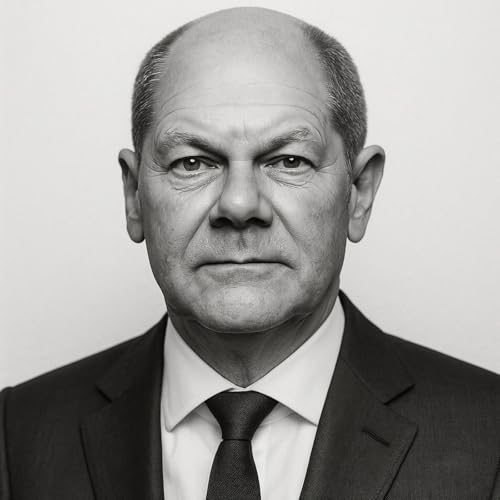
Biography Flash: Olaf Scholz - Diplomacy, Legacy, and Transition
カートのアイテムが多すぎます
ご購入は五十タイトルがカートに入っている場合のみです。
カートに追加できませんでした。
しばらく経ってから再度お試しください。
ウィッシュリストに追加できませんでした。
しばらく経ってから再度お試しください。
ほしい物リストの削除に失敗しました。
しばらく経ってから再度お試しください。
ポッドキャストのフォローに失敗しました
ポッドキャストのフォロー解除に失敗しました

Biography Flash: Olaf Scholz - Diplomacy, Legacy, and Transition
-
ナレーター:
-
著者:
このコンテンツについて
Well hello there, Biography Flash listeners, and welcome back to your daily dose of Olaf Scholz news. Let's dive right into what Germany's former chancellor has been up to lately.
First up, we've got some fascinating developments on the international stage. According to recent reporting, Scholz has been making waves in diplomacy, becoming the first German leader to break the ice with Vladimir Putin recently. On November fourth, Scholz told NATO Secretary General Mark Rutte that he actually opposes Ukraine's NATO membership aspirations. Now that's quite the position for a former chancellor to take, especially given the current geopolitical climate. This move has certainly raised some eyebrows in Brussels and beyond.
But here's where things get really interesting for our Scholz biography file. Back in August of this year, the German government formally established a National Security Council, and get this, the previous coalition government under Scholz had actually discussed but ultimately rejected the idea. The new chancellor Friedrich Merz revived it and implemented it swiftly, making it a centerpiece of his electoral program. So Scholz's legacy on security policy is now being actively reshaped by his successor, which is a significant moment in understanding how his tenure is being reassessed.
Now, shifting gears a bit, we've got some business news that's worth noting. In late November, specifically on the twenty-seventh, Siemens held a major press event where German Chancellor Olaf Scholz was actually present. While the details are still emerging, this public appearance alongside one of Germany's industrial giants suggests Scholz is maintaining active involvement in the country's business and industrial sectors even after leaving the chancellorship.
There's also been quite a bit of retrospective analysis about Scholz's final months in office. His three-party coalition collapsed in November, leading to an early parliamentary election scheduled for February twenty-third, twenty twenty-six. Various sources have been examining how his administration handled critical issues like China policy and military modernization, with many suggesting his approach was somewhat muddled compared to the decisive action his successor has taken.
The narrative around Scholz is clearly one of transition and reassessment. His diplomatic moves, his legacy on security policy, and his continued visibility in German business circles all paint a picture of a former leader whose influence is still being felt and debated.
Thanks so much for tuning into Biography Flash today. Please subscribe to never miss an update on Olaf Scholz, and search the term Biography Flash for more great biographies. We'll catch you next time.
Get the best deals https://amzn.to/4mMClBv
This content was created in partnership and with the help of Artificial Intelligence AI
まだレビューはありません