エピソード

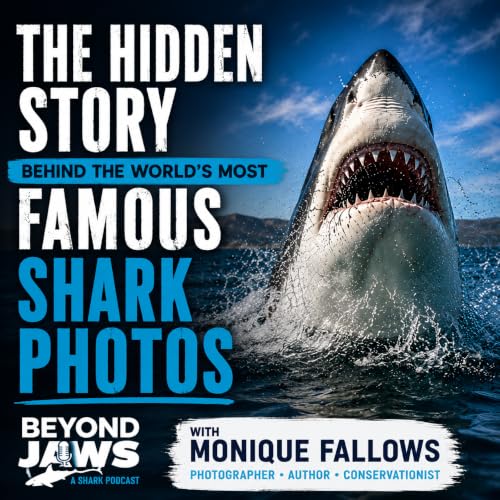
  • What Does a Camera Have to Do With Saving Sharks?
    2026/07/06

    For decades, stunning shark photographs have shaped the way millions of people think about these misunderstood predators. But behind every unforgettable image is a story that rarely gets told. In this episode of Beyond Jaws, we sit down with Manique Fallows to explore the passion, patience, and purpose behind a life dedicated to sharks.

    Monique shares how photography became more than a way to capture wildlife. It became a powerful tool for conservation, storytelling, and helping people connect with animals they often fear. We also talk about her work as an author, her experiences in the field, and what it is like building a life around some of the ocean's most iconic species.

    Whether you love sharks, wildlife photography, or inspiring stories from people making a difference for the ocean, this conversation offers a fresh perspective. You'll come away with a deeper appreciation for the people behind the lens and why their work matters now more than ever.

    Website: https://saltyseadogbooks.com/

    Connect with us:

    Website: https://bit.ly/37TMqeK
    Instagram: https://bit.ly/3eorwXZ
    YouTube: https://www.youtube.com/@beyondjawspodcast7591

    Dave:
    Website: https://www.lostsharkguy.com/
    Instagram: https://bit.ly/3q1J9Q5
    YouTube: https://www.youtube.com/@lostsharkguy

    Andrew:
    Website: https://www.speakupforblue.com/
    Instagram: https://bit.ly/37g5WkG
    YouTube: https://www.youtube.com/@SpeakUpForBlueTV

    続きを読む 一部表示
    1 時間 6 分
  • She Spent Years Tracking Sharks in Crocodile-Infested Rivers
    2026/07/14

    Dr. Julia Constance is back on Beyond Jaws, and this time she's joining hosts Andrew Lewin and Dr. David Ebert as Dr. Constance. Julia returns fresh off completing her PhD on the natural mortality and movement ecology of two of the world's least understood sharks: the speartooth shark and the northern river shark, both found almost nowhere outside northern Australia and southern Papua New Guinea. Using a long-running acoustic telemetry dataset built by her supervisor since 2013, Julia tracked around 200 tagged sharks across Northern Territory river systems, some for up to a decade, to understand how these animals move, where they go, and what puts them at risk.

    The conversation digs into just how little is still known about these sharks once they leave the rivers as adults. Julia explains how individuals vanish from the tracking data for years at a time before reappearing at a river mouth, with almost no confirmed sightings of adults in the open marine environment. She and the hosts also compare the relatively stable status of Australia's river sharks to their close relative, the Ganges shark, a species so rare and poorly documented that even basic facts about its biology are borrowed from research on its Australian cousins.

    Along the way, Julia and Andrew share what it's actually like to do this fieldwork: murky, chocolate colored water, gear retrieval by feel instead of by sight, and working in rivers that hold the largest population of saltwater crocodiles on the planet. The episode also touches on a real and growing concern: proposed water resource development on the Adelaide River, home to the largest known population of speartooth sharks anywhere in the world, and what that could mean for a species already living in an extremely narrow habitat.

    Connect with us:

    Website: https://bit.ly/37TMqeK
    Instagram: https://bit.ly/3eorwXZ
    YouTube: https://www.youtube.com/@beyondjawspodcast7591

    Dave:
    Website: https://www.lostsharkguy.com/
    Instagram: https://bit.ly/3q1J9Q5
    YouTube: https://www.youtube.com/@lostsharkguy

    Andrew:
    Website: https://www.speakupforblue.com/
    Instagram: https://bit.ly/37g5WkG
    YouTube: https://www.youtube.com/@SpeakUpForBlueTV

    続きを読む 一部表示
    54 分
  • What a 5-Week Shark Trip Revealed About the Future of Shark Science and Conservation
    2026/06/15

    Dave Ebert returns from a five-week journey across South Africa, Sri Lanka, and the Maldives, sharing stories from shark research, Sharks International, mentoring young scientists, and the search for lost sharks. This episode explores why taxonomy still matters, how new shark and ray species are still being discovered, and why the future of shark science depends on training the next generation.

    Shark science, shark conservation, Beyond Jaws, Dave Ebert, lost sharks, new shark species, guitarfish, South Africa sharks, Sri Lanka sharks, Sharks International, marine biology, ocean science, shark research, taxonomy, chondrichthyans, marine conservation, Save Our Seas Foundation, Maldives diving, science communication.

    Connect with us:

    Website: https://bit.ly/37TMqeK
    Instagram: https://bit.ly/3eorwXZ
    YouTube: https://www.youtube.com/@beyondjawspodcast7591

    Dave:
    Website: https://www.lostsharkguy.com/
    Instagram: https://bit.ly/3q1J9Q5
    YouTube: https://www.youtube.com/@lostsharkguy

    Andrew:
    Website: https://www.speakupforblue.com/
    Instagram: https://bit.ly/37g5WkG
    YouTube: https://www.youtube.com/@SpeakUpForBlueTV

    続きを読む 一部表示
    1 時間 5 分
  • How Do You Build an Ocean Career When You Live Inland?
    2026/06/01

    Ocean careers rarely follow a straight line. In this episode of How to Protect the Ocean, Dave Ebert takes over the host chair to interview Andrew Lewin about his career journey, from marine biology and consulting to podcasting, science communication, and his new role as Ocean Communications Manager with Pisces Ocean.

    Andrew shares how choosing family, living away from the coast, and building a podcast over many years helped shape a different kind of ocean career. The episode explores why storytelling matters in marine conservation, how podcasting can build real professional networks, and why science communication is becoming a powerful tool for ocean impact.

    This episode is for anyone trying to build a career in marine science, ocean conservation, science communication, or environmental storytelling, especially if your path does not look traditional.

    Connect with us:

    Website: https://bit.ly/37TMqeK
    Instagram: https://bit.ly/3eorwXZ
    YouTube: https://www.youtube.com/@beyondjawspodcast7591

    Dave:
    Website: https://www.lostsharkguy.com/
    Instagram: https://bit.ly/3q1J9Q5
    YouTube: https://www.youtube.com/@lostsharkguy

    Andrew:
    Website: https://www.speakupforblue.com/
    Instagram: https://bit.ly/37g5WkG
    YouTube: https://www.youtube.com/@SpeakUpForBlueTV

    続きを読む 一部表示
    57 分
  • Are Orcas Really to Blame for the Missing Great Whites?
    2026/05/25

    Great white sharks have disappeared from some of South Africa's most famous shark hotspots, but the reason may not be as simple as the popular story suggests. In this episode, Chris Fallows returns to talk about orcas, white sharks, shark nets, longline fisheries, and the uncomfortable possibility that humans played a much larger role than many people want to admit.

    This conversation looks beyond the headline of orcas hunting great whites and asks a harder question: what happens when we focus on the predator we cannot control while ignoring the human systems we can? From False Bay to Gansbaai to the broader South African coastline, this episode explores how shark conservation, fisheries, tourism, photography, and public storytelling collide when an iconic predator starts to vanish.

    Connect with us:

    Website: https://bit.ly/37TMqeK
    Instagram: https://bit.ly/3eorwXZ
    YouTube: https://www.youtube.com/@beyondjawspodcast7591

    Dave:
    Website: https://www.lostsharkguy.com/
    Instagram: https://bit.ly/3q1J9Q5
    YouTube: https://www.youtube.com/@lostsharkguy

    Andrew:
    Website: https://www.speakupforblue.com/
    Instagram: https://bit.ly/37g5WkG
    YouTube: https://www.youtube.com/@SpeakUpForBlueTV

    続きを読む 一部表示
    1 時間 28 分
  • The Big Question at Sharks International 2026: Are We Saving Sharks the Right Way?
    2026/05/05

    Ocean Conservation feels like it's everywhere, but are we actually making a difference, or just telling ourselves we are? In this episode, we break down what really works in ocean protection and why so many well-intentioned efforts fall short. If you care about the ocean but feel overwhelmed by conflicting messages, this conversation will help you cut through the noise and focus on what truly matters.

    Marine Science meets real-world impact as Daniel Fernando shares lessons from the field, including the challenges of balancing conservation with human needs. From working with communities to understanding how policies succeed or fail, this episode reveals the hidden systems that determine whether ocean protection actually works or becomes just another empty promise.

    Shark Conservation takes center stage as we connect this conversation to global efforts like Sharks International 2026, where scientists, conservationists, and policymakers come together to share what is actually working for shark protection. These events highlight a critical truth: success is not just about research, it is about collaboration, trust, and turning science into action that benefits both sharks and people.

    Sustainable Ocean Action is more than awareness, it is about making decisions that lead to measurable results. One surprising insight from this episode: some conservation efforts can fail not because people do not care, but because they are designed without understanding the people they affect most. That tension changes everything about how we should approach saving the ocean.

    続きを読む 一部表示
    52 分
  • She Built Shark Science Where Almost Nobody Was Looking
    2026/04/28

    Shark Conservation What happens when an entire coastline is full of species we barely understand, and almost no one is studying them? In this episode of Beyond Jaws, we speak with Ghofrane Labyedh, a rising shark scientist originally from Tunisia who is helping build shark and ray research in Cameroon. You'll hear how she entered marine science, why West Africa remains one of the least understood regions for sharks and rays, and what it takes to create science where little existed before.

    Marine Biology Careers Ghofrane shares the realities of doing fieldwork, building trust with local communities, working with fishers, and navigating the challenges of conservation in developing research systems. Her story shows that ocean science is not only about data, it is also about people, persistence, and creating opportunities where others see barriers.

    Women In Science one of the most inspiring moments in this episode is hearing how a young scientist from North Africa is helping lead change in a region where shark research has long been overlooked. It is a reminder that the future of conservation may come from voices the world has ignored for too long.

    Connect with us:

    Website: https://bit.ly/37TMqeK
    Instagram: https://bit.ly/3eorwXZ
    YouTube: https://www.youtube.com/@beyondjawspodcast7591

    Dave:
    Website: https://www.lostsharkguy.com/
    Instagram: https://bit.ly/3q1J9Q5
    YouTube: https://www.youtube.com/@lostsharkguy

    Andrew:
    Website: https://www.speakupforblue.com/
    Instagram: https://bit.ly/37g5WkG
    YouTube: https://www.youtube.com/@SpeakUpForBlueTV

    続きを読む 一部表示
    1 時間 3 分
  • She Didn't Plan to Study Sharks, Then Everything Changed in the Bay of Bengal
    2026/04/21

    Shark Conservation What happens when one unexpected opportunity completely changes your career path, and why does that matter for the future of sharks? In this episode of the Beyond Jaws podcast, Zoya Tyabji shares how her journey began in island conservation work and led her into the world of shark and ray research in India. You'll hear how curiosity, timing, and taking risks opened doors she never expected.

    Shark Research India Zoya explains the hidden realities of shark fisheries, trade, and conservation challenges in one of the world's most important marine regions. Her work combines science, community engagement, and real-world solutions that can help protect vulnerable species while supporting people who depend on the ocean. This conversation reveals why shark conservation is never just about sharks.

    Women in Science One of the most powerful insights in this episode is that Zoya did not start out chasing a shark career at all, she built it step by step by saying yes to opportunities. That reminder can change how anyone thinks about their own future.

    Connect with us:

    Website: https://bit.ly/37TMqeK
    Instagram: https://bit.ly/3eorwXZ
    YouTube: https://www.youtube.com/@beyondjawspodcast7591

    Dave:
    Website: https://www.lostsharkguy.com/
    Instagram: https://bit.ly/3q1J9Q5
    YouTube: https://www.youtube.com/@lostsharkguy

    Andrew:
    Website: https://www.speakupforblue.com/
    Instagram: https://bit.ly/37g5WkG
    YouTube: https://www.youtube.com/@SpeakUpForBlueTV

    続きを読む 一部表示
    53 分