エピソード

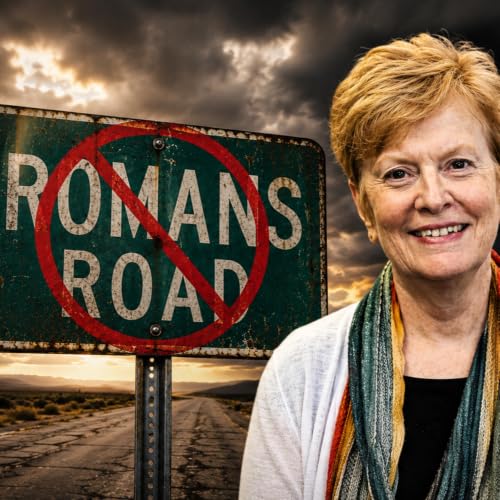
  • #9 Beverly Roberts Gaventa: Romans, Paul, Phoebe, and the "Apocalyptic" Gospel
    2026/07/08

    For decades Beverly Roberts Gaventa has been one of the world's leading Pauline scholars.

    In this conversation we explore one of the Bible's most influential—and most misunderstood—letters.

    We discuss:

    • Why Romans is not a "Romans Road"
    • What an apocalyptic reading of Paul actually means
    • Why Sin and Death are more than bad habits
    • Paul's use of the Old Testament
    • Phoebe's crucial role in delivering and interpreting Romans
    • Women in church leadership
    • Douglas Campbell's reading of Romans
    • Israel in Romans 9–11 and contemporary questions
    • Gaventa's nearly twenty years of writing her Romans commentary
    • Criticisms of her interpretation
    • How scholarship has shaped her own faith
    • The mentors who influenced her
    • What she has changed her mind about over her career
    • What keeps her curious after decades of studying Paul
    • What gives her hope—and concern—for today's church

    Whether you're a pastor, student, scholar, or simply someone who has always wanted to understand Romans better, this conversation offers a rich introduction to one of the New Testament's greatest letters.

    続きを読む 一部表示
    56 分
  • #8 Ben Finfrock (@fintatstic): Tattoos, Art & Why Christian Culture is Too Safe
    2026/06/18

    What can tattoos teach us about beauty, meaning, creativity, and the human experience?

    In this episode I speak with my dear friend Ben Finfrock for a conversation on faith, tattoos, art, beauty, and the human body.

    Ben shares his journey to Christian faith and how he found his vocation as a tattoo artist. Along the way, he reflects on the theology of tattoos, the role of conscience in Christian decision-making, and why many people seem more concerned about their parents' opinions than God's when considering their first tattoo.

    Drawing from thousands of hours spent working closely with clients, Ben discusses what tattooing has taught him about identity, belonging, beauty, and the deep human desire to create meaning. He also offers a behind-the-scenes look at the craft itself—from designing tattoos and working with different bodies to developing artistic skill and finding his own creative voice.

    The conversation expands beyond tattooing to explore the nature of art, whether there is such a thing as "Christian art," and what artists can teach the church about beauty, culture, and human flourishing. Ben also discusses his work helping lead an art gallery in Paris, the relationship between theology and artistic interpretation, and why he believes Christians should engage more deeply with the wider world of art and culture.

    Topics discussed include:

    • Becoming a Christian and a tattoo artist

    • Tattoos, theology, and Christian conscience

    • The beauty and significance of the human body

    • What tattooing reveals about human nature

    • The creative process behind designing tattoos

    • The tattoos Ben refuses to do

    • Art, meaning, and interpretation

    • The church's relationship with art and culture

    • Christian artists and creative vocation

    Connect with Ben:
    Instagram: @fintatstic

    TikTok: @fintatstic


    続きを読む 一部表示
    53 分
  • #7 Ruth Padilla DeBorst: Integral Mission, Evangelism, Social Justice, and the Future of the Church
    2026/06/02

    What is integral mission, and why has it become one of the most influential concepts in global Christianity?

    In this episode, I chat with theologian Dr. Ruth Padilla DeBorst to explore the relationship between evangelism and social justice, the future of the church, and what faithful Christian witness looks like in today's world.

    Ruth reflects on the legacy of her parents, René and Catherine Padilla, and shares how experiences of hospitality, community, and ministry shaped her understanding of the gospel. We discuss the origins and significance of integral mission, concerns about contemporary evangelicalism, the importance of ecumenical collaboration, and what gives her hope for the global church.

    We also explore intentional Christian community, theology from the margins, creation care, the influence of context on theology, and her involvement with organizations such as the Lausanne Movement, the Global Christian Forum, and A Rocha.

    Finally, Ruth shares how profound personal suffering—including the murder of her first husband—has shaped her understanding of God, discipleship, and hope.

    Topics discussed include:

    • Integral mission
    • Evangelism and social justice
    • René Padilla and Latin American theology
    • The Lausanne Movement
    • Ecumenism and Christian unity
    • Global Christianity
    • Theology and culture
    • Intentional Christian community
    • Creation care and ecological justice
    • Suffering, hope, and discipleship

    If you enjoyed this conversation, please consider following, rating, and sharing the podcast.

    Please consider buying me a coffee to support the channel: https://buymeacoffee.com/bespectacledandcurious


    Follow on Instagram: https://www.instagram.com/bespectacledandcurious/

    続きを読む 一部表示
    57 分
  • #6 Ruthia Pak Regis: Visio Divina, Contemplation, and Vulnerable Art
    2026/05/09

    In this episode, I speak with Toronto painter Ruthia Pak-Regis about art, theology, beauty, contemplation, and the spiritual discipline of learning how to see.

    We discuss visio divina, abstract art, creativity, vulnerability, and why Ruthia dislikes the label “Christian art.” We also talk about her theological studies at the University of Toronto, being represented by Roberts Gallery (the oldest commercial gallery in Canada), the tension between artistic ideals and practical realities, creative staleness, taking a sabbatical from painting, and how art can help cultivate a more contemplative life.

    This was one of the more open and reflective conversations I’ve had on the podcast — a discussion about beauty, faith, change, and what it means to pay attention in a distracted world.


    Check out her work: https://www.robertsgal...

    続きを読む 一部表示
    45 分
  • #5 Why This Christian Farm Boy Stopped Eating Meat
    2026/04/25

    I grew up on a hobby farm in Canada. We raised animals, processed our own chickens, and ate meat pretty much every day. But I haven’t eaten land animals or birds in over five years.So why did I stop eating meat after growing up on a farm?In this episode, I tell the story of how that shift happened, and why it stuck. It wasn’t one big moment but a mix of experience, circumstance, and eventually, reading Scripture a little more carefully than I had before.I reflect on growing up around animals, what changed when I became a husband and father, and how passages like Genesis 1, Genesis 9, and the biblical vision of new creation reshaped how I think about animals, food, and the future Christians are called to live toward.This isn’t an argument that every Christian should stop eating meat, I don’t think the Bible commands that. But it is an attempt to think more honestly about why we eat animals, what the Bible says about animals, and what it might look like to take seriously that God calls his creatures good.My article in the Anabaptist World: https://anabaptistworld.org/from-farm-boy-to-christian-vegetarian/John Berkman's Chapter "Are We Addicted to the Suffering of Animals: https://www.researchgate.net/publication/236008418_Are_We_Addicted_to_the_Suffering_of_Animals_Animal_Cruelty_and_the_Catholic_Moral_Tradition_-_John_Berkman Please follow the podcast on Apple: https://podcasts.apple.com/us/podcast/bespectacled-curious/id1880366110 Spotify: https://open.spotify.com/show/6iMFvbcOgsmrOAzxiwbNXj

    And subscribe on YouTube!

    続きを読む 一部表示
    19 分
  • #4 Roger E. Olson: Leaving Pentecostalism, Arminianism, and Evangelical Identity
    2026/04/11

    In this episode, I speak with theologian Roger E. Olson about his theological journey, including his upbringing in Pentecostalism and the experiences that shaped his later convictions.

    Olson reflects on his studies with Wolfhart Pannenberg and shares stories of encounters with major theological figures such as Oral Roberts, Jürgen Moltmann, John Piper, Greg Boyd, Stanley Grenz, R. C. Sproul, and Richard Bauckham.

    We discuss why theology matters for the life of the church, and why Arminianism is often misunderstood in contemporary evangelical debates. Olson also reflects on the ongoing relevance of the Calvinism–Arminianism discussion.

    The conversation then turns to broader shifts in evangelicalism, including why many are moving toward more liturgical traditions and what this reveals about changing Christian identity today. Olson also addresses the question of whether God changes in any meaningful sense.

    Finally, we explore post-conservative evangelical theology and why he continues to identify as “evangelical” despite ongoing debates about the term.

    Books Mentioned in this Episode (with links to buy):- Against Calvinism by Olson (https://amzn.to/3P1Giql)- The Story of Christian Theology by Olson (https://amzn.to/4v3NJwD)- Here Am I by Adrio Konig - Reclaiming Pietism by Olson (https://amzn.to/4u28AQF)- Theology for the Community of God by Stanley Grenz (https://amzn.to/4dfmvNv)- 20th Century Theology by Grenz and Olson (https://amzn.to/4uBynz4)- Who Needs Theology by Grenz and Olson (https://amzn.to/3RAce5O)- Arminian Theology by Olson (https://amzn.to/4eIblBY)- How to be Evangelical without Being Conservative by Olson (https://amzn.to/4d6HKB1) - Reformed and Always Reforming by Olson (https://amzn.to/48Zbmh3) - Systematic Theology by Wayne Grudem (https://amzn.to/4tBVrg9)- The Drama of Doctrine by Kevin Vanhoozer (https://amzn.to/4uORLZz)- Justification by N. T. Wright (https://amzn.to/3RhNMGg)- Four Views on the Spectrum of Evangelicalism by Olson and others (https://amzn.to/4uJPFdm)


    続きを読む 一部表示
    49 分
  • #3 Axel Kazadi the Rapping Theology Professor - His Crisis of Faith, Methodist Theology, and the Eucharist
    2026/03/25

    What happens when a theology professor is also a rapper?

    In this conversation I speak with Axel Kazadi of Kingswood University (NB, Canada) about the unusual path that led him to become both. We talk about his journey through a significant crisis of faith, the authors who helped him think his way through it, and how music became part of his theological expression.

    We also discuss his EP “Remontada,” and the place of art in Christian life. Along the way we explore a range of topics, including:

    • the deeper meaning of the Eucharist
    • what distinguishes the Wesleyan / Methodist tradition
    • what John Wesley meant by entire sanctification
    • the challenge of church unity
    • who might be the greatest rapper of all time.Subscribe on YouTube for more!
    続きを読む 一部表示
    1 時間 13 分
  • #2 Klyne Snodgrass: What Is the Gospel? Parables, Participation, and the Church
    2026/02/25

    Klyne Snodgrass taught for more than forty years at North Park Theological Seminary and is widely known for his work on the parables of Jesus. In this episode, we discuss his book You Need a Better Gospel and reflect on a lifetime of scholarship, teaching, and service to the Church.

    Our conversation explores what the gospel truly is, why participation with Christ stands at the center of Christian faith, and why the New Testament leaves no room for isolated individualism. Snodgrass speaks candidly about his love for the Church, and the need for theological humility. We also discuss common misunderstandings about Jesus’ parables, the authorship and theology of Ephesians, the influence of Richard Longenecker on his life, and why reducing salvation to “asking Jesus into your heart” misses something essential.

    Bon appétit!

    続きを読む 一部表示
    1 時間 30 分