『Be Truly Heard』のカバーアート

Be Truly Heard

Be Truly Heard

著者: Anne Leatherland
無料で聴く

今ならプレミアムプランが3カ月 月額99円

2026年5月12日まで。4か月目以降は月額1,500円で自動更新します。

概要

Welcome to the Be Truly Heard Podcast with me, Anne Leatherland. I’m a coach and voice expert with over 27 years of experience. I'm also a woman in business who understands the power of communication. In this podcast, I will help you control your nerves, sound more authoritative, speak confidently, and be taken seriously! I will share valuable growth strategies to help you overcome the barriers of communication in your life. Join me on this journey and get ready to be truly heard.Copyright 2026 Anne Leatherland マネジメント・リーダーシップ リーダーシップ 個人的成功 出世 就職活動 経済学 自己啓発
エピソード
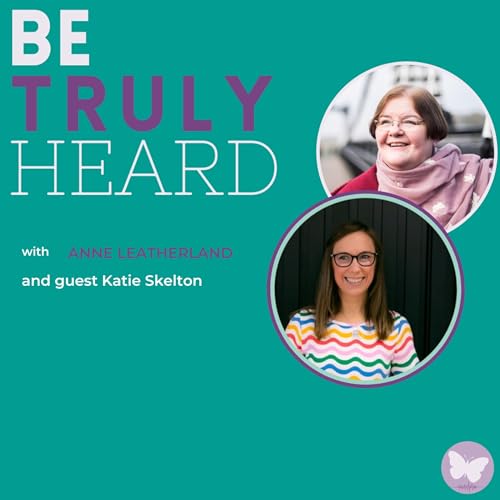
  • Katie Skelton: Showing Up as You in Emails
    2026/04/16
    In this episode of Be Truly Heard, Anne Leatherland is joined by email strategist Katie Skelton to explore the powerful link between written voice and spoken voice. Katie shares how redundancy during maternity leave pushed her to start her own business, how she gradually found her niche in email strategy, and why the way we write and the way we speak are not separate at all, but two expressions of the same identity. Together, they unpack authenticity, improvisation, practice and trust, showing how finding your real voice on the page can strengthen your confidence everywhere else too. Katie reflects on building a business through many small evolutions, discovering the creative freedom of email writing, and realising that her most authentic work comes when she writes close to the feeling of the moment. The conversation also moves into public speaking, where both Anne and Katie discuss why rigid scripts often kill confidence, how improvisation can unlock presence, and why truly connecting with an audience matters far more than delivering a perfect presentation. Key TakeawaysWritten voice and spoken voice come from the same place.Katie explains that the voice people hear in her emails is recognisably the same as the one they hear in conversation. When your writing sounds like you, it creates authenticity and connection. Sometimes your business direction becomes clear through doing, not planning.Katie’s move into email strategy was not part of a grand masterplan. It emerged through experimenting, noticing what felt natural, and listening when someone pointed out a strength she had overlooked. Authentic writing needs the right conditions. Katie talks about “ideal conditions” for creating work that feels real. For her, that means writing close to the emotion or thought she wants to express, often with a little bit of pressure and immediacy, so the words stay alive rather than over-rehearsed. Templates and formulas can make people lose their voice. In a world full of blueprints and frameworks, Katie believes many people become disconnected from what makes their writing theirs. Authenticity often comes from noticing your own natural rhythm, not forcing someone else’s system onto it. Improvisation can be more powerful than scripting. Katie discovered through stand-up comedy and speaking experience that heavily rehearsed presentations do not bring out her best. She is far more effective when she trusts her expertise and responds in the moment. Trusting yourself is central to speaking well.Anne and Katie both reflect on how public speaking becomes easier when you stop trying to perform perfectly and instead trust your knowledge, experience and ability to connect with people in real time. Slides do not create authority, presence does. The conversation makes the point that anyone can research and build a presentation, but that alone does not create trust. What builds trust is knowing your subject and being able to speak about it with confidence, energy and connection. Audience connection comes from speaking to people, not at them. Katie adapts her voice by imagining one specific person when writing emails and by staying responsive to individuals in the room when speaking. That sense of real conversation keeps both writing and speaking human. Practice builds clarity as well as confidence. Katie says that writing every day has not only strengthened her style but also helped her understand her own opinions, processes and teaching more clearly. Repetition turns instinct into something you can trust and share. Best Moments “Our written voice and our spoken voice are not separate. They’re two expressions of the same identity.” “I was forced into it through redundancy.” “I thought, well, if I’m going to do it, I’m going to have to do it now.” “People would reply and say, ‘I heard you saying this in your voice.’” “That’s how people lose their voice.” “Scripted, rehearsed, rigid speaking does not work for me.” “I just perform much better under improvisational circumstances.” “The more secure you are that you are an expert… the easier it is to just stand up and talk.” About the guestKatie Skelton is the founder of Little Green Duck Ltd, where she helps solofounders and small businesses grow through clear, consistent email strategy and copy.She writes the daily newsletter ALTITUDE, read by ambitious businessowners for practical email and sales insights.With a background in winning multi-million-pound broadcast industrycontracts, she brings real-world strategy to founders looking to turn words into predictable revenue.About the HostWith over 28 years’ experience, Anne Leatherland helps clients develop vocal confidence and personal growth. Her holistic approach bridges science, education and the performing arts, supporting women to be truly heard in business.Find out more: https://anneleatherland.co.uk/
    続きを読む 一部表示
    25 分
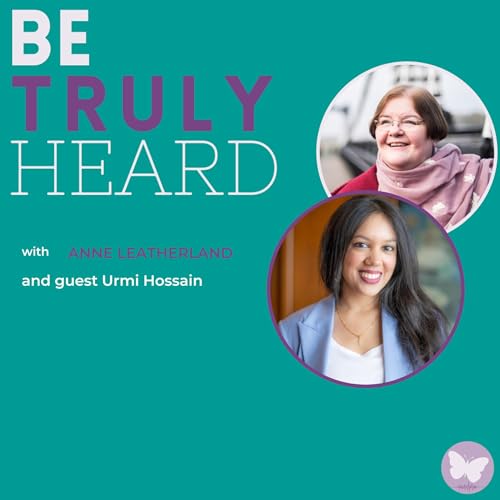
  • Urmi Hossain: Showing up as You Through Human Connection
    2026/04/02
    In this episode of Be Truly Heard, Anne Leatherland is joined by finance professional, author and mentor Urmi Hossain for a thoughtful conversation about identity, confidence and why women need to say yes to more opportunities. Drawing on her experience as an Italian-Bengali woman working in the male-dominated world of finance, Urmi shares how mentoring, self-belief and representation have shaped her journey. Together, she and Anne explore imposter syndrome, reframing negative self-talk, the power of visualisation, and how women can lead with more confidence by owning both their voice and their story.Key TakeawaysBe the mentor you never had.Urmi’s drive to mentor women comes from her own experience of growing up without many role models who looked like her or shared her cultural background. She now supports women from a wide range of backgrounds, especially women of colour, by becoming the guide she once needed herself.You do not have to choose one identity over another.Urmi reflects on navigating two cultural worlds – Bengali and Italian – and the pressure to fit neatly into one label. Her breakthrough came when she stopped choosing and instead embraced both, confidently describing herself as Italian-Bengali in both personal and professional life.Representation matters in male-dominated industries.Working in finance has meant learning to advocate for herself, find allies and seek out mentors. Urmi believes staying visible in those spaces matters, not just for her own career, but for the women coming behind her who need to see that they belong there too.Reframing negative self-talk can change everything.One of Urmi’s core tools for helping women with imposter syndrome is reframing. Rather than getting stuck in thoughts like “I’m not good enough”, she encourages women to rewrite those internal messages into something more constructive and empowering.Vision boards are more than a creative exercise.Urmi uses yearly vision boards as a practical way to keep goals, values and ambitions visible. By putting dreams into images and words, she believes the brain starts working towards them, often before we consciously realise it.A mentor might already be in your life.Urmi introduces the idea of a “friendtour” – a blend of friend and mentor. Sometimes the people best placed to guide, encourage and challenge us are trusted friends who already understand our struggles, values and ambitions.Say yes before you feel fully ready.Her advice to younger women is simple but powerful: say yes to opportunities. Too often women hesitate because they doubt themselves or feel unprepared, but stepping outside the comfort zone is how confidence is built.Your voice and perspective are enough.Anne and Urmi both reflect on the cultural and generational expectations placed on women, but the message is clear: women are worthy of being part of the conversation, and what they have to say carries value.Best Moments“I want to be the mentor I never had.”“It wasn’t about fitting either world, but more about putting them together and embracing the two sides of it.”“No matter where I am, it’s because I belong there.”“We have so many negative self-talks… we’re always second-guessing ourselves.”“Once you put it in a vision board, your brain starts to work towards that.”“Who knows you better than your own friend?”“Say yes to opportunities.”“What we have to say as women is powerful and it’s enough.”About the guestUrmi Hossain is a personal branding strategist, speaker and author who helpsprofessionals and entrepreneurs show up as themselves with clarity, confidence andintention. With a background in corporate banking, she understands the challenges ofbeing seen and heard in professional spaces, and now supports others to build a strong,authentic presence both online and in real life.She is the author of Discover Your Personal Brand and is known for her practical,grounded approach to visibility, particularly on LinkedIn. Urmi’s work focuses on helpingpeople find their voice, communicate their value and step forward in a way that feelsnatural rather than forced.Through her writing, speaking and coaching, she empowers individuals to be more visible,so that they can create opportunities, build influence and grow their careers or businessesin a way that truly reflects who they are.Connect with the guestlinkedin.com/in/urmihossainpodcasts.apple.com/us/podcast/stories-beyond-borders/id1831413373womeninleadership.ca/montrealAbout the HostWith over 28 years’ experience, Anne Leatherland helps clients develop vocal confidence and personal growth. Her holistic approach bridges science, education and the performing arts, supporting women to be truly heard in business.Find out more: https://anneleatherland.co.uk/
    続きを読む 一部表示
    22 分
  • Showing Up as You When the Stakes are High
    2026/03/19
    In this episode of Be Truly Heard, Anne Leatherland explores what really happens when high-stakes speaking situations send your nervous system into overdrive. From meetings and interviews to client calls and presentations, she explains why your body can react as if you’re facing danger, and how that stress response affects breath, pitch, vocal steadiness and confidence. Rather than relying on “just be confident” advice, Anne shares a more practical approach: regulating the nervous system so your voice can reflect your real capability, even when the pressure is on.She unpacks the fight, flight, freeze and fawn responses, shows how adrenaline and cortisol can interfere with vocal control, and introduces the idea of nervous system leadership, guiding your internal state so your voice stays grounded, calm and authoritative. Through a simple do-along exercise using breath, pacing, pitch and physical grounding, she demonstrates how small shifts in the body can help the voice settle and the speaker feel safer, steadier and more present.Key TakeawaysHigh-stakes speaking can trigger an ancient survival response.Your nervous system doesn’t always know the difference between a lion and a boardroom. Meetings, interviews and difficult calls can all activate protective stress responses that make speaking feel harder.Stress changes the voice as well as the body.When you’re dysregulated, breath becomes rapid, the throat can tighten, pitch may rise and the voice may wobble or lose power. That can make you sound less confident than you really are.“Just be confident” is not enough.Anne challenges surface-level advice like “just breathe” or “do a power pose” on their own. Real change comes from helping the body feel safe enough to move out of threat mode.Nervous system leadership is a learnable skill.This means guiding your inner state so your voice reflects your capability, not your panic. The more you can regulate yourself before and during speaking, the more authority and ease your voice can carry.The voice can help calm the nervous system.It’s not just that the nervous system affects the voice; the voice can also signal back to the body that everything is okay. A steadier pace, fuller breath and more grounded pitch can reduce activation.Grounding through the body supports vocal presence.Feet flat on the floor, softened jaw, a silent deep breath and a sense of energy rising through the body can help create a more connected, supported sound.Speaking more slowly and from a fuller breath improves authority.Anne contrasts a light, fast, slightly higher delivery with a slower, more grounded version of the same sentence to show how pacing, pitch and breath change how you sound and feel.You’re not lacking skill – your system may be working against you.Often, the challenge is not that you don’t know what to say, but that your voice, body and sense of self are not working together under pressure. Integration is the goal.Best Moments“The meeting, the interview, the client on the phone… anything that puts you into that state of butterflies in the stomach and sets your nervous system into overdrive.”“The nervous system goes into protective mode when the brain and the body detect a threat.”“That nervous system state and the body state, if you like, affects your voice.”“Just trying to be confident alone doesn’t work.”“We need to tell the body that it’s safe.”“I like to think of this as nervous system leadership.”“The nervous system listens to the voice as much as the voice reflects the nervous system.”“You don’t fail to show up because you lack skill… your voice, body and self are not working together.”Weekly ChallengeThe next time you’re heading into a high-stakes speaking moment, try Anne’s regulation sequence first: place your feet flat on the floor, soften your jaw, take a deep silent breath, and say a simple sentence more slowly and from a fuller, lower pitch. Notice how your voice changes when your body feels safer and more supported.About the HostWith over 28 years’ experience, Anne Leatherland helps clients develop vocal confidence and personal growth. Her holistic approach bridges science, education and the performing arts, supporting women to be truly heard in business.Find out more: https://anneleatherland.co.uk/
    続きを読む 一部表示
    21 分
まだレビューはありません