• Why Did BTK Wear A 'POLICE' Rain Slicker On His City Job?
    2026/06/10

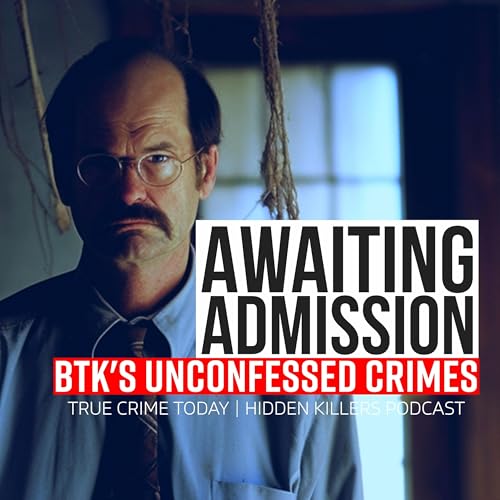
    In his fourteen years as the compliance officer for the city of Park City, Kansas, Dennis Rader designed a rain slicker for himself with the word POLICE printed across the back. He wore it on the job. He was not a police officer. He did not have arrest authority. His authority extended to grass height, junked vehicles, and other municipal code matters.

    The Park City police chief made him stop wearing the POLICE slicker. Rader's quoted response, in his own words: fine, put DOGCATCHER on it instead.

    In this third chapter of a five-part BTK investigation built specifically for case followers, host Tony Brueski walks through every official role Dennis Rader chose for himself and what each one actually gave him in operational terms. The ADT alarm installer position from 1974 to 1988. The Cub Scout pack leader role. The Christ Lutheran Church council seat that rose to council president. The Sedgwick County Board of Zoning Appeals seat. The Animal Control Advisory Board. The compliance officer truck with city plates and the legal authority to enter private property for code inspection without a warrant.

    The episode also walks through Rader's own confession description of his pre-killing reconnaissance method. He called it "trolling." Driving neighborhoods. Watching women. Mapping schedules. Picking houses. He had been doing it on his own time since the late 1960s. After 1991, the city of Park City put him on the public payroll to do exactly that, on the clock, with a badge.

    This is the third uncomfortable truth of the series. Dennis Rader did not need a separate hunting identity. The official roles he volunteered for gave him every legal permission and every community trust the hunting required. The costumes were not the cover. The costumes were the access.


    END LINKS

    Join Our SubStack For AD-FREE ADVANCE EPISODES & EXTRAS!: https://hiddenkillers.substack.com/ Want to comment and watch this podcast as a video? Check out our YouTube Channel. https://www.youtube.com/channel/UC8-vxmbhTxxG10sO1izODJg?sub_confirmation=1 Instagram https://www.instagram.com/hiddenkillerspod/ Facebook https://www.facebook.com/hiddenkillerspod/ Tik-Tok https://www.tiktok.com/@hiddenkillerspod X Twitter https://x.com/TrueCrimePod


    DISCLAIMER

    This publication contains commentary and opinion based on publicly available information. All individuals are presumed innocent until proven guilty in a court of law. Nothing published here should be taken as a statement of fact, health or legal advice.


    HASHTAGS

    #BTK #DennisRader #ComplianceOfficer #BTKCase #ParkCity #SerialKillers #ColdCase #BTKKiller #TrueCrime #HiddenKillers

    続きを読む 一部表示
    20 分
  • Did BTK Walk Home From Killing His Own Neighbor?
    2026/06/09

    In April of 1985, Marine Hedge was killed in her own bedroom in Park City, Kansas. She was sixty-three years old. She lived alone. Her body was found a week later in a ditch outside town.

    Marine Hedge lived on Independence Street. Dennis Rader lived on Independence Street. They were neighbors. On the night Rader killed her, he walked from her front door to his own back door. He went home. He went to bed.

    Park City Police investigated Marine Hedge's death. They did not connect her case to BTK. BTK was understood as a Wichita killer. Marine Hedge died in Park City. Different agency. Different file. The man who had killed her would not be officially connected to her death by anybody in law enforcement until he confessed to it himself, twenty years later, in 2005.

    For BTK case followers, this second chapter of Tony Brueski's five-part investigation walks through every confirmed Wichita-era piece of evidence law enforcement had on Dennis Rader and could not assemble. The Bright sketch. The Otero confession letter. The Fox 911 call. The Williams sealed package. The Hedge neighbor case in Park City. The Wegerle case that was filed as a domestic and put a grieving husband under suspicion for eighteen years.

    The episode walks slowly through what Wichita Police had, when they had it, what the legal and jurisdictional constraints of the era looked like, and the specific moments where pieces of Dennis Rader sat in different filing cabinets that no investigator at the time was authorized or able to bring together.

    This is the second uncomfortable truth of the series. The chase didn't close because the cops finally caught him. The chase closed when Dennis Rader, eleven months before his arrest, accidentally handed them the last piece.


    END LINKS

    Join Our SubStack For AD-FREE ADVANCE EPISODES & EXTRAS!: https://hiddenkillers.substack.com/ Want to comment and watch this podcast as a video? Check out our YouTube Channel. https://www.youtube.com/channel/UC8-vxmbhTxxG10sO1izODJg?sub_confirmation=1 Instagram https://www.instagram.com/hiddenkillerspod/ Facebook https://www.facebook.com/hiddenkillerspod/ Tik-Tok https://www.tiktok.com/@hiddenkillerspod X Twitter https://x.com/TrueCrimePod


    DISCLAIMER

    This publication contains commentary and opinion based on publicly available information. All individuals are presumed innocent until proven guilty in a court of law. Nothing published here should be taken as a statement of fact, health or legal advice.


    HASHTAGS

    #BTK #DennisRader #MarineHedge #BTKCase #BTKKiller #Wichita #ParkCity #SerialKillers #ColdCase #HiddenKillers

    続きを読む 一部表示
    19 分
  • Was BTK Possessed By 'Factor X' Or Was He Selling It?
    2026/06/08

    Factor X was a phrase Dennis Rader typed in a letter to a Wichita television station in February of 1978. He used it to describe what he claimed was driving him to kill. He compared the feeling to a demon. He compared himself to Jack the Ripper. He compared himself to Son of Sam. He asked the press, in writing, to call him the BTK Strangler.

    The press said yes.

    For forty-seven years, every documentary, book, and podcast about Dennis Rader has repeated his own language back to him, as if it were a forensic finding rather than a typed press release. Factor X. The Minotaur. The BTK brand. The mythology of BTK is the mythology Dennis Rader composed about Dennis Rader.

    In this first chapter of a new five-part investigation built specifically for BTK case followers, host Tony Brueski takes apart the language of the 1978 letter line by line. What Rader was reading at the time he wrote it. What classes he was taking at Wichita State. What books on profiling were sitting on his shelf. What cultural figures he chose to compare himself to. And the inconsistencies inside the letter that read, in retrospect, as somebody trying very hard to sound like the killer he had read about in his college textbooks.

    The episode also walks through how the Wichita Police Department first responded to the letter, how Chief Richard LaMunyon coined the term BTK Strangler in public for the first time, and how that branding moment turned Dennis Rader's self-marketing plan into official law enforcement terminology that has stuck for nearly half a century.

    If you have been studying this case for years, this episode is the version of the story you have not heard. The next four chapters go deeper.


    END LINKS

    Join Our SubStack For AD-FREE ADVANCE EPISODES & EXTRAS!: https://hiddenkillers.substack.com/ Want to comment and watch this podcast as a video? Check out our YouTube Channel. https://www.youtube.com/channel/UC8-vxmbhTxxG10sO1izODJg?sub_confirmation=1 Instagram https://www.instagram.com/hiddenkillerspod/ Facebook https://www.facebook.com/hiddenkillerspod/ Tik-Tok https://www.tiktok.com/@hiddenkillerspod X Twitter https://x.com/TrueCrimePod


    DISCLAIMER

    This publication contains commentary and opinion based on publicly available information. All individuals are presumed innocent until proven guilty in a court of law. Nothing published here should be taken as a statement of fact, health or legal advice.


    HASHTAGS

    #BTK #DennisRader #BTKKiller #BTKCase #FactorX #Wichita #ParkCity #SerialKillers #ColdCase #HiddenKillers

    続きを読む 一部表示
    20 分
  • Dr. Katherine Ramsland Interview Behind The Mind Of BTK Part 5
    2024/06/20
    In a gripping and revealing conversation, forensic psychologist Dr. Katherine Ramsland, known for her deep-dive exploration into the mind of the notorious serial killer, Dennis Rader (the BTK Killer), spoke with Tony Brueski on the podcast "Hidden Killers". Ramsland, the author of Rader's autobiography, offered an unrivaled glimpse into the process of understanding extreme offenders, her experiences with Rader, and the effect of this journey on the field of criminology and forensic psychology.

    Ramsland shared, "I've been teaching a course on extreme offenders for several decades... I had just finished a book where I looked at a dozen cases of mental health experts who had spent a lot of time with either a mass or serial killer, trying to learn as much detail about their developmental process as possible." The opportunity to work on Rader's biography, she mentioned, was one that she couldn't turn down, even though it meant navigating complex situations and trust-building exercises.

    A significant part of the process was to gain the trust of both Rader and the victims' families. Ramsland explained, "I had to write a proposal that everybody agreed with and it essentially, it was to be able to use whatever [Rader] tells me to benefit law enforcement, criminology and forensic psychology." It was a sensitive negotiation that demanded empathy, understanding, and clinical detachment.

    The project had a significant impact on Ramsland's career and research in criminology. Her time with Rader involved prison visits, phone conversations, detailed letters, and a study of his drawings and poetry, among other things. "It taught me things, taught him things. I think it did make a contribution... some people, I use it as a textbook in my classes," Ramsland said, affirming the value of the project to her field.

    Ramsland emphasized that the process of gaining trust was intricate and multifaceted. With the victims' families, she demonstrated her clinical interest and stated her intent to avoid any glorification or excessive graphic details. Ramsland recounted, "I think when I told them my intent... and agreed to the terms, um, and that this was really for me, a professional research project. And that's what I wanted to use it for. They were on board."

    On the other hand, building a relationship with Rader involved satisfying his fascination for puzzles and codes. Ramsland shared, "The first thing he wanted me to do was solve some codes... because he wanted to see if I'd play the game... I did because it was interesting... And then in the end, um, I ended up writing the code that we used for the book." Her willingness to engage in Rader's world allowed her to gain his trust and foster an understanding that eventually led to the creation of the book.

    Ramsland's intensive exploration into the mind of one of the world's most infamous serial killers paints an illustrative picture of the complexities involved in understanding such individuals. This work has not only contributed significantly to the field of forensic psychology but also brought to light the mechanisms of how the minds of extreme offenders work. Her pursuit reflects a compelling blend of professional rigor, human empathy, and academic curiosity, underlining the importance of such investigations for broader societal understanding and law enforcement applications.
    Want to listen to ALL of our podcasts AD-FREE? Subscribe through APPLE PODCASTS, and try it for three days free: https://tinyurl.com/ycw626tj
    Follow Our Other Cases:
    https://www.truecrimetodaypod.com
    The latest on Catching the Long Island Serial Killer, Awaiting Admission: BTK’s Unconfessed Crimes, Chad & Lori Daybell, The Murder of Ana Walshe, Alex Murdaugh, Bryan Kohberger, Lucy Letby, Kouri Richins, Justice for Harmony Montgomery, The Murder of Stephen Smith, The Murder of Madeline Kingsbury, and much more! Listen at https://www.truecrimetodaypod.com

    続きを読む 一部表示
    14 分
  • Dr. Katherine Ramsland Interview Behind The Mind Of BTK Part 4
    2024/06/19
    In a gripping and revealing conversation, forensic psychologist Dr. Katherine Ramsland, known for her deep-dive exploration into the mind of the notorious serial killer, Dennis Rader (the BTK Killer), spoke with Tony Brueski on the podcast "Hidden Killers". Ramsland, the author of Rader's autobiography, offered an unrivaled glimpse into the process of understanding extreme offenders, her experiences with Rader, and the effect of this journey on the field of criminology and forensic psychology.

    Ramsland shared, "I've been teaching a course on extreme offenders for several decades... I had just finished a book where I looked at a dozen cases of mental health experts who had spent a lot of time with either a mass or serial killer, trying to learn as much detail about their developmental process as possible." The opportunity to work on Rader's biography, she mentioned, was one that she couldn't turn down, even though it meant navigating complex situations and trust-building exercises.

    A significant part of the process was to gain the trust of both Rader and the victims' families. Ramsland explained, "I had to write a proposal that everybody agreed with and it essentially, it was to be able to use whatever [Rader] tells me to benefit law enforcement, criminology and forensic psychology." It was a sensitive negotiation that demanded empathy, understanding, and clinical detachment.

    The project had a significant impact on Ramsland's career and research in criminology. Her time with Rader involved prison visits, phone conversations, detailed letters, and a study of his drawings and poetry, among other things. "It taught me things, taught him things. I think it did make a contribution... some people, I use it as a textbook in my classes," Ramsland said, affirming the value of the project to her field.

    Ramsland emphasized that the process of gaining trust was intricate and multifaceted. With the victims' families, she demonstrated her clinical interest and stated her intent to avoid any glorification or excessive graphic details. Ramsland recounted, "I think when I told them my intent... and agreed to the terms, um, and that this was really for me, a professional research project. And that's what I wanted to use it for. They were on board."

    On the other hand, building a relationship with Rader involved satisfying his fascination for puzzles and codes. Ramsland shared, "The first thing he wanted me to do was solve some codes... because he wanted to see if I'd play the game... I did because it was interesting... And then in the end, um, I ended up writing the code that we used for the book." Her willingness to engage in Rader's world allowed her to gain his trust and foster an understanding that eventually led to the creation of the book.

    Ramsland's intensive exploration into the mind of one of the world's most infamous serial killers paints an illustrative picture of the complexities involved in understanding such individuals. This work has not only contributed significantly to the field of forensic psychology but also brought to light the mechanisms of how the minds of extreme offenders work. Her pursuit reflects a compelling blend of professional rigor, human empathy, and academic curiosity, underlining the importance of such investigations for broader societal understanding and law enforcement applications.
    Want to listen to ALL of our podcasts AD-FREE? Subscribe through APPLE PODCASTS, and try it for three days free: https://tinyurl.com/ycw626tj
    Follow Our Other Cases:
    https://www.truecrimetodaypod.com
    The latest on Catching the Long Island Serial Killer, Awaiting Admission: BTK’s Unconfessed Crimes, Chad & Lori Daybell, The Murder of Ana Walshe, Alex Murdaugh, Bryan Kohberger, Lucy Letby, Kouri Richins, Justice for Harmony Montgomery, The Murder of Stephen Smith, The Murder of Madeline Kingsbury, and much more! Listen at https://www.truecrimetodaypod.com
    続きを読む 一部表示
    12 分
  • Dr. Katherine Ramsland Interview Behind The Mind Of BTK Part 3
    2024/06/19
    In a gripping and revealing conversation, forensic psychologist Dr. Katherine Ramsland, known for her deep-dive exploration into the mind of the notorious serial killer, Dennis Rader (the BTK Killer), spoke with Tony Brueski on the podcast "Hidden Killers". Ramsland, the author of Rader's autobiography, offered an unrivaled glimpse into the process of understanding extreme offenders, her experiences with Rader, and the effect of this journey on the field of criminology and forensic psychology.

    Ramsland shared, "I've been teaching a course on extreme offenders for several decades... I had just finished a book where I looked at a dozen cases of mental health experts who had spent a lot of time with either a mass or serial killer, trying to learn as much detail about their developmental process as possible." The opportunity to work on Rader's biography, she mentioned, was one that she couldn't turn down, even though it meant navigating complex situations and trust-building exercises.

    A significant part of the process was to gain the trust of both Rader and the victims' families. Ramsland explained, "I had to write a proposal that everybody agreed with and it essentially, it was to be able to use whatever [Rader] tells me to benefit law enforcement, criminology and forensic psychology." It was a sensitive negotiation that demanded empathy, understanding, and clinical detachment.

    The project had a significant impact on Ramsland's career and research in criminology. Her time with Rader involved prison visits, phone conversations, detailed letters, and a study of his drawings and poetry, among other things. "It taught me things, taught him things. I think it did make a contribution... some people, I use it as a textbook in my classes," Ramsland said, affirming the value of the project to her field.

    Ramsland emphasized that the process of gaining trust was intricate and multifaceted. With the victims' families, she demonstrated her clinical interest and stated her intent to avoid any glorification or excessive graphic details. Ramsland recounted, "I think when I told them my intent... and agreed to the terms, um, and that this was really for me, a professional research project. And that's what I wanted to use it for. They were on board."

    On the other hand, building a relationship with Rader involved satisfying his fascination for puzzles and codes. Ramsland shared, "The first thing he wanted me to do was solve some codes... because he wanted to see if I'd play the game... I did because it was interesting... And then in the end, um, I ended up writing the code that we used for the book." Her willingness to engage in Rader's world allowed her to gain his trust and foster an understanding that eventually led to the creation of the book.

    Ramsland's intensive exploration into the mind of one of the world's most infamous serial killers paints an illustrative picture of the complexities involved in understanding such individuals. This work has not only contributed significantly to the field of forensic psychology but also brought to light the mechanisms of how the minds of extreme offenders work. Her pursuit reflects a compelling blend of professional rigor, human empathy, and academic curiosity, underlining the importance of such investigations for broader societal understanding and law enforcement applications.
    Want to listen to ALL of our podcasts AD-FREE? Subscribe through APPLE PODCASTS, and try it for three days free: https://tinyurl.com/ycw626tj
    Follow Our Other Cases:
    https://www.truecrimetodaypod.com
    The latest on Catching the Long Island Serial Killer, Awaiting Admission: BTK’s Unconfessed Crimes, Chad & Lori Daybell, The Murder of Ana Walshe, Alex Murdaugh, Bryan Kohberger, Lucy Letby, Kouri Richins, Justice for Harmony Montgomery, The Murder of Stephen Smith, The Murder of Madeline Kingsbury, and much more! Listen at https://www.truecrimetodaypod.com
    続きを読む 一部表示
    7 分
  • Dr. Katherine Ramsland Interview Behind The Mind Of BTK Part 2
    2024/06/18
    In a captivating series of conversations on the podcast "Hidden Killers," host Tony Brueski delves into the mind of one of the most notorious serial killers alive today, Dennis Rader, the BTK Killer. The series features extensive interviews with Dr. Katherine Ramsland, the author of Rader's autobiography and a professor of forensic psychology. Brueski and Ramsland provide a fascinating insight into the psyche of a murderer, drawing from years of correspondence and interactions between Ramsland and Rader himself.

    Ramsland's approach to understanding Rader involved extensive communication through letters and phone calls, exploring the intricate world of a killer's mind. "Well, he has what I believe is hypergraphia. Which is excessive writing," Ramsland revealed. "He would fill pages and pages of details...but just the fact that I would have these written documents was good because then I could use those as springboards for questions back to him."

    Notably, Rader maintained certain degrees of respect and discipline throughout the process, which Ramsland describes as unusual amongst serial killers. "Rader was not like that. He was respectful. He appreciated what I was trying to do. He read some difficult things. I sent a couple of books that I wanted him to read and think about and comment on regarding his own case, and he made his way through them," she said.

    As a part of her research, Ramsland encouraged Rader to read books like "The Anatomy of Violence" by Adrian Rain, a leading forensic psychologist. Rader's narcissism often guided his interest, focusing on segments of the text that seemed relevant to his situation.

    Interestingly, Ramsland mentioned that Rader showed a keen interest in understanding his own actions and behavior, an aspect that isn't often observed in psychopathic individuals. "He is interested in knowing why he turned out to be this way, especially because he, you know, lost a lot was at stake. He lost his family, he lost his social standing," Ramsland commented.

    One aspect of their conversation brought out a rather unexpected side of Rader - his emotional response to a documentary about his crimes. Ramsland noted, "It made him cry when he watched the other people talking on it." This sparked a discussion on the depth and authenticity of Rader's emotional responses, which Ramsland explained are often superficial in psychopathic individuals.

    However, Ramsland does not assert these observations as definitive proof of Rader's psychopathy or ability to feel remorse. "I'm not inside his head. I can't say that he has how deep his feelings go. I can't say that about anybody I know," she says, highlighting the complexities and limitations of studying such individuals.

    The series "Hidden Killers" provides an unnerving yet enthralling look into the world of true crime, expertly helmed by Brueski. With Dr. Katherine Ramsland's invaluable insights into the mind of a murderer, the series invites listeners to gain a more profound understanding of the macabre world of serial killers like Dennis Rader.
    Want to listen to ALL of our podcasts AD-FREE? Subscribe through APPLE PODCASTS, and try it for three days free: https://tinyurl.com/ycw626tj
    Follow Our Other Cases:
    https://www.truecrimetodaypod.com
    The latest on Catching the Long Island Serial Killer, Awaiting Admission: BTK’s Unconfessed Crimes, Chad & Lori Daybell, The Murder of Ana Walshe, Alex Murdaugh, Bryan Kohberger, Lucy Letby, Kouri Richins, Justice for Harmony Montgomery, The Murder of Stephen Smith, The Murder of Madeline Kingsbury, and much more! Listen at https://www.truecrimetodaypod.com
    続きを読む 一部表示
    12 分
  • Dr. Katherine Ramsland Interview Behind The Mind Of BTK Part 1
    2024/06/18
    In a gripping and revealing conversation, forensic psychologist Dr. Katherine Ramsland, known for her deep-dive exploration into the mind of the notorious serial killer, Dennis Rader (the BTK Killer), spoke with Tony Brueski on the podcast "Hidden Killers". Ramsland, the author of Rader's autobiography, offered an unrivaled glimpse into the process of understanding extreme offenders, her experiences with Rader, and the effect of this journey on the field of criminology and forensic psychology.

    Ramsland shared, "I've been teaching a course on extreme offenders for several decades... I had just finished a book where I looked at a dozen cases of mental health experts who had spent a lot of time with either a mass or serial killer, trying to learn as much detail about their developmental process as possible." The opportunity to work on Rader's biography, she mentioned, was one that she couldn't turn down, even though it meant navigating complex situations and trust-building exercises.

    A significant part of the process was to gain the trust of both Rader and the victims' families. Ramsland explained, "I had to write a proposal that everybody agreed with and it essentially, it was to be able to use whatever [Rader] tells me to benefit law enforcement, criminology and forensic psychology." It was a sensitive negotiation that demanded empathy, understanding, and clinical detachment.

    The project had a significant impact on Ramsland's career and research in criminology. Her time with Rader involved prison visits, phone conversations, detailed letters, and a study of his drawings and poetry, among other things. "It taught me things, taught him things. I think it did make a contribution... some people, I use it as a textbook in my classes," Ramsland said, affirming the value of the project to her field.

    Ramsland emphasized that the process of gaining trust was intricate and multifaceted. With the victims' families, she demonstrated her clinical interest and stated her intent to avoid any glorification or excessive graphic details. Ramsland recounted, "I think when I told them my intent... and agreed to the terms, um, and that this was really for me, a professional research project. And that's what I wanted to use it for. They were on board."

    On the other hand, building a relationship with Rader involved satisfying his fascination for puzzles and codes. Ramsland shared, "The first thing he wanted me to do was solve some codes... because he wanted to see if I'd play the game... I did because it was interesting... And then in the end, um, I ended up writing the code that we used for the book." Her willingness to engage in Rader's world allowed her to gain his trust and foster an understanding that eventually led to the creation of the book.

    Ramsland's intensive exploration into the mind of one of the world's most infamous serial killers paints an illustrative picture of the complexities involved in understanding such individuals. This work has not only contributed significantly to the field of forensic psychology but also brought to light the mechanisms of how the minds of extreme offenders work. Her pursuit reflects a compelling blend of professional rigor, human empathy, and academic curiosity, underlining the importance of such investigations for broader societal understanding and law enforcement applications.
    Want to listen to ALL of our podcasts AD-FREE? Subscribe through APPLE PODCASTS, and try it for three days free: https://tinyurl.com/ycw626tj
    Follow Our Other Cases:
    https://www.truecrimetodaypod.com
    The latest on Catching the Long Island Serial Killer, Awaiting Admission: BTK’s Unconfessed Crimes, Chad & Lori Daybell, The Murder of Ana Walshe, Alex Murdaugh, Bryan Kohberger, Lucy Letby, Kouri Richins, Justice for Harmony Montgomery, The Murder of Stephen Smith, The Murder of Madeline Kingsbury, and much more! Listen at https://www.truecrimetodaypod.com
    続きを読む 一部表示
    9 分