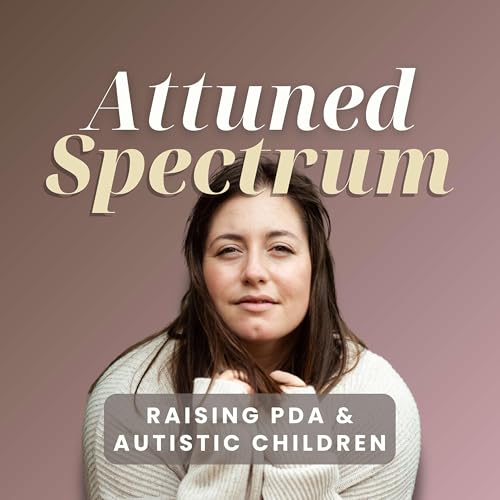
『Attuned Spectrum | Parenting Support for Raising PDA & Autistic Children』のカバーアート

Attuned Spectrum | Parenting Support for Raising PDA & Autistic Children

Attuned Spectrum | Parenting Support for Raising PDA & Autistic Children

著者: Chantal Hewitt
無料で聴く

このコンテンツについて

What if parenting your Autistic or PDA child didn’t feel so overwhelming — and you finally had support that honours your family?

I’m Chantal Hewitt — a PDA autistic, ADHD mother of three, including a PDA autistic son; an experienced educator with more than a decade in early childhood education and development; and a Family Autism & PDA Support Coach for parents who feel overwhelmed, burnt out, or quietly isolated as they try to make sense of their child’s needs.


I created Attuned Spectrum for families navigating intense emotions, explosive behaviour, sensory differences, anxiety-driven demand avoidance, burnout, shutdowns, masking, or a child who feels “different” but doesn’t fit traditional descriptions of Autism. Many parents who find this podcast don’t yet know whether their child is PDA — they just know the usual advice hasn’t worked. If that’s you, you’re in exactly the right place.


This isn’t a behaviour podcast.

It’s a connection-first, nervous-system-first, neurodiversity-affirming space for parents raising children with persistent drives for autonomy, big emotional worlds, misunderstood sensory needs, and nervous systems overwhelmed by a world that wasn’t built for them.


In each episode, I gently guide you through:


• what Autistic and PDA behaviours really communicate
• how to reduce demand anxiety and daily power struggles
• how to support your child through meltdowns and shutdowns
• how to co-regulate when you feel overstimulated yourself
• how to advocate at school when no one else understands
• how to recognise Autistic and PDA burnout in children
• how to create a calmer, safer, more attuned home


And lastly, and very importantly, how to hold space for yourself, your overwhelm, and your nervous system. Because without this foundational aspect and care towards yourself, it becomes increasingly unsustainable to show that care to your family.


Whether your child is diagnosed, suspected, or you’re simply trying to understand explosive behaviour or daily overwhelm, this podcast will help you make sense of your child’s inner world and support them in ways that truly work.


You deserve guidance that fits your child, compassion for your own nervous system, and a community that understands the unique challenges of raising Autistic and PDA children.


You’re not alone anymore.


Let’s walk this together — one attuned moment at a time.

© 2025 Attuned Spectrum | Parenting Support for Raising PDA & Autistic Children
人間関係 個人的成功 子育て 心理学 心理学・心の健康 自己啓発 衛生・健康的な生活
エピソード
  • Behaviour Isn’t the Problem for Your Autistic or PDA Child— The Environment Is
    2025/12/23

    A connection-first look at sensory load, nervous system safety, and how altering and being aware of our sensory environments drastically affects how we support our PDA and Autistic children.

    In this episode of The Attuned Spectrum Podcast, I want to help you understand why sensory environments matter so much more than the behaviour you’re seeing — especially when you’re parenting an autistic or PDA child.

    This episode is Part 3 of a 4-part Attuned Parenting Foundations series, where I’m walking you through the core shifts that change everything when you move away from behaviour-based approaches and toward nervous system safety and connection.

    In this third part, I focus on sensory environments and why they are often the missing piece. When we focus on behaviour without understanding what a child’s nervous system is processing underneath, we end up feeling stuck, frustrated, and exhausted. Not because we’re doing anything wrong — but because we’ve been looking in the wrong place.

    I break down sensory input, sensory load, and sensory output, and explain how these layers quietly build throughout the day before ever showing up as a meltdown, shutdown, or explosion. I also talk about why traditional behaviour strategies don’t work for PDA children, and why PDA is not manipulation or defiance, but a nervous system disability rooted in safety and autonomy.

    Using everyday examples — like brushing teeth — I show how sensory experiences and demands can stack up and drain a child’s capacity long before bedtime arrives. Many of the biggest sensory stressors are invisible: background noise, lighting, transitions, masking, and internal sensory demands like hunger or tiredness.

    When we begin adjusting environments instead of trying to control behaviour, things start to shift. Not through compliance or power struggles, but through safety, connection, and nervous system support.

    If you’d like to explore your child’s sensory profile more deeply, the Attuned Parenting Foundations course is currently free and includes 30 days inside the Attuned Parenting Community.
    You can find the link in the show notes or visit chantalhewitt.com/course.

    Text me and tell me- What do you want to hear for future episodes?

    Support the show

    If you’re parenting an Autistic or PDA child and want support that actually works, you’ll find more tools and free resources at chantalhewitt.com.

    Join The Attuned Parenting Community for Parents Raising Autistic / PDA Children

    LEARN MORE →

    Download my free guides

    Early Signs Guide → CLICK HERE
    Calm Parent Checklist → CLICK HERE
    PDA Parenting Guide → CLICK HERE

    Connect with me on Instagram, TikTok & YouTube @chantal.hewitt

    Reach out if you need anything- Say hello, share your story :) → hello@chantalhewitt.com

    Chantal x

    続きを読む 一部表示
    17 分
  • When Life Breaks Routine (Because It Will): Returning to the Foundations for Autistic and PDA Families
    2025/12/16

    What happens when life breaks routine — especially in autistic and PDA families?

    In this episode of the Attuned Spectrum Podcast, I’m sharing a care-first reflection from an unexpected hospital stay and what it highlighted for me about nervous systems, routine disruption, and why returning to the foundations matters most on hard days.

    I talk honestly about what it feels like when overwhelm builds, when control is lost, and when you’re holding worry for your children — especially when one or more children are already in burnout or masking. This episode is about the invisible load parents carry and how quickly things can unravel when routines shift unexpectedly.

    I also reflect on the impact of being listened to and accommodated in a moment of distress, and how regulating it can be to be witnessed without being fixed. It was a powerful reminder of how deeply our children need that same kind of space, understanding, and nervous-system safety.

    This episode brings everything back to the Attuned Parenting Foundations — not as theory, but as something we return to in real life.

    Key takeaways from this episode

    • When routines break, it impacts everyone’s nervous system — not just children’s
    • Insight and language don’t cancel overwhelm, especially during high-stress moments
    • Parents often hold worry for multiple children at once, and that load is real
    • Being listened to and accommodated can be deeply regulating
    • Foundations matter most when life is hard, not when things are calm

    The three Attuned Parenting Foundations

    1. Parent well-being and regulation

    Supporting our children starts with supporting ourselves. Parents need to be regulated and resourced enough to co-regulate — because when a parent is overwhelmed or depleted, it becomes much harder to show up in the way their child needs.

    2. Understanding your child’s nervous system

    When parents understand how their child’s nervous system works — including recognising burnout and stress responses — it becomes easier to respond with empathy and support regulation, rather than pushing for behaviour or compliance.

    3. Supporting through environment and sensory needs

    Even with parent regulation and nervous-system understanding, children will continue to struggle if environments aren’t set up to support them. Adjusting environments to reduce sensory overload and meet sensory needs is essential — not optional.

    Foundations aren’t something we build for calm days.

    They’re what we come back to when life breaks routine and capacity is low.

    Links to further support and resources are available in the show notes.

    Text me and tell me- What do you want to hear for future episodes?

    Support the show

    If you’re parenting an Autistic or PDA child and want support that actually works, you’ll find more tools and free resources at chantalhewitt.com.

    Join The Attuned Parenting Community for Parents Raising Autistic / PDA Children

    LEARN MORE →

    Download my free guides

    Early Signs Guide → CLICK HERE
    Calm Parent Checklist → CLICK HERE
    PDA Parenting Guide → CLICK HERE

    Connect with me on Instagram, TikTok & YouTube @chantal.hewitt

    Reach out if you need anything- Say hello, share your story :) → hello@chantalhewitt.com

    Chantal x

    続きを読む 一部表示
    10 分
  • Supporting Autistic & PDA Children Through Holiday Season Burnout
    2025/12/09

    Your autistic or PDA child isn’t “acting out” — their nervous system is asking for safety, rest, and attuned support.

    In this episode of Attuned Spectrum, I explore why autistic and PDA burnout intensifies at the end of the year and what you can do right now to support your child through rising overwhelm, avoidance, shutdowns, and meltdowns. December creates a perfect storm: disrupted routines, sensory overload, rising social expectations, and the emotional intensity of the holiday season — all of which place enormous pressure on a neurodivergent nervous system.

    I walk you through the real signs of autistic and PDA burnout (beyond “challenging behaviour”), why these shifts are rooted in nervous system depletion, and how burnout is often the accumulated impact of masking, school stress, and ongoing cognitive load. I share examples from my own home and the community, plus gentle, realistic shifts that can immediately reduce pressure for both you and your child.

    You’ll hear practical strategies to help right now: reducing non-essential demands, increasing autonomy, protecting recovery time, adjusting routines, and using co-regulation to rebuild safety.

    If you'd like scripts, deeper guidance, and a supportive space to apply these tools, you’re invited to join the FREE Attuned Parenting Foundations Course, which includes 30 days of community support inside Attuned Parenting.

    💜 Join for free → chantalhewitt.com/course

    Key Takeaways

    • Burnout is nervous system depletion, not misbehaviour.
    • End-of-year overwhelm spikes due to disrupted routines + sensory load.
    • Reduced demands + increased autonomy help children regulate.
    • Your co-regulation plays a central role in burnout recovery.
    • Validation strengthens safety after meltdowns or shutdowns.

    Text me and tell me- What do you want to hear for future episodes?

    Support the show

    If you’re parenting an Autistic or PDA child and want support that actually works, you’ll find more tools and free resources at chantalhewitt.com.

    Join The Attuned Parenting Community for Parents Raising Autistic / PDA Children

    LEARN MORE →

    Download my free guides

    Early Signs Guide → CLICK HERE
    Calm Parent Checklist → CLICK HERE
    PDA Parenting Guide → CLICK HERE

    Connect with me on Instagram, TikTok & YouTube @chantal.hewitt

    Reach out if you need anything- Say hello, share your story :) → hello@chantalhewitt.com

    Chantal x

    続きを読む 一部表示
    20 分
まだレビューはありません