エピソード

  • Janna Watson: Orientations of Painting
    2026/06/22

    Today on the Artalogue, one of my favourite Canadian painters, Janna Watson, chats with me about her art career, being Queer and taking inspiration from nature. Janna Watson is a Toronto-based abstract painter whose paintings use colour, drag marks, contrast, and negative space to reframe spirituality as something embodied, flexible, and alive. She also intentionally avoids borders, letting the edges stay vulnerable and infinite.

    We start with her earliest memories of art, shaped by two artist grandparents and a formative critique from her grandfather: “it needs to be wilder.” From there, Watson breaks down how intuition is built through repetition and risk, why “mistakes” often become the strongest moments in a painting, and how she sees herself in collaboration with her tools. We also talk about influences she returns to, what she chooses to collect at home, and how nature, especially the sky, becomes her favourite form of inspiration in abstraction because it changes constantly and belongs to all of us.

    Because this conversation lands during Pride month, Watson shares her experience as a Queer artist raised in a Pentecostal church, including the being outed, and how finding queer community in Toronto expanded her sense of self, God, and possibility. She explains what it means to “queer the painting process” through working on the floor, building compositions with multiple orientations. We close with career highlights, discuss sobriety, her new book “Layers of Self,” and practical advice for emerging painters who want a sustainable studio practice. We also have a really great discussion about complicating the Canadian canon!

    If this resonates, subscribe, share the episode with an artist friend, and leave a review so more people can find these stories of art, identity, and creative freedom.

    Connect with the Artalogue:

    Madison Beale, Host

    Be a guest on The Artalogue Podcast

    続きを読む 一部表示
    28 分
  • Jake Kimble: Life as Performance
    2026/06/16

    Happy Pride! It's episode 2 of the Artalogue's Pride Programming, speaking with 2SLGBTQ+ voices in Canada's art world. Today on the Artalogue, Madison Beale chats with Jake Kimble, a contemporary Dënesųłıné photographer based in Vancouver, who was recently highlighted by CBC Arts as an artist to watch! originally from Treaty 8 Territory in the North West Territories. Kimble's work moves between photography, performance, and material experimentation with a clear goal: make authenticity visible without sanding down its edges.

    Kimble shares their path from acting to a visual art practice shaped by breath, the body, and the idea that “life is a performance.” He shares how growing up across the Northwest Territories and other parts of Canada taught him to value freedom, privacy, and the specific places that hold memory, which now informs where he shoots the Canadian landscape in his practice. We talk about what changed through training as an artist when honest feedback pushed him away from edgy, disingenuous work that wasn't representative of their true self, and toward a self-portraiture practice that can make sense of sexuality, love, pain, and humour all at once. Kimble also explores what their two-spirit identity means to them in their life and art practice, and how breaking down normative ideas of gender have become central to their work.

    From there, we discuss some highlights in Kimble's over so far, such as the beaded tears that slowly obscure his face in It’s All So Incredibly Loud and the cheeky brilliance of printing photographs on paper towels for the Pick It Up Quick series. We also talk about the East and West coast art scenes from both the artist side and the gallery side, career highs, burnout, and the self-care practices that make long careers possible.

    If this conversation sparks something in you, subscribe, share it with a friend, and leave a review.

    Connect with the Artalogue:

    Madison Beale, Host

    Be a guest on The Artalogue Podcast

    続きを読む 一部表示
    36 分
  • Michèle Pearson Clarke: Possibilities of the Image
    2026/06/08

    Grief makes people uncomfortable, and that discomfort shapes what we’re allowed to say, show, and share. Today, Madison sits down with Toronto based visual artist, writer, and educator Michèle Pearson Clarke to talk about what happens when you allow yourself move with grief, rather than simply allowing it to move through or past you.

    Clarke walks us through an auto-ethnographic practice rooted in the longing and losses of Brown and Black queer people, and how her practice as an artist took shape later in life. Growing up in Trinidad, she didn’t imagine herself as an artist, but volunteering at the Inside Out LGBT Film and Video Festival cracked open a new definition of who gets to make work. We talk about coming to Canada at 19, what it means to become “Capital B” Black in a Canadian context, and how social work and psychology trained her to navigate vulnerability, boundaries, and the structural forces that shape personal pain.

    We also have a frank discussion about some relevant topics this Pride, from Queer curating to relationship culture, while discussing some works in Clarke's oeuvre. We discuss why gay divorce can feel so abstract and so unspeakable in our community that fought so hard for marriage equality, and how Clarke articulates more nuanced Queer experience in her work.

    Clarke shares how she thinks about the limits and strengths of the still image versus video, why repetition matters, and how she wants viewers to feel something, not just “get it.” Plus, we dig into her time as Toronto’s photo laureate during the pandemic, her work on queer curating, and the realities of balancing teaching with an art practice, including creative blocks and rebuilding confidence.

    If you are interested in contemporary Canadian photography, video art, 2SLGBTQ+ artists, Black Canadian art, and the creative possibilities inside grief, listen to this episode and join in the conversation. Subscribe, share with a friend, and leave a review with the line that stayed with you most.

    Connect with the Artalogue:

    Madison Beale, Host

    Be a guest on The Artalogue Podcast

    続きを読む 一部表示
    33 分
  • Rob Cowley and Lydia Abbott on the Canadian Auction Market
    2026/05/22

    Fair warning: this episode's a good one.

    Today, Madison chats with Rob Cowley and Lydia Abbott, principles of the Canadian auction house Cowley Abbott. We explore how an auction house functions within the Canadian art world and why auctions are one of the most visible indicators of the secondary art market. We talk about how results reveal both demand and supply, and why today’s Canadian art ecosystem is propelled by collaboration between auction houses, specialists, curators, consultants, retail galleries, and public institutions.

    Rob and Lydia share their story of building Cowley Abbott, from launching with a strong online auction model to incorporating the ceremony and production of live sales in Toronto. We get into what changed as collectors grew comfortable buying online, why in-person viewing still matters for condition and scale, and how COVID accelerated the digital shift while making logistics brutally hard. We also explore Lydia’s work as an adjunct professor at University of Toronto, where she connects art history to practical topics within the art market.

    Along the way, we chat about what’s ahead for the Spring Auction of Canadian and International Masterworks in Toronto on May 27, 2026, and reflect on record-setting highlights like the Schaefer Collection.

    If you care about Canadian art, art auctions, collecting, appraisals, or breaking into the art business, subscribe, share this conversation with a fellow art lover, and leave a review with your biggest takeaway.

    Connect with the Artalogue:

    Madison Beale, Host

    Be a guest on The Artalogue Podcast

    続きを読む 一部表示
    37 分
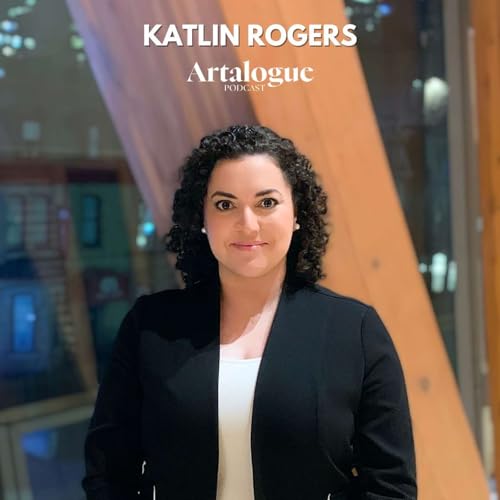
  • Building a Canadian Art Collection with Art Advisor Katlin Rogers
    2026/05/15

    Buying art is the fun part. Knowing what you’re buying, why it matters, and how to protect it over time is where most collectors get stuck. We’re joined by Katlin Rogers, founder of Rogers Art Advisory in Toronto and a certified appraiser with the International Society of Appraisers, to make the Canadian art market feel far less mysterious and a lot more navigable.

    We talk about what an art advisor really does, through building a strategy around your taste and goals, sourcing works privately and through galleries or auctions, negotiating, and managing the unglamorous essentials like logistics, documentation, conservation, and collection management. Katlin also explains how professional art appraisal works under USPAP ethics and standards, why the intended use of an appraisal changes the methodology, and how provenance, condition, and comparable sales data shape a defensible valuation for insurance, estates, and donations.

    If you’re curious about blue chip Canadian art, we define it clearly and name the kinds of anchors that have stood the test of time, including major figures associated with the Group of Seven and other quintessential artists in Canadian art history. We also dig into current Canadian art market trends: a more cautious buying mood paired with a renewed patriotism and strong push to diversify collections by seeking Indigenous artists, women artists, and historically overlooked voices. Corporate art collections come up too, especially how companies can build collections that reflect mission and culture while being professionally stewarded.

    Subscribe for more conversations on collecting, share this with a friend who’s art-curious, and leave a review if you want more episodes like this. What question do you still have about buying, valuing, or managing art in Canada?

    Follow Katlin's Instagram

    Connect with the Artalogue:

    Madison Beale, Host

    Be a guest on The Artalogue Podcast

    続きを読む 一部表示
    33 分
  • How Jean-François Bélisle is leading Canada's National Gallery
    2026/05/08

    WELCOME TO SEASON 5 OF THE ARTALOGUE!

    We're kicking off the fifth season of the Artalogue with a conversation with Jean-François Bélisle, the Director and CEO of Canada's National Gallery. We discuss the responsibilities of national institutions to their people and how national institutions can serve everyone, not just their immediate audience.

    What does "national" mean to a gallery with a mandate to serve all of Canada? We explore how the gallery is collaborating with institutions across the country, analyzing gaps in their collection and how to engage the public. We also explore the future-facing work that museums can’t ignore. Jean-François shares how the National Gallery thinks about digital engagement as a two-way street, creating online spaces that invite exchange rather than simply pushing information out.

    We close with a personal note on a piece of art he returns to again and again: Janet Cardiff’s The Forty Part Motet, and what it reveals about the power a single artwork can have. If you care about Canadian art, museum leadership, and the National Gallery of Canada’s next chapter, subscribe, share this conversation, and leave a review so more listeners can find the season.

    Connect with the Artalogue:

    Madison Beale, Host

    Be a guest on The Artalogue Podcast

    続きを読む 一部表示
    27 分
  • Patricia Cronin On Resisting Self and State Censorship As An Artist
    2026/01/30

    A viral encounter with a bronze sculpture put our host, Madison Beale, in touch with the incomparable interdisciplinary artist Patricia Cronin this year. Today on the Artalogue, Beale sits down down with Cronin to discuss her career trajectory from humble beginnings to a global art world presence as multidisciplinary feminist artist behind Memorial to a Marriage and Shrine for Girls to unpack how a work of art can carry both intimacy and insurgency.


    Patricia traces her path from a Catholic childhood through the 1990s culture wars, with erotic Polaroids interrogating power, authorship and voyeurism. That same insistence on lived perspective inspired later works, like the three-ton neoclassical embrace installed on her own burial plot to answer legal and physical absence in public space, and three quiet altars in Venice layered with fabrics that invite viewers to better understand how the patriarchy harms us all.

    Beale and Cronin also face the present head-on: executive orders scaring museum programs into deplatforming artists, show cancellations rippling through the arts in the United States, and the subtler danger of self-censorship in the studio. Cronin shares a clear path for resisting authoritarianism, matching skills to message and building communities that outlast regimes.

    Patricia Cronin is an interdisciplinary feminist artist that examines issues of gender, sexuality, and social justice. Major bodies of work focus on the international human rights of LGBTQ+ persons, women, and girls, including “Memorial To A Marriage”, the world’s first Marriage Equality monument. Cronin’s work has been exhibited internationally, with solo exhibitions at institutions including the Tampa Museum of Art, The FLAG Art Foundation, the 56th Venice Biennale, the Brooklyn Museum, and the American Academy in Rome. She has also participated in significant group exhibitions around the world and received various prestigious awards and fellowships. Cronin’s works is collected by numerous museums, including Kelvingrove Art Gallery and Museum, Leslie-Lohman Museum of Gay and Lesbian Art, National Gallery of Art, Perez Art Museum Miami, Smithsonian National Portrait Gallery, Tampa Museum of Art, and Woodlawn Cemetery. She lives and works in Brooklyn, New York.

    If this conversation moves you, follow the show, share it with a friend who loves art and justice, and leave a review with the artwork that changed your life. Your stories help others find us and keep this community growing.

    Connect with the Artalogue:

    Madison Beale, Host

    Be a guest on The Artalogue Podcast

    続きを読む 一部表示
    57 分
  • Barbara Cole on Creating Timeless Images
    2025/11/28

    Barbara Cole turned a newsroom fashion job into a decades-long photography practice. In this new episode of the Artalogue, Madison chats with the award winning photographer Barbara Cole about her unorthodox journey to the dark room.

    Cole's first memories of art were at the theatre, which makes sense when you look at her gorgeous and theatrical photographs. She was initially inspired by the British artist Sarah Moon and the painterly way she conceived her photographs. From there she learned by doing: running lights off generators, hand-painting prints, collaging archival imagery, and eventually mastering a practice that treats film and digital as complementary tools.

    Cole shares more about Impermanence, her new show with Bau-Xi gallery. black-and-white underwater series shot through the surface with a Rolleiflex while a summer storm tried to drown the set. The result is a study in blur, breath, and transition with figures suspended in dreamy, watery underworlds. Cole worked with a young designer to create outfits specifically for this shoot. As well as creative peaks, we talk about some creative troughs: fear between projects, the discipline of shooting without expectation and mental health struggles.

    If you’re chasing a singular voice, this conversation delivers practical insight: how to find honest gesture, why gear isn’t always the answer, and how finding your own style through experimentation can create a timeless look.

    Connect with the Artalogue:

    Madison Beale, Host

    Be a guest on The Artalogue Podcast

    続きを読む 一部表示
    29 分