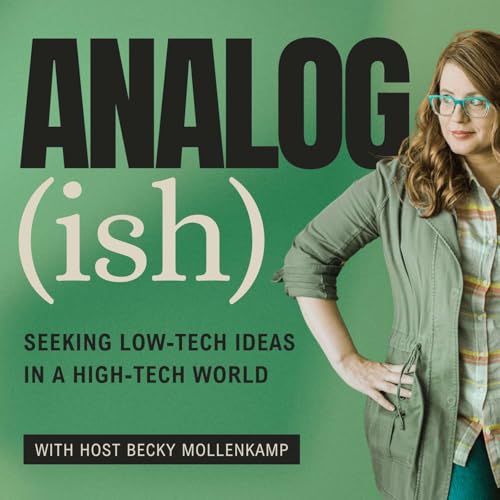
『Analog-ish: Seeking low-tech ideas in a high-tech world』のカバーアート

Analog-ish: Seeking low-tech ideas in a high-tech world

Analog-ish: Seeking low-tech ideas in a high-tech world

著者: Becky Mollenkamp
無料で聴く

Analog-ish is a weekly interview podcast for people who are tired of being optimized. Hosted by feminist coach Becky Mollenkamp, who believes slowing down is a radical act, each episode features conversations with thinkers, makers, and everyday radicals who are finding their way back to something slower, more intentional, and more human. We're not here to tell you to smash your phone or go off the grid. We're here to ask better questions about the role technology plays in your life — and to explore practical low-tech ideas that give you more agency over the answer. From reclaiming rest to building real-life community, from protecting your attention to finding unmonetized joy, these conversations are honest, curious, and refreshingly free of hustle culture. If you're burned out from being constantly online and hungry for a different way forward, this show is for you.2026 Becky Mollenkamp LLC 心理学 心理学・心の健康 衛生・健康的な生活
エピソード
  • How to Market Your Business Without Being Online All Day with Andria Singletary
    2026/06/10

    In this episode, you'll hear from Andria Singletary — podcast strategist, host of Evergreen Marketing Era for Women Entrepreneurs, and mom of (almost) three — about how she stopped building her business on borrowed land. What started as a necessity when her daughter was born became a full philosophy shift: ditching the social media hamster wheel in favor of long-form content that works while you sleep. Andria breaks down how she replaced Instagram with podcasting, blogging, and strategic collaborations — and how that switch didn't just save her sanity, it brought in better clients. If you've ever felt like you'd lose your business the moment you put your phone down, this episode will make you think again.

    Topics Covered:
    • Why motherhood forced a marketing reckoning. Andria realized she was missing her kids' childhoods trying to keep up on Instagram — and that wake-up call became the catalyst for completely rethinking how she showed up for her business.
    • The fear of being forgotten. What it actually felt like to scale back social media when it had been her primary lead source, and how she moved through those fears instead of letting them keep her stuck.
    • Long-form content as a business foundation. Andria makes the case for podcasting and blogging over short-form social, explaining how evergreen content compounds over time in a way that Instagram posts simply cannot.
    • Quality over quantity, and what that actually means. One weekly podcast episode plus one blog post per month versus daily posting: why less, done intentionally, outperforms more, done frantically.
    • Dopamine hits vs. real business growth. The moment Andria realized that likes and comments don't pay the bills, and how she found a more meaningful (and more profitable) version of that reward through long-form content engagement.
    • Why podcast listeners make better clients. Andria explains how being "in someone's ears" while they do laundry or go for a walk creates an intimacy that social media's flat, curated feed can never replicate, and how that translates to warmer leads and shorter sales cycles.
    • Letting go of perfectionism in content creation. The accidental Christmas recording-on-her-phone moment that changed how Andria thought about production quality, and what she learned when her listeners loved it.
    • Content ownership and platform risk. Getting locked out, censored, or watching your platform collapse overnight, Andria talks about why building on rented land is a genuine business risk and how long-form content gives you something no algorithm can take away.
    • Her current social media diet. Instagram is basically a dead zone; Threads gets 30–45 minutes a week; and her business is just fine. What that looks like in practice, and what she actually focuses on instead.
    • Starting before you're ready: the case for podcast guesting. Not sure if podcasting is for you? Andria's advice is to go be a guest first, and her broader reminder that blogging and YouTube are also legit long-form paths.

    Resources:
    • Evergreen Marketing Era for Women Entrepreneurs podcast: https://mamaturnedmompreneur.com/podcast
    • Andria's Threads: https://www.threads.com/@evergreenmarketingera
    • Andria's website: https://mamaturnedmompreneur.com/

    🎤 JOIN US IN THE FEMINIST PODCASTERS COLLECTIVE: http://feministpodcastcollective.com/

    続きを読む 一部表示
    37 分
  • Why Zines Are Making a Comeback with Maz George
    2026/06/03

    In this episode, you'll hear from Maz George (they/them), a queer neurodivergent astro coach, artist, and avid zine maker, about why the DIY publishing format is experiencing a radical resurgence. Maz shares the evolution of zine-making from the pre-internet days of typewriters and rubber stamps to today's intentional analog rebellion against algorithmic content. We explore how creating physical, uncensored media offers focus, human connection, and creative freedom that social media can't replicate — and why choosing to make something tangible in a digital-first world is its own form of resistance. Whether you're curious about launching your first zine or just craving more offline creative practice, this conversation will inspire you to get your hands dirty (literally).

    Topics Covered:

    • How zine-making has evolved from necessity in the '90s and early 2000s to intentional resistance in the algorithm age, and why choosing print feels so different now
    • The unexpected emotional difference between 100 social media likes and 100 people holding your physical zine in their hands
    • Why zines remain uncensored, unfiltered, and un-algorithmed, and how zine distros and festivals are building alternative distribution networks
    • The concept of "skeuomorphism" (digital design mimicking physical objects) and what it reveals about our innate human need for tactile experiences
    • How the zine community creates serendipitous human connection, like meeting the maker of your favorite zine at a festival six months after buying it
    • Why children growing up in a digital-first world need the opposite of skeuomorphism: translation tools to help them understand offline, embodied experiences
    • The power of slowing down with a typewriter, embracing typos, and treating imperfection as part of the creative process
    • Simple zine ideas to get started: "shit I saw on my walk," color collections, lists of things you love, scavenger hunt finds
    • How making zines with kids can build creativity, focus, and appreciation for physical making
    • Why you don't need to escape the internet entirely to benefit from analog creative practices—it's about balance, not binaries

    Resources Mentioned:

    • Book Riot's history of zines
    • The Newspaper Club
    • Quimby's (Brooklyn)
    • New York Art Book Fair (by Printed Matter)

    Maz's Instagram
    Maz's zine: Astrology and creativity guide


    🎤 JOIN US IN THE FEMINIST PODCASTERS COLLECTIVE: http://feministpodcastcollective.com/

    続きを読む 一部表示
    36 分
  • Cuqui Magazine is Bringing Back Print for Gen Alpha Girls (with Paula James Martinez)
    2026/05/27

    In this episode, you'll hear from Paula Goldstein, former fashion director at Refinery29 and founder of Cuqui Media, about why she's bringing print magazines back for Gen Alpha girls. Paula shares her journey from UK teen magazines to working at indie fashion mags in London and Paris, and why the collapse of print publishing taught her what we lost when everything moved online. We dig into why kids who've never known life before the internet are somehow more bored by it than we are, how nostalgia isn't a strategy but presence is, and why Paula turned down venture capital to bootstrap a magazine that prioritizes magic over metrics. If you've ever felt the sting of your kid calling you out for doomscrolling, this conversation will hit home.

    Topics Covered:

    • How the shift from print to digital happened in real time in the fashion magazine world, and why editors dismissed Instagram as "bad photos on phones" before it changed everything overnight
    • The moment commerce overtook art in publishing (2008 financial crisis) and opened the floodgates for digital-first media
    • Why Gen Alpha kids are somehow more bored by the internet than Millennials and Gen X, they've "reached the end of the internet and there's nothing new under the sun"
    • The difference between nostalgia (what we miss) and what kids are actually craving: magic, presence, and something tactile to hold
    • Paula's philosophy: "Nostalgia isn't a strategy, Cuqui is," building something new instead of trying to recreate the past
    • Why turning down venture capital was essential to building a magazine on her own terms, without growth-at-all-costs pressure
    • The painful moment when your kid calls you out for being on your phone when you should be present, and why it stings so much
    • How doomscrolling has become a parental habit we model for our children, and what breaking that cycle looks like
    • The magic of getting something in the mail that isn't a bill, why physical magazines create a reading experience digital media can't replicate
    • Paula's challenge: go somewhere without your phone for two hours and see if the world collapses (spoiler: it won't)

    Resources Mentioned:

    • Cuqui.club is currently accepting pre-orders for journals to support the launch
    • Ms. Magazine


    🎤 JOIN US IN THE FEMINIST PODCASTERS COLLECTIVE: http://feministpodcastcollective.com/

    続きを読む 一部表示
    32 分
adbl_web_anon_alc_button_suppression_t1
まだレビューはありません