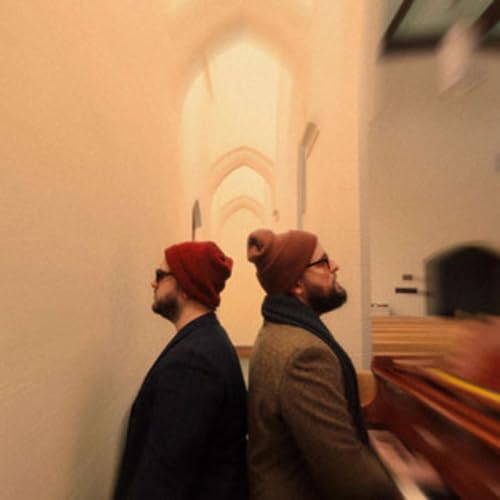
『A Pastor and a Philosopher Walk into a Bar』のカバーアート

A Pastor and a Philosopher Walk into a Bar

A Pastor and a Philosopher Walk into a Bar

著者: Randy Knie & Kyle Whitaker
無料で聴く

このコンテンツについて

Mixing a cocktail of philosophy, theology, and spirituality.

We're a pastor and a philosopher who have discovered that sometimes pastors need philosophy, and sometimes philosophers need pastors. We tackle topics and interview guests that straddle the divide between our interests.

Who we are:

Randy Knie (Co-Host) - Randy is the founding and Lead Pastor of Brew City Church in Milwaukee, WI. Randy loves his family, the Church, cooking, and the sound of his own voice. He drinks boring pilsners.

Kyle Whitaker (Co-Host) - Kyle is a philosophy PhD and an expert in disagreement and philosophy of religion. Kyle loves his wife, sarcasm, kindness, and making fun of pop psychology. He drinks childish slushy beers.

Elliot Lund (Producer) - Elliot is a recovering fundamentalist. His favorite people are his wife and three boys, and his favorite things are computers and hamburgers. Elliot loves mixing with a variety of ingredients, including rye, compression, EQ, and bitters.

© 2025 A Pastor and a Philosopher Walk into a Bar
キリスト教 スピリチュアリティ 哲学 社会科学 聖職・福音主義
エピソード
  • Power, Love, and What God Can’t Do: More on Omnipotence With Tom Oord and Chris Lilley
    2025/12/12

    Text us your questions!

    What kind of God is worth trusting when life falls apart? We pull up a chair with Thomas Jay Oord and guest Chris Lilley for a spirited, vulnerable conversation about omnipotence, evil, and why love may be the only measure of divine power that doesn’t betray our moral core. The stakes are high: beliefs about God’s power shape how we face suffering, talk to our kids about hope, and decide whether prayer is protest, surrender, or both. If you haven't heard our first conversation with Tom about God's power, we recommend checking that out first here.

    Tom lays out open and relational theism: God moves through time with us, gives and receives, and has a nature of uncontrolling love. From there he challenges three classic readings of omnipotence—doing anything, exerting all power, and unilaterally determining outcomes—arguing they either collapse logically or become morally intolerable in the face of real-world evil. Chris, a former Thomist and Reformed teacher now in the Episcopal ordination process, offers a thoughtful pushback: if omnipotence can be carefully qualified, should we abandon it, or teach it better? His turning point is painfully human: holding his newborn while teaching election and realizing he couldn’t preach a God who ordains every outcome and still call that good.

    We wrestle with creation, “almighty” in the liturgy, liberation theology’s demand for a God who not only intends justice but accomplishes it, and a hard question about the afterlife: could you rest eternally with a God who could have stopped your suffering? Tom reframes power as maximal influence—everlasting, universal, persuasive—rather than control. Kyle names the unresolved middle: if God could fix it later, why not now? The conversation doesn’t hand out easy answers; it invites you to weigh goodness against power and decide which vision of God you can actually pray to.

    If this episode challenges or helps you, share it with a friend, hit follow, and leave a review so others can find the show.

    =====

    Want to support us?

    The best way is to subscribe to our Patreon. Annual memberships are available for a 10% discount.

    If you'd rather make a one-time donation, you can contribute through our PayPal.


    Other important info:

    • Rate & review us on Apple & Spotify
    • Follow us on social media at @PPWBPodcast
    • Watch & comment on YouTube
    • Email us at pastorandphilosopher@gmail.com

    Cheers!

    続きを読む 一部表示
    1 時間 19 分
  • Motives, Meaning, and the Enneagram with Jeff Cook
    2025/11/28

    Text us your questions!

    Our friend Jeff Cook—writer, podcaster, and Enneagram systems thinker—is back with us to discuss his recent book (volume 1 of a series because of course it is): about the Enneagram. (See our first conversation from S03E26 here.)

    Jeff explains how the Enneagram names the “why” beneath our choices, conflicts, faith, and love. Randy shares how the framework has sharpened his self-awareness and softened his edges. And Kyle characteristically pushes back a bit on evidence, parsimony, and the risk of thick theories outrunning data. The result is a lively, generous exploration that treats the Enneagram as a language for motive rather than a box for behavior.

    Jeff starts by laying a foundation—head, heart, and body—as an ancient scaffold echoed in philosophy, spirituality, and clinical practice. From there, he maps how core desires show up under stress and security and why the hardest question, “What do you want?”, may be the doorway to identity and change. We pressure-test the model where it matters most: relationships. Randy gets a live read on Eight-with-Six dynamics—strength meeting vigilance, autonomy meeting reassurance—and why "body types" experience control and agency in ways that feel physical, not theoretical. We also tackle the cottage-industry problem, academic standards, and how to treat the Enneagram like a Wittgensteinian ladder: use it when it helps, set it aside when it doesn’t.

    If you’ve been burned by rigid labels, you’ll appreciate our insistence on flexibility, nuance, and practical outcomes. If you’re curious about real-life gains, Jeff’s focus on gifts will resonate: name what you uniquely bring—clarity, courage, steadiness, empathy—and aim it outward. Useful, not ultimate. Humble, not hazy.

    Enjoy the conversation? Subscribe, share with a friend who loves a good debate, and leave a review on Apple or Spotify.

    =====

    Want to support us?

    The best way is to subscribe to our Patreon. Annual memberships are available for a 10% discount.

    If you'd rather make a one-time donation, you can contribute through our PayPal.


    Other important info:

    • Rate & review us on Apple & Spotify
    • Follow us on social media at @PPWBPodcast
    • Watch & comment on YouTube
    • Email us at pastorandphilosopher@gmail.com

    Cheers!

    続きを読む 一部表示
    1 時間 28 分
  • Miroslav Volf: How Striving to Be Better Than Others Makes Us Worse
    2025/11/14

    Text us your questions!

    Is the drive to be better than others making us worse? We talk with theologian Miroslav Volf about his book The Cost of Ambition and explore why comparison-based striving saturates our schools, churches, workplaces, and politics. Volf separates healthy aspiration from superiority-seeking and makes a compelling case for excellence without domination, rooted in agape, i.e., unconditional love that affirms people beyond performance.

    We dig into the Christ hymn of Philippians 2 and why self-emptying is not weakness but a different kind of strength. Volf shows how resurrection and ascension empower humility rather than feed triumphalism and why honoring everyone is both a spiritual discipline and a democratic necessity. From the academy’s “one-up” culture to the marketplace’s imitation traps, he argues that obsessing over competitors blinds us to our unique gifts and corrodes joy. Even stalwart capitalists like Warren Buffett warn against competitor-fixation. Volf adds a deeper moral and theological critique as well, drawing on Paul’s piercing question: What do you have that you did not receive?

    We also test his claims against Nietzsche’s will to power, happiness research on social comparison, and the rise of Christian nationalism. Is Christ a moral stranger to our priorities? Volf challenges both sides of the aisle to recover mere humanity—Kierkegaard’s vision of belovedness before achievement—and to practice agape toward others and ourselves. The result is a bracing, hopeful vision: strive for truth, craft, and contribution, not for status; pursue excellence as stewardship, not self-exaltation.

    If you’re weary of the status treadmill yet still hungry to do meaningful work, this conversation will give you categories, language, and practices to recalibrate your aims. Listen, reflect, and share with someone who needs a healthier way to win. If the episode resonates, subscribe, leave a review, and let us know your thoughts.

    =====

    Want to support us?

    The best way is to subscribe to our Patreon. Annual memberships are available for a 10% discount.

    If you'd rather make a one-time donation, you can contribute through our PayPal.


    Other important info:

    • Rate & review us on Apple & Spotify
    • Follow us on social media at @PPWBPodcast
    • Watch & comment on YouTube
    • Email us at pastorandphilosopher@gmail.com

    Cheers!

    続きを読む 一部表示
    59 分
まだレビューはありません