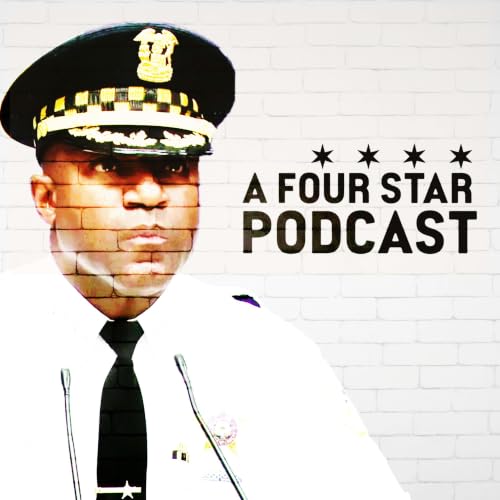
『A Four Star Podcast (Chicago, but Better)』のカバーアート

A Four Star Podcast (Chicago, but Better)

A Four Star Podcast (Chicago, but Better)

著者: Fox 32 Chicago
無料で聴く

A Four Star Podcast is a new series from FOX Chicago built on a simple idea: our city’s biggest challenges shouldn't just be endless points of debate—they’re problems with practical, attainable solutions. Named for the stars on our municipal flag, the show acts as a filter for the usual civic noise. We're moving past the "Chicago politics" headlines to focus on the actual quality of life issues that affect us every day. Whether it's the reliability of the CTA, the safety of our streets, the health of our business climate, or the reality of the housing market, we’re looking at the nuts and bolts of how this city really functions. Our goal is common-sense progress over political gridlock. By sitting down with technical experts, boots-on-the-ground advocates, and industry insiders—the voices you don’t always see in the local news cycle—we’re deconstructing the hurdles that keep Chicago from reaching its full potential. We aren’t just here to point out what’s broken; we’re talking to the people who know how to fix it. This is a blueprint for a more functional, ambitious, and better Chicago.2025 Fox 32 Chicago 政治・政府
エピソード
  • You're not actually stealing from Jeff Bezos
    2026/05/26
    When a neighborhood store closes, the argument usually starts fast. Activists blame corporate greed. Retailers point to theft. Residents are left with fewer places to buy groceries, fill prescriptions or pick up the basics. In this episode of FOX Chicago's A Four Star Podcast, we talk with Robert Karr, President and CEO of the Illinois Retail Merchants Association, about the pressures facing brick-and-mortar retail in Chicago and across Illinois. The conversation starts with the recent Walgreens closing in Chatham, then opens up into a larger discussion about shoplifting, organized retail crime, pharmacy reimbursement, property taxes, government mandates, municipal grocery stores and the complicated math behind keeping stores open in underserved neighborhoods. Karr argues that retail theft is not a victimless crime. Every stolen item affects sales tax revenue, store employees, managers, local governments and the neighborhoods that depend on those stores. He also explains why some large retailers may no longer be willing to subsidize underperforming locations the way they once did. Later, we turn focus to part of a viral conversation featuring Hasan Piker about whether stealing from major corporations can be justified as a political or social statement. Karr calls that thinking uninformed and dangerous, arguing that it ignores the real-world consequences for workers, customers and communities. The episode closes with a second retail voice: Our host's dad, a retired retail manager and district manager who spent decades dealing with shrinkage, store safety, employee theft, customer service and the brutal bottom-line reality of whether a store survives. History lesson: Retail theft used to be treated largely as a store-level management problem. Shrinkage, employee theft, customer shoplifting and loss prevention were part of the basic retail math. But in recent years, organized retail crime, online resale markets, changing prosecution policies and political fights over store closures have turned it into a much bigger civic issue. In Chicago, that means the future of retail is not just about shopping. It is about neighborhood stability, public safety, tax revenue and whether basic services can remain within reach. Illinois Retail Merchants Association: https://irma.org/ Illinois Organized Retail Crime Association: https://ilorca.org/ 00:00 Cold open: Retail theft, politics and store closures 00:59 Who is Robert Karr? 01:22 Brick-and-mortar temperature check 03:54 Walgreens, Chatham and the politics of store closures 10:23 Why pharmacies are under pressure 12:25 Should cities run grocery stores? 17:45 Illinois, Chicago and the cost of doing business 21:18 How local government affects retail 23:14 Why retail theft is not victimless 24:27 Prosecution, cash bail and the pendulum swing 28:01 What organized retail crime looks like inside a store 30:27 How theft changes the shopping experience 32:37 Could stores become pickup windows? 34:51 The human cost for managers and employees 37:31 Stealing as political signaling 41:21 Robert Karr responds to Hasan Piker's viral shoplifting argument 44:06 Can young consumers be educated on retail theft? 46:42 Illinois’ Organized Retail Crime Act 49:19 Technology, enforcement and the future of retail security 50:12 Where to follow the issue 51:19 A second retail expert: Grant’s dad 53:24 Shrinkage from a store manager’s perspective 56:25 Why customer service prevents theft 57:23 The rise of undercover loss prevention 58:19 Managing stores in high-theft neighborhoods 01:02:40 Why stores actually close 01:04:14 When subsidizing problem stores stops making sense 01:06:18 Prosecuting every shoplifter 01:07:27 Advice for today’s retail managers 01:08:20 Family photos, old stores and disposable cameras A Four Star Podcast is new every Tuesday morning at 6. Learn more about your ad choices. Visit podcastchoices.com/adchoices
    続きを読む 一部表示
    1 時間 11 分
  • The Ultimate Backyard Secret for Stressed City Parents
    2026/05/21
    Why are American cities losing families at greater rates than any other demographic? According to Alicia Pederson, known online as the Courtyard Urbanist, the answer isn't a lack of desire for city living - it’s a catastrophic design failure. In this episode of FOX Chicago's A Four Star Podcast, we sit down with Pederson to dismantle the standard, developer-driven housing templates that dominate modern American cities. A "recovering academic" with a PhD in Renaissance Literature, Pederson bridges the gap between 16th-century Italian urban design and 21st-century Chicago zoning policy. She introduces us to the "Goldilocks" density of the European perimeter block: mid-rise, wall-to-wall housing structures built around a secured, shared interior green courtyard. It is an architectural strategy that effectively brings "the big house with a yard" right into the city center. We dive deep into the daily mechanics of urban parenting, exploring why massive apartment complexes with "double-loaded corridors" isolate families and cut children off from safe outdoor spaces. Pederson contrasts these "disgusting" designs with the "Point Access Block" or single-stair layout, which eliminates long dark hallways and guarantees dual-aspect apartments with windows on both sides—allowing parents to actually watch and hear their kids playing outside while making dinner. Finally, we look at the exact policy changes required to unlock this housing renaissance in Chicago. From the massive implications of single-stair reform in Governor Pritzker’s Build Act to the "boring" local zoning restrictions like front and side setback requirements that actively outlaw community-centric architecture, Alicia outlines a beautiful, high-density future for major redevelopments like Lincoln Yards and The 78. More from Alicia Pederson: https://x.com/UrbanCourtyard https://courtyardurbanist.com/ A Four Star Podcast is all-new Tuesday mornings at 6AM! CHAPTERS 00:00 Cold Open: A European Inspiration for Family Density 00:31 Welcome Alicia Pederson, The Courtyard Urbanist 01:18 The Housing Crisis: Why Cities are Losing Families 02:41 Defining Courtyard Urbanism (It's Not a Courtyard Marriott) 05:04 The Flaw of the American "Double-Loaded Corridor" 08:38 Hidden Costs: Parking, Egress, and Over-Regulated Elevators 10:25 The Drowning Hazard: Why Building Pools Instead of Yards Fails Parents 11:36 The Mom’s Perspective: The Mental Health Burden of Arranging Playdates 15:43 The Isolation Paradox: Shared Spaces for Single Parents and Adults 17:05 From Renaissance Literature to Urban Advocacy: Alicia’s Journey 20:56 Dual-Aspect Living: Making Apartments That "Live Like a House" 22:15 Lessons from a 16th-Century Florentine Palazzo 26:07 The Build Act: Will Pritzker’s Legislation Legalize Better Buildings? 27:59 The Inglewood Proposal & The Nightmare of Chicago Setback Laws 31:07 The "Greystone Legacy" and Boston’s North End Architecture 34:25 19th-Century Light Regulations: How Scandinavia Solved the Geometry 35:55 Scaling Up: Micro-Tear Downs vs. Mega Projects Like The 78 and Lincoln Yards 37:52 The Deep Floor Plate Problem: Converting Commercial Buildings to Homes 40:04 The Rise of the Live-Work Neighborhood & The Death of the Office Tower 41:57 The Modern Dual-Income Household vs. The 1950s Suburban Commute 43:34 What is a "Texas Donut"? Disguising Car Dependency 46:37 Pastoral Friction: What 16th-Century Writers Can Teach 21st-Century Chicago 49:52 Millennial Revival: Catching Up to European Standards 52:45 The Magic Wand: Two Codes Alicia Would Wipe Out Tomorrow 55:30 Outro: Where to Find the Courtyard Urbanist Online Learn more about your ad choices. Visit podcastchoices.com/adchoices
    続きを読む 一部表示
    57 分
  • How Democratic Socialists Captured City Hall
    2026/05/21
    When the Mayor of a major American city responds to the flight of its largest taxpayers with a laughing “Bye,” it isn’t just a viral clip. It’s a mission statement. For decades, blue city politics was defined by moderate Democrats and corporate compromise. But in 2026, the "machine" has been rebuilt. In this episode, Grant is joined by Austin Berg, Executive Director of Chicago Policy for the Illinois Policy Institute, to look past the rhetoric and into the new mechanics of municipal power. They discuss the "dossier" of Democratic Socialists of America (DSA) members who have moved from outside the gates to the levers of executive power. From the "tax the rich" performance of NYC’s Zohran Mamdani to the institutional capture of Chicago’s administrative agencies, they explore what happens when "the dog catches the car" and activists actually have to deliver results. Connect with Austin Berg: Substack: https://www.thelastward.org/ X: https://x.com/Austin__Berg Writing & Research: https://www.illinoispolicy.org/author/aberg/ 00:00 Cold Open: The Dog Catches the Car 00:58 Introduction: Austin Berg and the DSA Influence 02:30 Video Analysis: Mamdani’s "Terror Tax" and Griffin’s Response 05:45 Results vs. Intentions: The Seattle Starbucks Boycott 09:45 The Wealth Tax Illusion: Why US Cities aren't European Democracies 11:40 The Resilience of New York vs. the Exit of Ken Griffin 14:40 Learning Hard Lessons: Lessons from the California Wealth Tax 15:50 Patient Zero: How Bernie Sanders 2016 Transformed the DSA 18:30 The Municipal Strategy: Why Local Elections are Easy to Sway 20:45 Tactics of the Vanguard: Obstruct, Appoint, and Primary 22:45 Follow the Money: The Role of Government Sector Unions 26:15 Chicago’s Squad: Performative Policy vs. Ward Service 29:40 The Public Safety Debate: ShotSpotter and Ideological Litmus Tests 32:50 Economic Stagnation: Head Taxes and Millionaire Surcharges 35:50 Personnel is Policy: The Infiltration of Appointed Leadership 40:45 Cops are Pigs: Activist Rhetoric vs. Professional Governance 44:30 Is the Vibe Shifting? Lessons from San Francisco’s Rebound 48:30 The Solution: Why Chicago Needs a City Charter 50:20 Being "Long" on Chicago: Man-made Problems and Man-made Solutions Learn more about your ad choices. Visit podcastchoices.com/adchoices
    続きを読む 一部表示
    54 分
adbl_web_anon_alc_button_suppression_c
まだレビューはありません