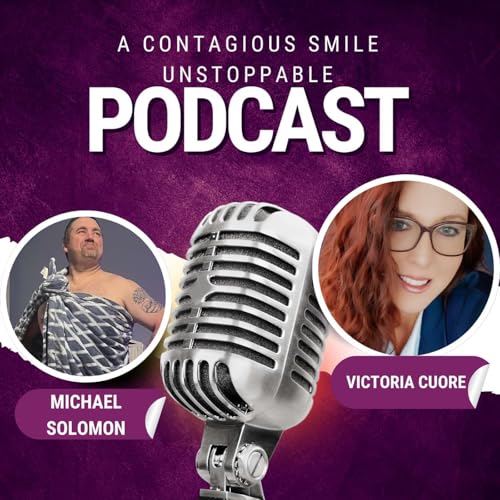
『A Contagious Smile Podcast』のカバーアート

A Contagious Smile Podcast

A Contagious Smile Podcast

著者: Victora Cuore; A Contagious Smile Who Kicked First Domestic Violence Survivor Advocate Motivational Coach Special Needs Abuse Support Life Skill Classes Special Needs Social Groups
無料で聴く

今ならプレミアムプランが3カ月 月額99円

2026年5月12日まで。4か月目以降は月額1,500円で自動更新します。

概要

Stop surviving and start thriving. A Contagious Smile is a globally ranked podcast providing a safe haven for abuse survivors and special needs families navigating the journey of trauma recovery. Whether you are healing from domestic violence, narcissistic abuse, childhood trauma, or the daily challenges of disability advocacy, our mission is to turn your pain into power.


Each episode features raw, authentic conversations with survivors, mental health experts, and advocates who share actionable resources for PTSD healing, resilience building, and emotional wellness. We go beyond the struggle to highlight the triumphs of the special needs community, offering support for caregivers and individuals with disabilities who are rewriting their own narratives.

Hosted by Victoria Cuore, an award-winning trauma advocate and survivor, this podcast delivers the "blueprints" for recovery—not just Band-Aids. Join our community to find hope, humor, and the unstoppable spirit needed to rekindle your inner light.

© 2026 A Contagious Smile Podcast
ノンフィクション犯罪 人間関係 個人的成功 社会科学 自己啓発
エピソード
  • A New Partnership For Trauma-Informed Mental Health Support with Michael Mackniak
    2026/04/22

    Send us Fan Mail

    The scariest part of a mental health crisis isn’t always the symptoms. It’s the moment you realise nobody is talking to each other and your loved one is getting treated like a problem instead of a person. We sit down with veteran attorney and caregiver advocate Michael Machnac to share a major new partnership bringing his care coordination work together with Victoria’s trauma-informed recovery approach, aimed squarely at the families and individuals who feel trapped in the gaps of the system.

    We get specific about what “care coordination” actually means: building a complete history, understanding the family ecosystem, aligning providers around one direction, and making the patient the captain of the ship. Along the way, we unpack why modern healthcare navigation is so exhausting, from repeated paperwork to siloed hospitals and rushed appointments that leave dignity behind. We also talk candidly about crisis response, autism and de-escalation, and the difference between being managed and being heard.

    You’ll hear what we’re planning next for Mental Health Awareness Month, why we’re launching a podcast series to share real strategies (not just complaints), and how character and habits can help you climb out of your own rut when life hits hard. If you’ve ever felt alone on the “crazy train” of mental health advocacy, this conversation is your reminder that you’re not imagining it and you’re not on your own.

    Subscribe, share this with someone who needs it, and leave a review so more caregivers and survivors can find these tools. What’s the biggest communication breakdown you’ve seen in healthcare?


    Michael Mackniak
    Website: https://michaelmackniak.com

    Care Coalition: Care Coalition – https://carecoalition.org

    Academy: https://guardian-academy.thinkific.com

    Email: mike@guardian-ct.org


    Support the show

    続きを読む 一部表示
    48 分
  • Leaving An Abusive Relationship Starts With A Safety Plan
    2026/04/20

    Send us Fan Mail

    “Why don’t you just leave?” gets thrown at survivors like it’s a simple fix, so we slow it down and tell the truth. We’re Stucco, Rusty, Sexy Victoria, and Michael, and we talk through what actually keeps people in abusive relationships: isolation, money, kids, pets, housing, fear, and the very real danger that comes with trying to exit without a plan. If you’ve ever judged someone for staying, or blamed yourself for going back, this conversation is built to challenge that reflex and replace it with clarity.

    Victoria brings the clinical lens and lived experience, and we dig into why the average survivor may return again and again when the safety plan is not in place. We also talk about the shelter dilemma and why “removing the victim” can feel like losing your home twice. From there, we get into trauma after survival: PTSD, complex PTSD, and the triggers that can show up in everyday life long after the relationship ends. We also call out how often obvious abuse signs get minimized in medical settings, and what trauma-informed care should look like instead.

    We don’t stop at survival. We talk boundaries with family and “out of the woodwork” people who only show up when they want something, plus the difference between real change and manipulation. We go straight at narcissistic abuse and accountability, and we share what recovery looks like when someone finally chooses a different life. If you want practical support, we point you to a free escape plan course at Monstermile.mn.co. Subscribe, share this with someone who needs it, and leave us a review so more survivors can find these resources.

    Support the show

    続きを読む 一部表示
    43 分
  • TikTok Toilets And A Very Bad Diastat Day
    2026/04/16

    Send us Fan Mail

    One phone call can flip your whole world. We start with real life and real laughs, then move into the kind of story that makes your stomach drop: what happens when a school says your child had a medical emergency, but the timeline and the paperwork don’t match what you know to be safe care.

    We talk about why families choose no contact, why the “but they’re your parents” line misses the point, and how breaking generational trauma often looks like setting boundaries that others don’t understand. We also get honest about modern distraction, screen time at the dinner table, bullying on social media, and the hard truth that “talk to your kids” only works when adults slow down and truly listen.

    From there we dig into healthcare access and patient advocacy: long waits for specialists, rushed appointments, and how the system can accidentally funnel people toward unsafe answers. Then Victoria tells the full Faith story from a parent-advocate lens, including IEP details, school accountability, documentation, and why staying calm can be your sharpest tool when everything is on the line.

    If you care about special needs parenting, IEP meetings, school safety, teen mental health, patient rights, and protecting your peace, this conversation will stick with you. Subscribe, share with a parent who needs it, and leave a review with your biggest takeaway.

    Support the show

    続きを読む 一部表示
    1 時間 1 分
まだレビューはありません