

A British Voice from Bosnia | When a Broken Bridge Says Everything About Bosnia
カートのアイテムが多すぎます
カートに追加できませんでした。
ウィッシュリストに追加できませんでした。
ほしい物リストの削除に失敗しました。
ポッドキャストのフォローに失敗しました
ポッドキャストのフォロー解除に失敗しました

A British Voice from Bosnia | When a Broken Bridge Says Everything About Bosnia
-
ナレーター:
-
著者:
How a damaged border crossing at Gradiška became a symbol of political delay, economic frustration, and everyday life made harder than it needs to be in Bosnia and Herzegovina.
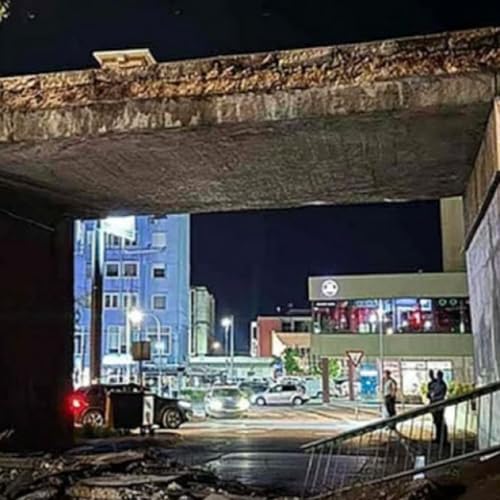
The damaged bridge at Gradiška is one of those stories that seems to explain far more than the event itself.
On the surface, it is about the old bridge over the Sava River between Bosnia and Herzegovina and Croatia. It is about stopped traffic, diverted lorries, long queues, and drivers losing hours at alternative crossings.
But beneath that, it is about something bigger: politics, frustration, and the gap between what Bosnia and Herzegovina could do, and what its political system too often allows it to do.
For those of us in the Banja Luka region, Gradiška is not just another border crossing. It is one of the main routes north into Croatia, the European Union, and the wider European road network. Families, hauliers, exporters, tourists, workers, and the Bosnian diaspora all depend on it.
So when Gradiška stops working properly, it becomes more than a local inconvenience. It becomes an economic and human problem.
On 19 May 2026, traffic was suspended at the Gradiška–Stara Gradiška crossing after part of the protective fence on the bridge over the Sava collapsed, creating a serious safety risk. Thankfully, no injuries were reported.
But the disruption was immediate. Traffic was diverted, queues grew, and reports described trucks waiting up to 16 hours at alternative crossings.
That means lost money, lost working time, delayed goods, missed appointments, and frustrated families.
And this is where the story becomes especially frustrating.
There is already a new Gradiška bridge and border crossing infrastructure. After the old bridge problem forced action, traffic was temporarily redirected there, valid until 19 August 2026.
Which leaves the obvious question.
If traffic could be moved there in an emergency, why did it take an emergency?
Bosnia and Herzegovina is full of capable people who understand why a crossing like Gradiška matters. The problem is rarely a lack of intelligence. It is a political culture where practical solutions become trapped in arguments over institutions, authority, revenue, responsibility, and blame.
A bridge is supposed to connect people.
But at Gradiška, it has also shown the cost of delay, division, and political point scoring.
And once again, the bill is not paid by those making the speeches.
It is paid by the driver in the queue, the business waiting for goods, the family delayed at the border, and a country losing time it cannot afford to waste.