

68 Thoughts on the Nature of Mathematics
カートのアイテムが多すぎます
ご購入は五十タイトルがカートに入っている場合のみです。
カートに追加できませんでした。
しばらく経ってから再度お試しください。
ウィッシュリストに追加できませんでした。
しばらく経ってから再度お試しください。
ほしい物リストの削除に失敗しました。
しばらく経ってから再度お試しください。
ポッドキャストのフォローに失敗しました
ポッドキャストのフォロー解除に失敗しました

68 Thoughts on the Nature of Mathematics
-
ナレーター:
-
著者:
In this episode, I discuss some thoughts on the nature and philosophy of mathematics and how it really works, contra to what many today and through the ages have said. (Their practice of math, thank goodnes, has not been entirely consistent with their philosophy of it.) I owe all or most of this to Pat Corvini, who has done great work on the foundations of mathematics. Of course, any mistakes or misunderstandings here are my fault, not hers. I take responsibility for them.
Notes.
Math is important. It helps you live, survive, and thrive. It helps solve problems of survival: shelter, food, fun, etc.
Salary. Budget it, i.e., measure it out to your values. How much is something worth to you. Savings. Interest income. Salary increases.
How much gas cost how much and can get you how far in context of what budget and what values.
How much paint to buy to cover which walls or ceilings, why and when and how.
Or the equivalent for gardening, and lawn care, or driveway care, or roofing, etc.
How to understand ideas and science about exercise, fitness, health, diet, drugs.
Hobbies and work. Engineering. Nursing. Fighting. Photography.
It is integral to how we as humans interact with the world.
It is an important tool of thought used in most every field of thought: physics, photography, fitness, philosophy, chemistry, medicine, accounting, finance, economics, art, painting, sculpture.
It is not merely in our heads. Set theory wrong. Kant wrong. Math is not “pure reasoning.” It is not deductive. It is not “purely in the mind.”
It is a method of knowing and understanding the world. It has content and method. It arises from facts of reality, nature, and experience: repetition, multiplicity, etc.
Entities: first concepts of number
Add, subtract, multiply, divide
Later, get 0 and 1
Fractions: counting parts
Attributes: more abstract concepts of number
Possibility of continual division (sequence/series)
The science of number: even, odd, primes, etc.
Attributes: the science of measurement
Counting numbers —> real numbers
Need concepts of method, such as roots
Concept of “negative” — reality comes first, knowledge second; we give and take things and move things around, then start to figure out how to conceptualize that and make it scientific; no one ever had some idea in their head first, then “deduced” that things could be moved around, ergo reality snapped into place. That’s absurd.
More abstract: complex numbers
Ratio
Proportion
Functions
Area and volume as function
Coordinate system
---->Calculus
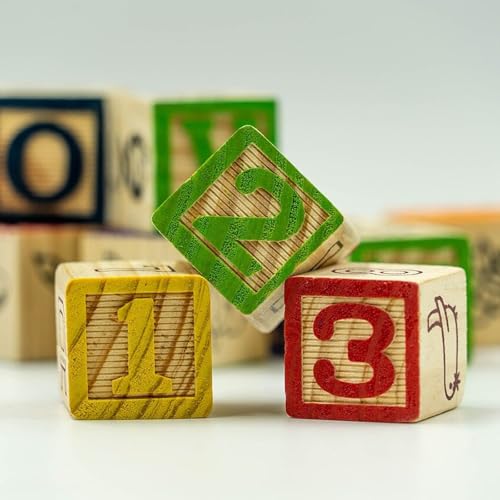
Image from "Counting" on Wikipedia.
Please consider liking us on your podcast app, and leaving a rational review.
Email us at ReasonRxPodcast@aol.com, michael@goldams.com, or goldmj@aol.com.
Host.
Michael: https://www.linkedin.com/in/michael-gold-2883921/
Gold Academy: https://goldams.com
Total Human Fitness: https://total-human-fitness.com
adbl_web_anon_alc_button_suppression_t1
まだレビューはありません