

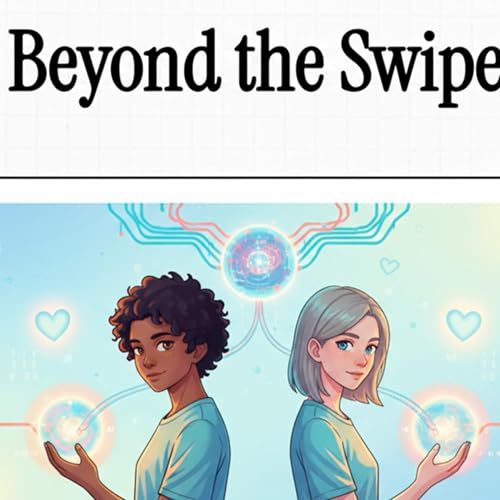
4. Love and Romance: The Algorithm Behind The Marriage Pact
カートのアイテムが多すぎます
カートに追加できませんでした。
ウィッシュリストに追加できませんでした。
ほしい物リストの削除に失敗しました。
ポッドキャストのフォローに失敗しました
ポッドキャストのフォロー解除に失敗しました

4. Love and Romance: The Algorithm Behind The Marriage Pact
-
ナレーター:
-
著者:
概要
In this episode, we take a deep dive into the Stanford Marriage Pact—a project that started as a joke for an economics class and evolved into an algorithm-driven phenomenon replacing swipe culture on campuses across the U.S.
The "Gale-Shapley" Shift: Originally a Nobel Prize-winning theory used for matching medical students to hospitals, this "stable marriage" algorithm is now being used to find your perfect campus match.
Efficiency Over Serendipity: Students are trading the "illusion of endless choice" on apps like Tinder for the "algorithmic certainty" of a single, data-backed match.
Swipe Fatigue: Traditional dating apps are losing users to "paradox of choice" and swipe fatigue; these campus algorithms offer scarcity and intentionality instead.
Deep Data: Forget the profile picture—the Marriage Pact uses a 50-question survey covering everything from political views (abortion, gun control) to hyper-local campus culture (dorm rumors, "Rice Purity" scores).
The Goal of Stability: The algorithm seeks "stability," meaning it finds a pair where neither person would secretly rather be with someone else assigned by the system.
The Viral Spark: At Stanford alone, roughly 58% of the student body signed up almost overnight, shifting the "Marriage Pact" from a 20-year safety net to a "date for this Friday" tool.
The Copycat Market: The success of the Marriage Pact has sparked competition, including "Date Drop" (which raised $2M) and Notre Dame’s "Crossroads".
Monetizing FOMO: Some platforms are now charging users (e.g., $5) to choose between their top two algorithmic matches, effectively "monetizing the fear of missing out".
A "Stanford Solution": Is this the end of romantic magic, or just the logical optimization of romance in a high-pressure, tech-driven world?