エピソード

  • Counter-Revolution Explained
    2026/01/31

    🎧 In this episode, I lay out the core argument of my upcoming book Counter-Revolution in Egypt: Sisi’s New Republic, out soon with Verso. This is not a story about a failed revolution or cultural fatalism. It is about how repression was rebuilt after 2011 as a coordinated, bureaucratic system, where security agencies stopped competing and started operating as a cartel.

    I explain how Egypt’s so-called New Republic represents a shift in governing logic: no social contract, no persuasion, just permanent mobilization against ever-changing internal enemies. Drawing on years of research, the episode walks through how repression became structural rather than reactive, why violence today is so procedural and banal, and how foreign allies helped normalize this model in the name of stability. Understanding how this system actually works is not an academic exercise. It is a political necessity.


    Get full access to 3arabawy at 3arabawy.substack.com/subscribe
    続きを読む 一部表示
    6 分
  • Abolish Criminology, When Crime Is Manufactured
    2026/01/24

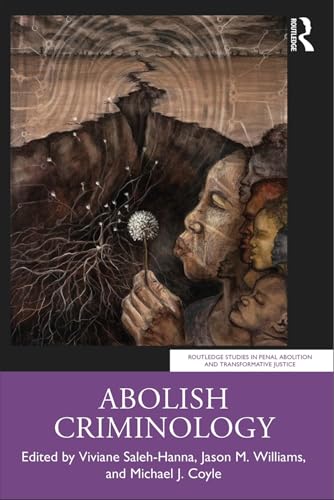
    🎧 This episode is a reading and reflection on Abolish Criminology, edited by Viviane Saleh-Hanna, Jason M. Williams, and Michael J. Coyle, through the lens of a police case that never left me.

    In 1996, a father was tortured into confessing to killing his missing daughter, only for the child to later reappear alive. The case collapsed, but the system did not. Using that experience as a point of entry, I argue that criminology is not a neutral discipline studying crime, but an intellectual machinery that helps produce it, launder coercion into expertise, and render truth optional.

    This is not a conversation about reform, better training, or oversight. It is about why the categories of crime and justice themselves do political work, and why abolishing criminology is necessary if we are serious about ending carceral violence.


    Get full access to 3arabawy at 3arabawy.substack.com/subscribe
    続きを読む 一部表示
    8 分
  • Writing Against Erasure
    2026/01/17

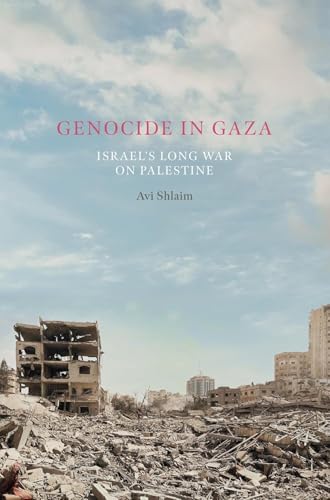
    🎧 This episode reflects on Avi Shlaim’s Genocide in Gaza, a book written in the midst of ongoing devastation rather than after its dust has settled. It examines Shlaim’s argument that Gaza should be understood not as a recurring humanitarian emergency but as the product of a long-standing political logic rooted in siege, domination, and settler colonial control. Drawing on history, international law, and the lived realities of occupation, the episode explores how violence is normalised, how legal language is used to manufacture impunity, and why naming what is happening matters before denial hardens into record.


    Get full access to 3arabawy at 3arabawy.substack.com/subscribe
    続きを読む 一部表示
    8 分
  • Abolition Is Not a Metaphor
    2026/01/10

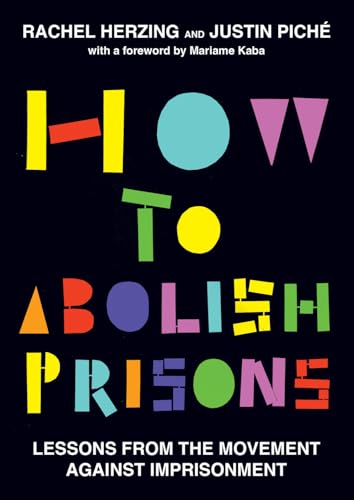
    🎧 In this episode, I review How to Abolish Prisons by Rachel Herzing and Justin Piché, a book that refuses blueprints and instead documents what abolition looks like in practice.

    Drawing on decades of organizing in the US and Canada, the authors show how prisons are not broken institutions but deliberate political choices, and how organizers have shut them down, stopped expansions, freed people, and built alternatives under real-world constraints.

    This is not an argument about belief or morality, but about responsibility, power, and pressure. Abolition, the book insists, is not a future fantasy. It is already happening, quietly, unevenly, and through struggle.


    Get full access to 3arabawy at 3arabawy.substack.com/subscribe
    続きを読む 一部表示
    5 分
  • The Violence in Ordinary Things
    2026/01/03

    Description:🎧 An eleven-minute film about a mirror stolen in 1948 becomes a meditation on how dispossession settles into everyday life. Set around a family table, Mirror Image, by Danielle Schwartz, traces the afterlife of the Nakba not through archives or declarations, but through language, hesitation, and what cannot quite be said. A refusal to name Palestinians, a story that never fully coheres, an object that will not become innocent with time. The film watches how theft is softened into inheritance, how violence becomes furniture, and how silence does much of the work ideology requires. Nothing is resolved. The mirror remains, reflecting an ordinary world built on an unaddressed crime.


    Get full access to 3arabawy at 3arabawy.substack.com/subscribe
    続きを読む 一部表示
    7 分
  • How the Algerian War Made Modern Counterinsurgency
    2025/12/27

    🎧 In this episode, I review Terrence G. Peterson’s Revolutionary Warfare: How the Algerian War Made Modern Counterinsurgency, a sharp and unsettling account of how the French army’s defeat in Algeria produced a doctrine that outlived empire itself. Peterson shows how Pacification fused violence, social reform, and surveillance into a coherent model of warfare, one that treated society as the battlefield and civilians as the primary objective. Far from disappearing with Algerian independence, these techniques traveled globally, shaping US counterinsurgency from Vietnam to Iraq.

    This is not just a book about Algeria, but about why counterinsurgency keeps failing while remaining stubbornly influential, and what that legacy still means today.


    Get full access to 3arabawy at 3arabawy.substack.com/subscribe
    続きを読む 一部表示
    6 分
  • A World Beyond Bombs, Borders, and Cages
    2025/12/20

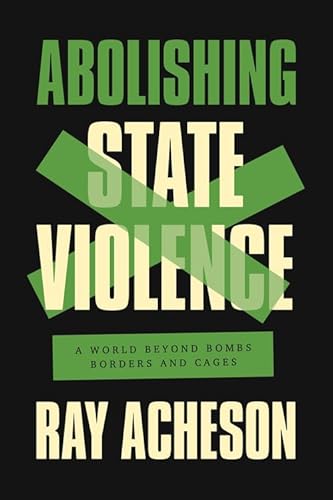
    🎧 In this episode, I explore Ray Acheson’s Abolishing State Violence and the radical clarity it brings to our present moment. From policing to prisons, surveillance to borders, war to capitalism, the book exposes how violence is embedded in the structures we are taught to trust. I walk through its core arguments, the melancholy that runs through them, and the hope found in the everyday work of abolition already taking shape around us. This episode is an invitation to imagine a world where safety is built through care, not coercion.


    Get full access to 3arabawy at 3arabawy.substack.com/subscribe
    続きを読む 一部表示
    8 分
  • The Weight of Staatsräson
    2025/12/13

    🎧 This episode explores the world revealed by Hyper-Zionism: Germany, the Nazi Past, and Israel, moving through the tension, fear, and quiet pressure shaping public life in Germany today. I delve into how Staatsräson, introduced as a state-defining obligation, has expanded into an atmosphere that influences speech, culture, and belonging. Through a mix of reflection and witness, I examine how remembrance narrowed into one sanctioned direction, how institutions act from dread rather than principle, and how entire communities navigate invisible lines. This conversation is ultimately about reclaiming breathing space, defending the universal meaning of “Never again,” and refusing to let the lessons of the past be used to restrict voices in the present.


    Get full access to 3arabawy at 3arabawy.substack.com/subscribe
    続きを読む 一部表示
    8 分