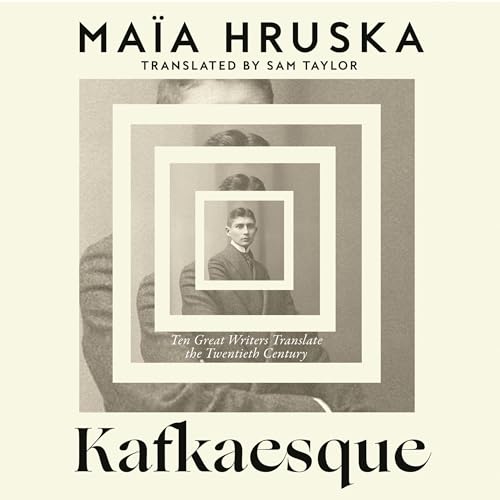
『Kafkaesque』のカバーアート

Kafkaesque

Ten Great Writers Translate the Twentieth Century

聴き放題対象外タイトルです。プレミアム会員登録で、非会員価格の30%OFFで予約注文できます。聴けるのは配信日からとなります。

プレミアムプランを無料で試す
オーディオブック・ポッドキャスト・オリジナル作品など数十万以上の対象作品が聴き放題。
オーディオブックをお得な会員価格で購入できます。
30日間の無料体験後は月額¥1500で自動更新します。いつでも退会できます。

Kafkaesque

著者: Maïa Hruska
プレミアムプランを無料で試す

30日間の無料体験後は月額¥1500で自動更新します。いつでも退会できます。

¥2,200で今すぐ予約注文する

¥2,200で今すぐ予約注文する

概要

'A book to underline endlessly, to dog-ear, to carry around until battered, and then to tell all your friends to buy because you're too reluctant to give up your own copy. A wonder’ Polly Barton

‘Dazzling … one fine day, you open a book by an unknown writer, and a charge of pure talent blows you away’ La Tribune

________________________________

What happens to a writer's work when it's translated – specifically, what happens if his name is Franz Kafka?

After Kafka died young and unknown, a German-speaking Jew in Prague, ten writers rescued him from oblivion. For years, long before he became a much misused adjective, Kafka existed mostly through their wildly different readings of his words.

Many of his first translators would later be counted among the greatest thinkers and writers of the twentieth century – and they all found in Kafka’s writing a guiding light through the dark of their own tumultuous lives. Primo Levi translated Kafka into Italian from the German he had learned in Auschwitz; Milena Jesenská lovingly into Czech before she too was deported to the camps; Bruno Schulz into Polish before being shot by an SS officer; and Jorge Luis Borges into Spanish as he slowly went blind. Vladimir Nabokov annotated The Metamorphosis in exile, having undergone his own transformation from native to foreigner, while Kafka’s translators back in Russia were condemned to perpetual anonymity by the Soviet censor.

With inventiveness, spirit and wit, Maïa Hruska has written a celebration of the impossible art of translation, and a portrait of the tragic, absurd twentieth century that Kafka so presciently described.

'An elegant reflection on how the act of translation itself brings about Kafkaesque diversions' TLS

©2026 Maïa Hruska (P)2026 HarperCollins Publishers
20世紀 ユダヤ教 ヨーロッパ 世界文学 作家 単語・言語・文法 文学史・文学批評 歴史 芸術・文学 近代

批評家のレビュー

Rarely, if ever, have I read a book about translation so insightful, so wide-ranging, so romantic, so hard-hitting. A book to underline endlessly, to dog-ear, to carry around until battered, and then to tell all your friends to buy because you're too reluctant to give up your own copy. Maïa Hruska and Sam Taylor have created a wonder’ Polly Barton, author of Fifty Sounds

'An elegant reflection on how the act of translation itself brings about Kafkaesque diversions … offers poignant reflections on the Europe of yesteryear and its legacy today' Times Literary Supplement

'In lively, lyrically inviting prose, Hruska tells the stories of ten early translators of Kafka … Hruska’s approach makes Kafka fresh and revelatory again' George Prochnik, author of The Impossible Exile

‘A bigger picture of Kafka's writing and its fateful journey through a hundred years in a dozen countries during a troubled century. It is a joyful and mind-opening read for everyone, not just Kafka experts’ Burhan Sönmez, author of Lovers of Franz K. and President of PEN International

‘Both brilliant and relevant, erudite and highly accessible … It's not a long book, yet its breadth and depth make it feel like so much more’ Le Figaro

‘Many books have been dedicated to this Czech writer … this is one of the most interesting … Subtle and erudite, this captivating book is a literary panoramaLire Magazine

Dazzling … one fine day, you open a book by an unknown writer, and a charge of pure talent blows you away… It's a rare occurrence, even when you read for work. Dix Versions de Kafka is that gift that you don’t expectLa Tribune

‘Examines the ‘Kafka question’ with finesse and erudition … this is unquestionably an important book about a universal literature’ L’Arche

‘Maïa Hruska sets out along untrodden paths that it is astonishing no one has ever thought of taking before’ Analyse Opinion Critique

まだレビューはありません