

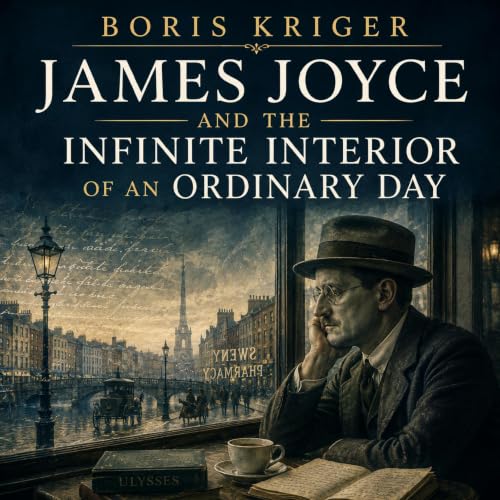
James Joyce and the Infinite Interior of an Ordinary Day
カートのアイテムが多すぎます
カートに追加できませんでした。
ウィッシュリストに追加できませんでした。
ほしい物リストの削除に失敗しました。
ポッドキャストのフォローに失敗しました
ポッドキャストのフォロー解除に失敗しました
聴き放題対象外タイトルです。Audibleプレミアムプラン登録で、非会員価格の30%OFFで購入できます。

James Joyce and the Infinite Interior of an Ordinary Day
¥2,060 で購入
-
ナレーター:
-
Becky Brabham
-
著者:
-
Boris Kriger
One Thursday in June of 1904, a middle-aged advertising canvasser named Leopold Bloom walked around Dublin. He bought a kidney for breakfast, fed the cat, attended a funeral, ate a cheese sandwich, dodged a man he did not wish to meet, and came home in the small hours to a wife who had not, that particular afternoon, been entirely faithful. Almost nothing happened. James Joyce spent seven years and seven hundred pages on it, and called the result his damned monster-novel.
Why would anyone do that? This book takes the question seriously, which is already a small betrayal of its subject, since Joyce swore there was not one serious line in the whole affair. The answer, it turns out, reaches far past literature. A living mind cannot actually hold a day. To carry us forward through time it has to guess what comes next and throw nearly everything else away, so that every glance at the world is also an enormous act of not-looking. Joyce ran that machine in reverse. He stopped the clock and wrote back down the vast inner life that ordinary consciousness is built to lose.
Listening to Joyce's own words about his impossible book beside a clear account of how any mind keeps a world upright, this book shows that an ordinary day is infinite on the inside, and that Joyce, half by cunning and half by accident, walked straight past culture and philosophy and laid his hand on the machinery underneath them both.
©2026 Boris Kriger (P)2026 Boris Kriger