

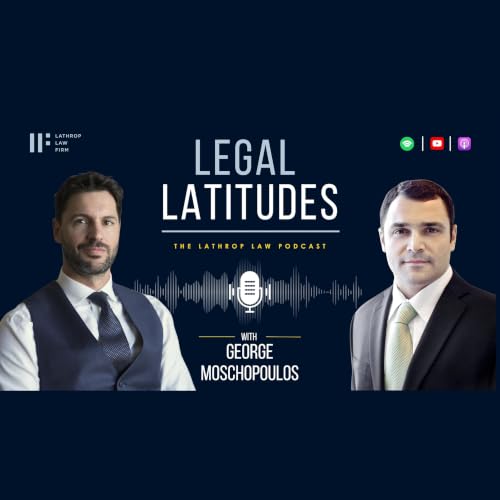
How Do You Lose a Case? | George Moschopoulos on Trial Strategy, Cross-Examination & Finding Your Own Style
カートのアイテムが多すぎます
カートに追加できませんでした。
ウィッシュリストに追加できませんでした。
ほしい物リストの削除に失敗しました。
ポッドキャストのフォローに失敗しました
ポッドキャストのフォロー解除に失敗しました

How Do You Lose a Case? | George Moschopoulos on Trial Strategy, Cross-Examination & Finding Your Own Style
-
ナレーター:
-
著者:
What if the first question you asked when evaluating a case wasn’t “How do we win?” but “How do we lose?”
That is how trial lawyer George Moschopoulos approaches a case.
Before becoming a lawyer, George trained as a structural engineer. That background still shapes the way he thinks today: find the stress points, identify what can fail, and understand which facts are actually carrying the weight of the case.
In this episode of Legal Latitudes, George and Federico Lathrop break down how that mindset translates into the courtroom.
They discuss why lawyers should confront bad facts early instead of hiding from them, how to evaluate performance improvement plans and retaliation cases, and why an imperfect plaintiff can still have a powerful case.
Then the conversation moves into trial.
George explains why he believes lawyers have to earn the right to advocate. First you inquire. Then you inform. Only after that do you persuade.
He also breaks down constructive versus destructive cross-examination and why his default demeanor with a witness is “curiosity and disappointment.”
George learned that lesson the hard way.
In one trial, convinced he was fighting for the right side, he aggressively attacked a CEO on cross-examination. He raised his voice, called the witness a liar, and thought the jury would appreciate the fight.
They didn’t.
He won the case, but the jury awarded only about 10% of what he asked for. Afterward, he learned that several jurors simply did not like the way he treated the witness.
That experience changed the way he tries cases.
The episode also explores why copying another successful trial lawyer rarely works. A technique may be worth studying, but the delivery has to fit the lawyer using it. There is only one Brian Panish. There is only one Gerry Spence. And there is only one you.
George and Federico also talk about preparation, repetition, jury selection, connecting voir dire to closing argument, family, discipline, and George’s kids competing internationally in surfing.
In this episode:
• How an engineer thinks about building a trial case • Why George starts by asking, “How do we lose?” • Finding and owning the weak points in your case • Performance improvement plans and employment cases • Why retaliation often creates such a powerful story • Representing imperfect plaintiffs • Connecting jury selection to closing argument • Constructive vs. destructive cross-examination • Using curiosity and disappointment with witnesses • Why anger can cost credibility with a jury • The trial that changed George’s approach to cross • Why great trial lawyers should be studied, not imitated • Finding your own voice in the courtroom • Why lawyers fall to the level of their preparation
Legal Latitudes is hosted by Federico Lathrop, founder of Lathrop Law and a California personal injury trial lawyer.