

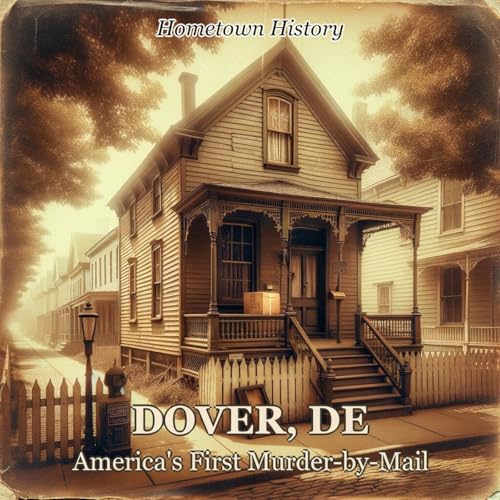
Dover, Delaware: The Poisoned Chocolates That Changed American Law
カートのアイテムが多すぎます
カートに追加できませんでした。
ウィッシュリストに追加できませんでした。
ほしい物リストの削除に失敗しました。
ポッドキャストのフォローに失敗しました
ポッドキャストのフォロー解除に失敗しました

Dover, Delaware: The Poisoned Chocolates That Changed American Law
-
ナレーター:
-
著者:
概要
In August 1898, a small package arrived at a prominent home in Dover, Delaware, bearing no return address. Inside: a box of chocolate bonbons, a cambric handkerchief, and a note reading "With love to yourself and baby." Mary Elizabeth Penington Dunning shared the candy with her sister Ida Harriet Deane and several guests on the family porch that evening. Within hours, everyone who ate the chocolates was violently ill. Within days, Mary and Ida were dead from arsenic poisoning.
The killer was Cordelia Botkin, a woman sitting three thousand miles away in San Francisco. She had nevermet her victims. Her target had been the family of her former lover, Associated Press correspondent John Preston Dunning, who had ended their three-year affair when he departed for the Spanish-American War. Botkin purchased arsenic from a drugstore on Market Street, laced a box of bonbons from George Haas and Sons Confectionery, and mailed the package from the Ferry Post Office. She had weaponized the United States Postal
Service.
The investigation that followed linked Botkin to the crime through handwriting analysis, drugstore receipts, candy shop identification, and a price tag she forgot to remove from the handkerchief. San Francisco Police Chief Isaiah W. Lees coordinated the cross-continental investigation, and handwriting expert Daniel T. Ames matched Botkin's penmanship to the package and anonymous letters she had previously sent to the family. Her trial in San Francisco captivated the nation, with William Randolph Hearst's Examiner erecting a public bulletin board outside the courthouse to update the crowds.
Advertising Inquiries: https://redcircle.com/brands
Privacy & Opt-Out: https://redcircle.com/privacy