

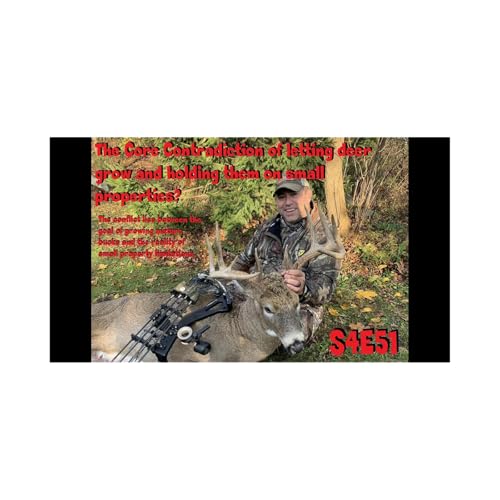
The contradiction of letting deer grow and holding them on small properties s4e51
カートのアイテムが多すぎます
カートに追加できませんでした。
ウィッシュリストに追加できませんでした。
ほしい物リストの削除に失敗しました。
ポッドキャストのフォローに失敗しました
ポッドキャストのフォロー解除に失敗しました

The contradiction of letting deer grow and holding them on small properties s4e51
-
ナレーター:
-
著者:
このコンテンツについて
The Core Contradiction of letting deer grow and holding them on small properties? The conflict lies between the goal of growing mature bucks and the reality of small property limitations.
"Letting Them Grow" (The Goal):
To harvest mature bucks (often 3.5 to 5.5+ years old), you have to pass on younger bucks.
The mantra is "Let them go, so they can grow."
This requires a long-term investment of time and restraint. "Holding Them" (The Problem):
Home Range vs. Property Size: A mature whitetail buck's home range is typically much larger (often 640+ acres or a square mile) than most small hunting properties (e.g., 20, 40, or 80 acres).
The Risk: You cannot physically "hold" a free-ranging buck on a small property 100% of the time. When you "let him grow" and he wanders off your property (which he inevitably will to feed or breed), he is at risk of being harvested by neighbors who may not share your management goals.
The Paradox: By improving your land to hold more deer, you may attract more bucks, but you also risk feeding and housing them only for them to get shot the moment they cross your fence line.
Common Discussion Points on This Topic
Becoming the "Core" Area: Accepting that you can't hold a deer 24/7, but striving to be the place where he spends his daylight hours (bedding) or feels safest.
The Sanctuary Concept: Designating a large percentage of a small property as a "no-go" zone for humans so deer feel virtually unpressured, encouraging them to stay during daylight.
Neighborhood Co-ops: Trying to build relationships with neighbors to get everyone on the same page about age-structure goals (though this is often difficult).
Attraction vs. Pressure: The balance of improving habitat (food plots, timber stand improvement) without pressuring the deer off the property with too much human activity.