

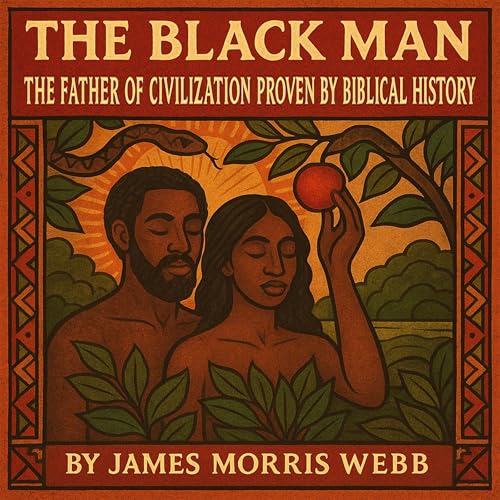
The Black Man
The Father of Civilization Proven by Biblical History
カートのアイテムが多すぎます
カートに追加できませんでした。
ウィッシュリストに追加できませんでした。
ほしい物リストの削除に失敗しました。
ポッドキャストのフォローに失敗しました
ポッドキャストのフォロー解除に失敗しました
聴き放題対象外タイトルです。Audibleプレミアムプラン登録で、非会員価格の30%OFFで購入できます。

The Black Man
¥900 で購入
-
ナレーター:
-
Leighton Harris
このコンテンツについて
First published in 1919, The Black Man: The Father of Civilization stands as one of the earliest theological works to directly confront the racial assumptions embedded in Western biblical interpretation. James Morris Webb—an AME pastor, scholar, and leading voice of early 20th-century Black religious thought—presents a bold, meticulously argued case for the centrality of African and Afro-Asiatic peoples in the biblical narrative and in the foundations of world civilization.
Drawing upon Scripture, ancient history, and the genealogical lineage recorded in the Old Testament, Webb asserts that the earliest human families—beginning with Adam and Eve, continuing through Ham, Cush, Nimrod, David, Solomon, and even Jesus’ ancestral line—bear unmistakable ties to peoples of African descent. Far from being a peripheral presence in sacred history, Webb argues Black people were the originators of culture, spirituality, kingship, and civilization itself.
At a time when pseudoscience and racial prejudice sought to deny the dignity, antiquity, and spiritual depth of African peoples, Webb’s work offered a radical counter-narrative grounded in Scripture, not speculation. His message resonated deeply with emerging African American religious movements, proto-Black nationalist thought, and the spiritual foundations of what would later influence the Harlem Renaissance, Rastafarianism, and Pan-African philosophy.
Today, Webb’s text remains a profound reminder of the importance of reclaiming historical truth and honoring the contributions of peoples whose stories were long suppressed or distorted. This modern edition presents his work with renewed clarity, inviting contemporary readers—scholars, believers, and seekers alike—to reconsider the biblical world through a broader, culturally accurate lens.
This is not merely a theological argument. It is a restoration of memory, dignity, and rightful presence in the story of humanity.
©2021 Rolled Scroll Publishing (P)2021 Rolled Scroll Publishing