エピソード

  • Course 12 - Maltego Advanced Course | Episode 1: Maltiggo Transforms, Sets, and Essential Menu Actions
    2025/12/02
    In this lesson, you’ll learn about:
    • How transforms work in Maltego
    • Transform sets and how they organize large transform collections
    • Key transform menu actions and shortcuts
    • Essential bottom-row menu actions for efficient workflow
    Summary of the Episode: This episode explains the core mechanics of Maltego transforms, how to run them, how they are organized, and the essential menu actions available when working on a graph. 1. Understanding Transforms
    • Transforms are functions that take one or more selected entities as input.
    • They only appear if relevant entity types are selected.
    • Transforms can be run in two ways:
      • Through the right-click transform menu on the graph
      • Through the Run View
    2. Transform Sets Because some entities (like Domain) have very long lists of transforms, Maltego organizes them into transform sets.
    • Transform sets help users find transforms more easily.
    • Sets and transforms are grouped first by their hub item, which may introduce new transforms (e.g., Thread Miner included by default).
    • Navigation:
      • Click a group or set to see its contents
      • Use the left bar or right-click → Up to go back a level
    3. Recognizing Items in the Transform List
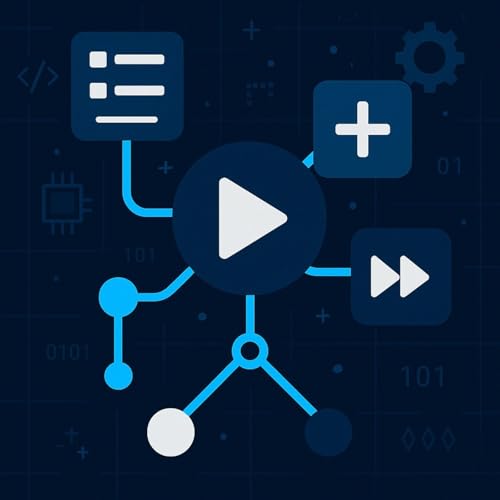
    • Transforms
      • Dark background (near-black)
      • Single play icon ▶
    • Groups/Sets
      • Light background
      • Small plus icon ➕
    • Run All in a Set
      • Double-play icon ▶▶
      • Use with caution due to potentially large output
    4. Special Transform Sets
    • All
      • Appears on every level
      • Shows all transforms for the selected entity/entities
    • Favorites
      • Only appears if you starred transforms for the current entity type
    • Machines
      • Appears at the topmost level, at the bottom
      • Shortcut to run Maltego Machines
    5. Customizing Your Transform Experience
    • Users can create custom transform sets in the Transform Manager.
    • Hub items can add new transform groups to your environment.
    6. Essential Right-Click Menu Actions (Bottom Row) These are shortcuts to functions available elsewhere in Maltego: Basic Actions
    • Delete / Cut / Copy
      • Copy sends entity as GraphML to clipboard
      • Can be pasted into another graph
    Type Actions
    • Quickly search the entity value in Google or Wikipedia
    • Used rarely
    Send to URL
    • Sends selected entities to a custom HTTP POST endpoint
    Clear / Refresh Images
    • Reloads images from original sources
    • Works only in normal privacy mode, not stealth mode
    Copy to New Graph
    • Creates a brand-new graph containing the selected entities and their links
    • Useful for:
      • Experimentation
      • Isolating parts of a graph
    • You can later copy results back into the original graph
    Change Type
    • Converts entity from one type to another (e.g., DNS name → Website)
    • Crucial when the target transform isn’t available for the current type
    Merge
    • Combines two entities that represent the same real-world object
    • Consolidates their links
    Attach
    • Adds files (evidence, screenshots, etc.) to an entity
    • Attached images can be displayed on the graph instead of the entity icon
    7. Most Important Actions to Remember
    • Copy to New Graph
    • Change Type
    • Merge
    • Attach
    These actions significantly improve workflow efficiency and flexibility when working with complex investigations.

    You can listen and download our episodes for free on more than 10 different platforms:
    https://linktr.ee/cybercode_academy
    続きを読む 一部表示
    12 分
  • Course 11 - Mobile Forensics Fundamentals | Episode 3: iOS and iPhone Forensics: Security, Acquisition Techniques, and Artifact Analysis
    2025/12/01
    In this lesson, you’ll learn about: • iOS architecture and security features • Common vulnerabilities and exploit history • Logical and physical acquisition techniques • Key forensic artifacts and analysis methods • Legal constraints and investigative limitations iOS / iPhone Forensics: Summary and Key Concepts 1. iOS Security and Architecture iOS is its own complete operating system and is generally considered more secure than Android due to its standardized hardware/software ecosystem. Any vulnerability or exploit tends to apply consistently across devices, but Apple rapidly patches these issues. iOS architecture is layered, similar to the OSI model:Core OS – Unix-based kernel, security framework, low-level networking.Core Services – TCP/IP communication, iCloud services, file sharing.Media Layer – Audio, graphics, video processing.Cocoa Touch – Application interface layer.The file system historically used HFS+, storing data in a B-tree format. Key iOS Security FeaturesSecure Boot ChainVerifies every boot stage using Apple’s root certificate. Prevents downgrades and protects against boot-level attacks.Secure Enclave / “Clave”A dedicated co-processor using encrypted memory to handle cryptographic keys, making memory dumps extremely difficult.AES-256 EncryptionIndustry-grade (DoD-level) encryption applied at the hardware level to protect user partitions.ASLR (Address Space Layout Randomization)Mitigates buffer overflow attacks by randomizing memory locations.Sandboxing / JailingRestricts app access to only their assigned directory, protecting system resources.2. Vulnerabilities and Exploit History While secure, iOS has had notable vulnerabilities:Masquerading AttackA malicious app with the same internal project name as a legitimate one could overwrite it without signature validation (older versions).IP Box ExploitAllowed brute-forcing on older iOS versions by bypassing lockout delays.GrayKey Unlocking DeviceA proprietary law-enforcement tool used to bypass locks; Apple later patched the underlying vulnerabilities.San Bernardino CaseFBI paid roughly $1M for a one-time exploit to bypass auto-wipe on a locked iPhone.Apple consistently patches publicly disclosed vulnerabilities, reducing the lifespan of exploits. 3. Acquisition Techniques and Challenges 1. Logical Acquisition Often performed through iTunes backups.Requires the device to be unlocked.Extracts app data, device configuration, file structure, communications, and certain system logs.Tools include:Paraben Device SeizureXRYCellebrite (UFED)iTunes Backup Analyzer 2 (IPBA2)2. Physical Acquisition Attempts to extract raw data, including deleted and unallocated space. However:Modern iOS with full AES-256 encryption makes physical acquisition impossible without the passcode.Often requires a temporary jailbreak or custom exploit.Tools such as Pangu or custom RAM disks may be used on older versions.Recovery/Boot Modes Used in ForensicsRecovery Mode – Useful for interacting with the firmware and restoring images.DFU Mode – Lower-level access used to load custom tools or initiate exploit chains.4. Key Forensic Artifacts and Evidence Sources Plist (Property List) Files Store structured data such as:IMEI, IMSI, ICCIDDevice GUIDBackup detailsEncryption flagsPlists are among the most valuable forensic artifacts.Timestamps iOS uses Unix Epoch time (seconds since Jan 1, 1970).Investigators examine:MAC times (Modified, Accessed, Created)Irregularities (e.g., zeroed milliseconds) that may indicate tampering.Location DataHistorically stored indefinitely; now encrypted and retained for ~8 days.Still useful for reconstructing user movement.CommunicationsContactsSMS/iMessage databasesCall history (including missed/attempted calls)VoicemailsNote: Listening to an unheard original voicemail may violate wiretap laws.Browser Artifacts (Safari)BookmarksCacheSearch history“Suspend state list”—recently closed tabs and windowsEphemeral DataClipboard contentsDynamic keyboard cacheOften contains usernames, passwords, or search terms.Image and Media Data (DCIM)Photos/videos include EXIF metadata (sometimes GPS).Deleted images may remain accessible as thumbnails embedded in databases.Network ArtifactsWi-Fi Plist files contain auto-join network information, including BSSIDs.Can establish proximity between suspects/devices.5. Legal and Procedural Requirements Investigators must remain strictly within legal authorization scopes:Accessing iCloud or any cloud-stored user data requires separate warrants.Overstepping authority can end a forensic career immediately.Under the Plain View Doctrine, unrelated evidence may be reported as long as the investigator stays within the allowed scope of the warrant.You can listen and download our episodes for free on more than 10 different platforms:https://linktr.ee/cybercode_academy
    続きを読む 一部表示
    17 分
  • Course 11 - Mobile Forensics Fundamentals | Episode 2: Data Acquisition, Diverse Operating Systems, and Forensic Challenges
    2025/11/30
    In this lesson, you’ll learn about: • Core forensic methodology and mobile-specific preservation challenges
    • Mobile forensics follows the standard digital forensic phases—collection, examination, analysis, and reporting—but must adapt to mobile-specific risks.
    • Devices must be isolated immediately to prevent remote wiping or network interference using Faraday cages, Stronghold bags, or shielded rooms.
    • Some devices (e.g., BlackBerry) support remote kill commands, making rapid on-scene triage essential before the device locks.
    • Investigators must document the exact state of the device on seizure (powered on/off, locked/unlocked) and any actions taken (e.g., enabling Airplane Mode).
    • Methods of mobile data acquisition and their limitations Acquisition techniques follow a “pyramid of reliability,” balancing forensic soundness with practical access: 1. Manual Extraction
    • Used when automated tools fail or when handling unsupported “feature phones” or burner devices.
    • Often involves photographing each screen manually using tools like Project Phone.
    • Least reliable but sometimes the only option.
    2. Logical Acquisition
    • The most common method for smartphones, performed with forensic tools such as Cellebrite, XRY, and Paraben.
    • Retrieves allocated data, app data, logs, contacts, SMS, and backups.
    • iPhone logical extraction usually requires iTunes to force the device to generate a backup.
    • Android logical extraction may use ADB, especially on rooted devices.
    3. Physical Acquisition (Invasive & Non-Invasive)
    • Targets both allocated and unallocated data, including deleted content.
    • Methods include JTAG, ISP, and Chip-Off forensics.
    • Increasingly limited by full-disk encryption—data may be physically extracted but cryptographically useless without keys.
    4. Volatile Memory Extraction
    • RAM acquisition is highly difficult due to hardware protections, sandboxing, and security mechanisms.
    • Any volatile data disappears once the device powers down.
    • Operating system architectures and forensic implications Android
    • Linux-based and secured with SE Linux for mandatory access control.
    • SE Linux sandboxing has known bypasses through covert channels.
    • Highly fragmented ecosystem creates inconsistent forensic tool performance.
    iOS / iPhone
    • Unix-based, secured by Apple’s robust Secure Boot Chain.
    • Uses APFS (Apple File System) with strong encryption.
    • Extremely resistant to physical extraction on modern versions.
    Windows Phone
    • Historically optimized for usability over security.
    • Weak sandboxing may allow cross-privilege interaction and artifact leakage.
    • Mobile network fundamentals and legal constraints in forensic work Network Technologies & Identifiers
    • GSM: International, open-standard.
    • CDMA: North American, proprietary.
    • Key identifiers:
      • IMEI – device hardware identity
      • IMSI – subscriber identity stored in SIM
    Legal Restrictions
    • Mobile devices fall under Fourth Amendment protections.
    • Accessing cloud data using cached credentials without a warrant violates the Computer Abuse Act (18 USC §1030).
    • Carrier metadata (CDRs, tower location, HLR/VLR info) requires a subpoena or discovery order.
    • Operating signal-jamming equipment without government authorization is illegal under FCC regulations.


    You can listen and download our episodes for free on more than 10 different platforms:
    https://linktr.ee/cybercode_academy
    続きを読む 一部表示
    12 分
  • Course 11 - Mobile Forensics Fundamentals | Episode 1: Legal Authority, Acquisition Procedures, and Examiner Responsibilities
    2025/11/29
    In this lesson, you’ll learn about: • The purpose and scope of mobile forensics
    • Introduction to the course structure, online training logistics, and preparation for the Certified Mobile Forensic (CMF) exam.
    • Overview of provided resources such as forensic report templates, chain-of-custody forms, and research platforms like Packetstorm and Exploit-DB.
    • Unique technical challenges in mobile device acquisition
    • Why mobile forensics is inherently less forensically sound due to unavoidable data alteration when powering on or connecting devices.
    • The constant arms race with advanced device encryption and OS security patches that can rapidly render expensive forensic tools (e.g., GrayKey) ineffective.
    • Legal and procedural risks of using exploits: though sometimes necessary, they violate the Daubert standard and require meticulous documentation to avoid evidence dismissal.
    • The full role and responsibilities of the Computer Forensic Examiner (CFE)
    • The CFE oversees the entire forensic process from evidence seizure (“tag and bag”) to courtroom testimony.
    • Understanding the scope of authority through search warrants (under the Fourth Amendment) or corporate policy.
    • Search warrant requirements: establishing probable cause and clearly describing both the place to be searched and the specific items to seize—including hidden storage devices (micro SD cards in coins, poker chips) and altered devices like jailbroken consoles.
    • Situations where the Patriot Act may override the Fourth Amendment in terrorism investigations.
    • Standard forensic procedures for evidence handling and preservation
    • Securing evidence and documenting every action—ideally using methods such as video recording.
    • Preparing systems for acquisition, which often involves shutting down the device and removing storage media.
    • Preventing evidence alteration by using write-blockers, especially with operating systems like Windows that modify metadata upon connection.
    • Performing bitstream (forensic) copies whenever possible, reserving logical copies for time-critical scenarios.
    • Quality assurance, standardization, and avoiding common mistakes
    • Importance of peer review, standardized reporting formats, and consistent workflows to ensure reliability in forensic results.
    • Risks posed by untrained first responders—such as system administrators—who may unintentionally alter timestamps or damage critical evidence when attempting to “fix” systems.


    You can listen and download our episodes for free on more than 10 different platforms:
    https://linktr.ee/cybercode_academy
    続きを読む 一部表示
    13 分
  • Course 10 - Network Security Fundamentals | Episode 7: Implementing Defense in Depth, Data Integrity, and Zero Trust
    2025/11/28
    In this lesson, you’ll learn about:
    • Defense in Depth (DiD) and layered security controls
    • Data integrity, backup policies, and encryption best practices
    • Securing voice and email communications
    • Social engineering and vishing defense
    • PKI-based email protection (PGP, S/MIME)
    • Zero Trust Networking (ZTN) architecture and IAM principles
    Core Principles of Modern Network Security 1. Defense in Depth (DiD) A security strategy based on creating multiple layers of protection so no single failure leads to compromise.
    • Physical Controls: Locks, cameras, facility access controls
    • Administrative Controls: Policies, procedures, user awareness training
    • Perimeter Controls: Firewalls, filtering devices
    • Internal Network Controls: Segmentation, monitoring, endpoint security
    • Goal: an attacker must successfully bypass multiple layers at the same time, reducing overall risk.
    2. Data Integrity, Resilience, and Backup Strategy A. Data Integrity and Availability
    • Data must stay complete, accurate, and accessible.
    • Backup policies must consider the entire data lifecycle.
    B. Backup and Retention Best Practices
    • Follow regulatory retention requirements (e.g., financial records retained for 7 years in certain industries).
    • Use reliable storage media and ensure off-site storage for disaster recovery.
    • Employ both:
      • On-site backups for fast recovery
      • Off-site backups for catastrophic events
    • Plan for long-term data growth.
    C. Encryption for Data at Rest
    • Confidential data should be encrypted using strong symmetric algorithms such as AES-256.
    • Protects against physical theft, insider threats, and unauthorized access.
    3. Securing Voice Communications A. Voice Technologies Covered
    • VoIP (Voice over IP)
    • POTS (Plain Old Telephone System)
    • Mobile communications
    B. Key Threats
    • Man-in-the-Middle (MitM) attacks
    • Caller ID spoofing
    • “Phone phreaking” and unauthorized system access
    • Social engineering and vishing attacks
    C. Hardening Voice Systems
    • Encrypt voice traffic where possible.
    • Disable unnecessary features on phone systems.
    • Change all default passwords and device settings.
    • Use network segmentation (VLANs/subnets) to isolate voice systems from the main LAN.
    • Users with sensitive communications should use encrypted apps such as Signal.
    4. Email Security Essentials A. The Need for Encryption Historically, email was transmitted in clear text—making confidential messages vulnerable to interception. B. Two Primary Encryption Systems Both rely on asymmetric PKI (Public Key Infrastructure):
    1. PGP / GPG / OpenPGP
    2. S/MIME (Secure / Multipurpose Internet Mail Extensions)
    C. Additional Email Protections
    • Opportunistic TLS for encrypting SMTP connections when possible.
    • SPF (Sender Policy Framework) to validate legitimate email senders.
    • Anti-spam and anti-phishing filters (e.g., Bayesian filtering).
    • User training via phishing simulations to strengthen human defense.
    5. Zero Trust Networking (ZTN) A. Core Philosophy
    • “Never trust, always verify.”
    • Assume an attacker may already be inside the network.
    B. Architectural Components
    • Strict verification of every user and device before access is granted.
    • Network segmentation using VLANs and subnets to reduce lateral movement.
    • Identification of the “protect surface” — the most critical data and systems.
    C. Identity and Access Management (IAM)
    • Strong use of AAA principles:
      • Authentication (verify identity)
      • Authorization (grant the minimum required access)
      • Accounting/Auditing (log all actions)
    • Reduces reliance on perimeter-only defenses.


    You can listen and download our episodes for free on more than 10 different platforms:
    https://linktr.ee/cybercode_academy
    続きを読む 一部表示
    12 分
  • Course 10 - Network Security Fundamentals | Episode 6: Attack Mitigation, Vulnerability Assessment, and Penetration Testing
    2025/11/27
    In this lesson, you’ll learn about:
    • The top real-world network threats and how to think like an attacker
    • The full process of conducting a vulnerability assessment
    • Tools and methodologies used in modern vulnerability scanning
    • How penetration testing works and its legal, ethical, and operational requirements
    • Red team vs. blue team roles
    • Best practices for reporting and mitigating discovered vulnerabilities
    Modern Network Defense Using an Offensive Security Mindset 1. Thinking Like an Attacker
    • Defense is inherently harder than offense, so defenders must understand attacker mindset and methodology.
    • Understanding how attacks work is essential for proper mitigation.
    • A widely referenced list (e.g., from firms like Netrix) highlights the most common network attacks, including:
      • Denial-of-Service (DoS)
      • Man-in-the-Middle
      • Phishing and spear phishing
      • Drive-by attacks
      • Password attacks
      • SQL injection
      • Cross-Site Scripting (XSS), CSRF/XSURF variants
      • Eavesdropping
      • Birthday attacks
      • Malware attacks
    2. Vulnerability Assessment Vulnerability assessments identify weaknesses in an organization’s systems before an attacker does. Definition and Purpose
    • A structured evaluation of security policies, controls, and system configurations.
    • A combination of automated scanning and manual analysis.
    • Verifies whether an organization’s defenses align with its intended security posture.
    Assessment Steps
    1. Network Discovery
      • Use tools like Nmap or Zenmap to map the environment.
      • Identify open ports, services, and protocols.
      • Establish scope and baseline information.
    2. Vulnerability Scanning
      • Dedicated scanners identify known vulnerabilities in devices and applications.
      • Examples commonly used in labs or controlled learning environments include:
        • Nessus
        • OpenVAS
        • Aunetis
      • Application-level scanners include:
        • Burp Suite
        • Nikto
        • Wapiti
        • SQLMap
      • Many tools are pre-packaged in specialized security testing operating systems (e.g., Kali Linux, Parrot OS).
    3. Analyzing and Validating Results
      • Remove false positives.
      • Evaluate severity and risk.
      • Determine potential impact and remediation urgency.
    3. Penetration Testing (Ethical Hacking) Penetration testing goes beyond vulnerability assessment by attempting controlled exploitation in an authorized test environment. Purpose
    • Simulates real-world attacks to evaluate the organization's true security posture.
    • Helps validate defenses, identify exploitable paths, and strengthen systems.
    Key Components A. Tools and Platforms
    • Specialized security operating systems like Kali Linux and Parrot OS.
    • Frameworks such as Metasploit provide structured exploit testing in controlled environments.
    B. Penetration Test Types
    • White Box: Full internal knowledge (IP ranges, architecture, credentials).
    • Black Box: No prior knowledge, simulating an external attacker.
    • Gray Box: Partial information, simulating an insider or semi-informed adversary.
    C. Teams
    • Red Team: Offensive testers simulating adversaries.
    • Blue Team: Defensive personnel monitoring, detecting, and mitigating attacks.
    D. Legal and Ethical Requirements
    • A formal contract must define:
      • Scope of testing
      • Rules of engagement
      • Permission to perform active tests
    • Ensures compliance with laws (such as the CFAA in the U.S.) and protects testers from liability.
    E. Final Deliverable
    • A structured professional report including:
      • Executive summary
      • Risk-ranked list of vulnerabilities
      • Technical analysis and reproduction details
      • Clear mitigation recommendations for the security team


    You can listen and download our episodes for free on more than 10 different platforms:
    https://linktr.ee/cybercode_academy
    続きを読む 一部表示
    13 分
  • Course 10 - Network Security Fundamentals | Episode 5: Protecting and Hardening Network Endpoints: Concepts, Strategies, and Management
    2025/11/26
    In this lesson, you’ll learn about:
    • Why endpoint security is essential in modern networks
    • Key strategies for protecting endpoints from malware and attacks
    • Hardening techniques that reduce the attack surface
    • How Network Access Control (NAC) enhances security
    • The role and capabilities of HIDS/HIPS
    • Mobile Device Management (MDM) systems and BYOD policies
    Endpoint Security — Concepts, Techniques, and Management 1. Why Endpoint Security Matters
    • Endpoint security became critical after the shift from host-terminal systems to distributed client-server environments in the late 1980s.
    • Endpoints now have computational power, making them attractive and vulnerable targets for attackers.
    • Compromising an endpoint is often the easiest way for an attacker to infiltrate the rest of the network.
    • Endpoints requiring protection include:
      • PCs, laptops, smartphones, tablets
      • Smart TVs, smart watches
      • E-readers and IoT devices (e.g., HVAC systems, sensors, appliances)
    • To limit lateral movement, organizations must use network segmentation (e.g., VLANs) so that a breach in one segment does not compromise the entire network.
    2. Core Protection Strategies Anti-Malware Deployment
    • Anti-malware software must be installed on all endpoints.
    • Automated deployment (e.g., Group Policy) ensures consistency and coverage.
    • All operating systems—Windows, macOS, Linux, Android, iOS, IoT—must be regularly patched.
    Network Access Control (NAC)
    • NAC enforces security requirements before or during network access.
    • Two main deployment styles:
      • Proactive NAC: Device must have anti-malware and meet security standards before joining the network.
      • Reactive NAC: Device is removed from the network if malware or misconfiguration is detected.
    • NAC strengthens confidentiality and integrity, though proactive enforcement may temporarily reduce availability.
    HIDS / HIPS
    • For high-value systems, install:
      • Host-Based Intrusion Detection Systems (HIDS)
      • Host-Based Intrusion Prevention Systems (HIPS)
    • These tools monitor:
      • Logs, configuration changes, system files
      • Suspicious activity on the host
    • Designed to protect critical assets such as servers containing sensitive proprietary data.
    3. Endpoint Hardening Techniques Hardening reduces attack vectors and decreases the likelihood of compromise.
    • Disable unnecessary services and accounts
      • Remove guest accounts
      • Disable unused protocols (e.g., Telnet)
      • Remove unused or insecure software
    • Strong AAA (Authentication, Authorization, Accounting)
      • Enforce password complexity and rotation
      • Restrict permissions to the minimum required (least privilege)
      • Log actions for visibility and auditing
    • Security Policies
      • Account lockout after too many failed logins
      • Automatic screen lock after 1–2 minutes of inactivity
    • Isolation and Encryption
      • Use virtualization (VMs) or containers to sandbox risky apps
      • Encrypt data at rest and in transit (e.g., TLS, IPsec)
    • Follow Manufacturer and Industry Guidance
      • Apply security baselines
      • Follow vendor best practices and secure configuration checklists
    4. Mobile Device Management (MDM) MDM systems manage mobile devices that often contain both personal and business data. Key MDM capabilities include:
    • Remote Wiping
      • Erase data from lost or stolen devices to prevent data exposure.
    • Policy Enforcement
      • Mandatory screen locks
      • Password and lockout requirements
    • Application Control
      • Whitelisting: Only approved apps can run
      • Blacklisting: Blocks dangerous or unapproved apps
    • MDM is especially important in BYOD environments, where personal devices access corporate data.


    You can listen and download our episodes for free on more than 10 different platforms:
    https://linktr.ee/cybercode_academy
    続きを読む 一部表示
    13 分
  • Course 10 - Network Security Fundamentals | Episode 4: VPNs, Tunneling, and Secure Remote Access Technologies
    2025/11/25
    In this lesson, you’ll learn about:
    • What VPNs are and why organizations rely on them
    • How tunneling works and how VPNs secure data in transit
    • Key VPN protocols (TLS, L2TP/IPsec, AH, ESP) and what each provides
    • How organizations manage secure remote access for users
    • AAA systems for authentication, authorization, and auditing
    • Administrative considerations for supporting remote workers securely
    VPNs, Tunneling, and Secure Remote Access — Explained 1. Core VPN Concepts
    • A Virtual Private Network (VPN) creates a virtual, encrypted connection over an untrusted network (like the internet).
    • VPNs protect communications through:
      • Confidentiality: Encryption hides data from attackers.
      • Integrity: Hashing ensures data isn’t modified.
      • AAA: Authentication, Authorization, and Auditing/Accounting.
    • VPNs are essential for users working remotely, on public Wi-Fi, or in locations with weak security.
    • They defend against attacks such as:
      • Traffic sniffing
      • IMSI-catcher attacks on mobile networks
      • Unauthorized access to internal systems
    2. Tunneling Technology
    • Tunneling means encapsulating one network packet inside another using TCP/IP.
    • Encryption can be applied at different OSI layers depending on the protocol.
    • Tunneling allows remote users to securely reach internal networks as if they were physically inside the office.
    3. Major VPN Protocols A. TLS VPN (Layer 4)
    • Uses Transport Layer Security (TLS) to secure remote access.
    • Accessible through a browser (sometimes called SSL/TLS VPN).
    • Must be protected with account lockout policies to block brute-force login attempts.
    B. L2TP/IPsec
    • Combines L2TP (Layer 2) for tunneling + IPsec (Layer 3) for encryption.
    • IPsec includes two main components:
      • AH (Authentication Header)
        • Provides integrity, authentication, and non-repudiation.
      • ESP (Encapsulating Security Payload)
        • Provides encryption at Layer 3 so attackers cannot read data.
    • Often used for site-to-site VPNs or permanent remote connections.
    4. Remote Access Requirements
    • Organizations must consider:
      • User bandwidth (slow connections → poor performance).
      • Encryption strength (weak encryption → vulnerabilities).
      • Compatibility with firewall/VPN gateway settings.
      • Monitoring and logging of remote sessions to detect misuse.
    • Remote workers may face obstacles like:
      • Poor-quality internet (e.g., remote regions)
      • Location-based blocks (e.g., Great Firewall of China)
    5. AAA Systems for Secure Access
    • AAA = Authentication, Authorization, Auditing/Accounting
    • Common systems include:
      • RADIUS
      • Diameter (successor to RADIUS)
      • TACACS
      • Active Directory / SSO systems for unified authentication
    • Logs created during the accounting phase help detect misuse.
    6. Remote Access Tools Organizations choose tools based on how much access they want to grant:
    • Full desktop control:
      • RDP, VNC, TeamViewer, LogMeIn, Splashtop, Citrix
    • Limited function access (e.g., email only):
      • More restrictive remote gateways
    • Security teams must:
      • Regularly patch these tools
      • Restrict access rights
      • Align tool capabilities with organizational security goals
    7. Administrative Policies for Remote Workers
    • Clear rules must define who:
      • Supports equipment
      • Fixes or replaces damaged devices
      • Handles user connectivity issues
    • Policies reduce ambiguity and prevent security gaps.


    You can listen and download our episodes for free on more than 10 different platforms:
    https://linktr.ee/cybercode_academy
    続きを読む 一部表示
    10 分